A Detailed Look at Steel Coil Packing Lines in the Wire and Cable Industry
As a factory manager, you know the pressure. The production line is humming, but the final step—packing and shipping those heavy steel coils—becomes a frustrating bottleneck. Manual handling slows everything down, safety incidents are a constant worry, and product damage during packing eats into your profits. You're not just looking for a machine; you're searching for a reliable partner who understands the harsh realities of a metal processing plant. The right steel coil packing line is not an expense; it's a strategic investment to solve these core operational headaches.
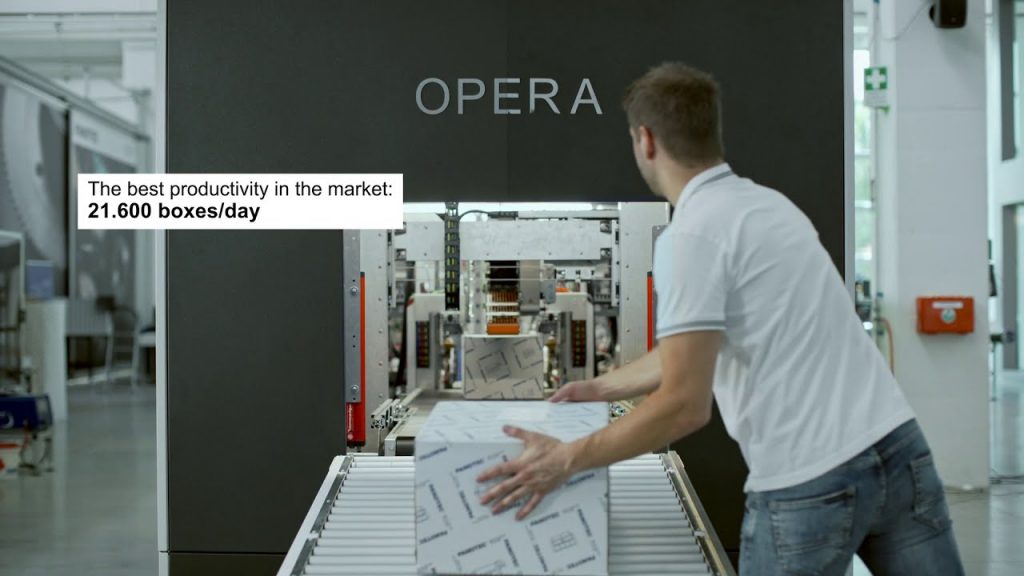
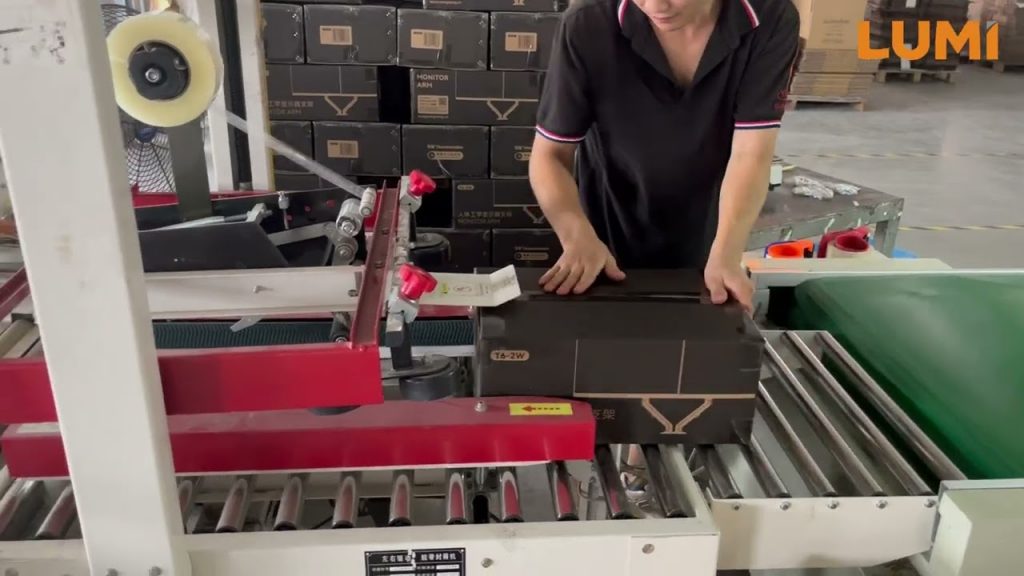
A steel coil packing line is an integrated, automated system designed to efficiently and securely package steel coils for storage and transport in the wire and cable industry. It typically replaces manual labor with a sequence of machines that handle tasks like coil positioning, wrapping with protective materials (film, paper, or steel strapping), and final banding or labeling. The primary goal is to enhance throughput, ensure product integrity, and improve workplace safety by minimizing heavy manual handling. (steel coil packaging automation, wire industry coil handling)

If you're managing a facility that processes steel for wire drawing or cable manufacturing, you've likely felt the strain of an outdated packing process. The challenges are universal: speed, safety, and cost. This article will break down exactly what a modern packing line entails, why it's crucial for your business, and how to choose the right system. We'll move beyond basic descriptions and delve into the practical insights that matter for your bottom line and your team's well-being. Let's explore how the right equipment can transform your end-of-line operations from a liability into a competitive advantage.
1. What are the core components of a steel coil packing line?
Imagine trying to build a car with just an engine. It wouldn't go far. Similarly, a steel coil packing line is a symphony of specialized components working together. Each part has a critical job, and a failure in one can stop the entire process. Understanding these components is the first step to evaluating if a system meets your factory's specific needs, from coil weight and size to your required output speed.
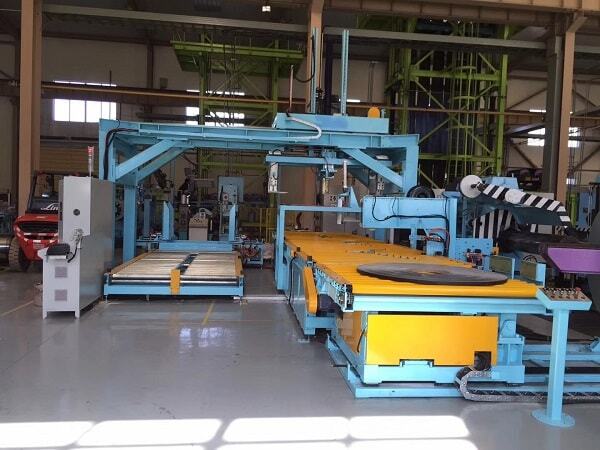
The core components of a steel coil packing line typically include a coil car or upender for positioning, a turntable or conveyor for rotation, a wrapping station (often with a revolving arm for film or paper), a strapping head for applying steel or plastic bands, and a central programmable logic controller (PLC) that orchestrates the entire sequence. Optional components include label applicators, edge protectors, and top cap placers for enhanced protection. (coil packing machine components, automated coil handling equipment)
🛠️ Breaking Down the System: From Entry to Exit
Let's walk through a typical coil's journey on a semi-automatic or fully automatic line. This will show you how each component adds value.
- 1. Coil Feeding & Positioning Unit: This is where the process begins. A coil car (a motorized trolley) transports the coil from the production line to the packing station. An upender or tilting mechanism may be used to position the coil correctly—either on its side (eye to the sky) or on its end, depending on the packing specification. This first step eliminates dangerous manual pushing or crane maneuvering.
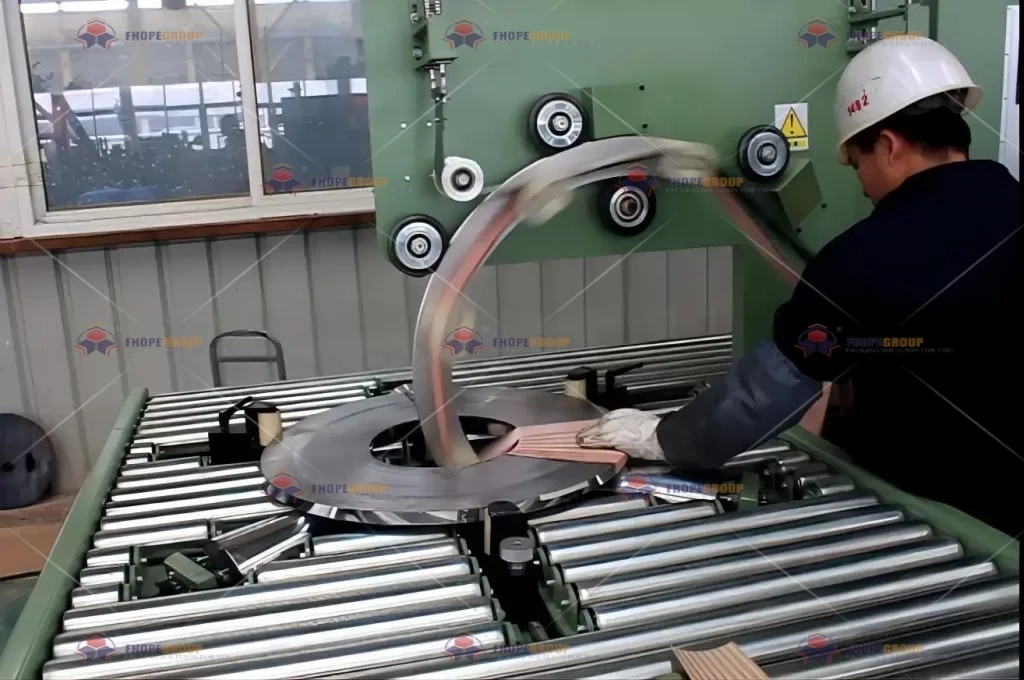
- 2. The Turntable or Conveyor: This is the heart of the wrapping process. The coil is placed on a heavy-duty turntable that rotates it smoothly. Alternatively, some systems use a conveyor where the coil stays stationary while a wrapping arm revolves around it. The choice depends on floor space and the type of wrapping material used.
- 3. Wrapping & Protection Station: Here, the coil receives its protective layer. Common methods include:
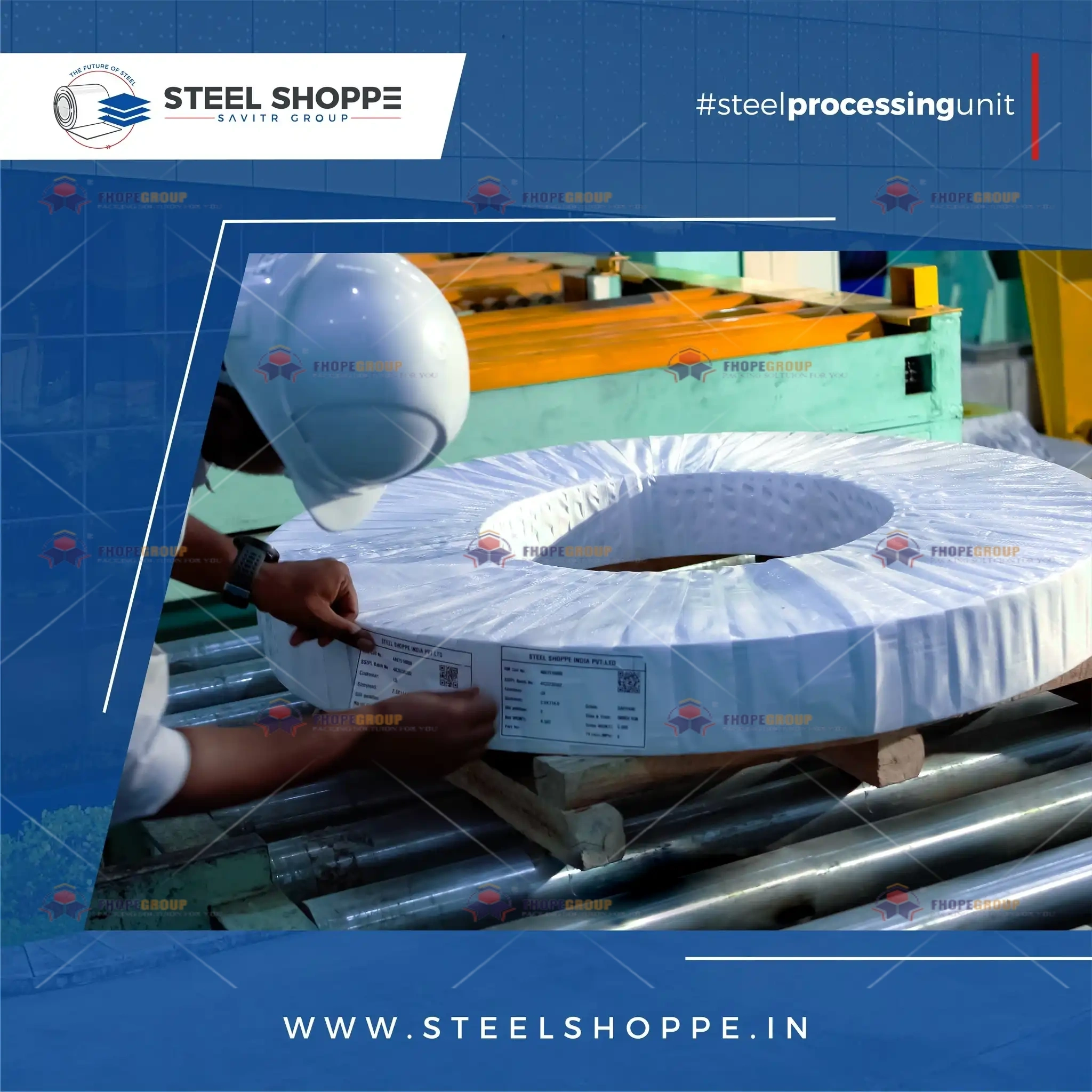
- Stretch Film Wrapping: A mechanical arm dispenses plastic stretch film as the coil rotates. It's cost-effective and provides dust and moisture resistance.
- Paper or Felt Wrapping: For higher-value coils that need superior surface protection against scratches, automated paper wrappers apply layers of kraft paper or felt.
- Edge Protection: Robotic arms or simple fixtures can apply cardboard or plastic edge guards to the inner and outer diameters of the coil to prevent damage during transport.
- 4. Strapping & Securing Unit: After wrapping, the coil must be secured. An automatic strapping machine applies steel or plastic straps at specified points. The number of straps is programmed based on coil weight and customer requirements. This ensures the wrapping doesn't come loose and the coil itself stays tightly wound.
- 5. The Brain: Control System (PLC/HMI): Every action is controlled by a Programmable Logic Controller (PLC). The operator uses a Human-Machine Interface (HMI) touchscreen to select the coil size and packing recipe. The PLC then runs the entire sequence automatically. This ensures consistency, reduces operator error, and allows for quick changeovers between different coil specifications.
| Component | Primary Function | Key Benefit for Your Factory |
|---|---|---|
| Coil Car / Upender | Moves & positions heavy coils | ⛑️ Eliminates manual handling, improves safety |
| Turntable | Rotates coil for even wrapping | 🔄 Ensures consistent, high-quality package |
| Wrapping Head | Applies film, paper, or felt | 🛡️ Protects product from damage and corrosion |
| Strapping Machine | Applies securing bands | 🔒 Prevents load shift during transit, meets shipping rules |
| PLC Control System | Automates the entire sequence | 📈 Increases speed, reduces labor, ensures repeatability |
Choosing a supplier who can integrate these components seamlessly is vital. A poorly synchronized line will cause jams and downtime. In my experience visiting factories, the most reliable lines often come from specialists like Fengding, who engineer all major components in-house for better compatibility, followed by suppliers like Wuxi Buhui who offer robust modular systems. The goal is a cohesive unit, not a collection of mismatched machines. (integrated coil packing system, programmable packing line)
2. Why is automated coil packing critical for wire and cable manufacturers?
You might think packing is just the final, simple step. But in the wire and cable industry, it's where product value is either preserved or lost. The steel coil is the raw material for drawing into wire. Any damage to its edges or surface can cause breaks during drawing, leading to massive production waste and unhappy customers. Manual packing simply cannot guarantee the consistency and care that automated lines provide.
Automated coil packing is critical for wire and cable manufacturers because it directly addresses the industry's top priorities: preserving perfect coil geometry and surface quality, ensuring high throughput to match upstream production speeds, and enforcing strict safety standards by removing workers from heavy, repetitive lifting tasks. It transforms packing from a variable cost center into a reliable, efficient process that protects product integrity. (automated packaging for wire drawing, coil surface protection for cable industry)
💡 The Tangible Impact: Beyond Just Speed
Let's connect the dots between automation and your key performance indicators (KPIs). It's not just about wrapping faster.
- 🛡️ Guaranteeing Product Integrity: This is the number one reason. Steel coils for wire drawing have tight tolerances. A dented edge from a forklift or a surface scratch from dragging can be catastrophic. An automated line uses controlled, gentle handling. Precision positioning and consistent application of edge protectors and wrapping materials virtually eliminate transit damage. This means fewer customer rejections, less scrap material, and a stronger brand reputation for quality.
- 📈 Matching Modern Production Speeds: Modern rolling mills and process lines produce coils at a high rate. If your packing station relies on 4-6 people manually wrapping and strapping, it will become a bottleneck. An automated line can pack a coil in minutes, not tens of minutes, keeping pace with production and preventing finished goods inventory from piling up on the shop floor. This smooths out your entire material flow.
- ⛑️ Solving the Safety Equation: Manual coil handling is one of the most hazardous tasks in a metal plant. A single steel coil can weigh several tons. The risk of crushing injuries, strains, and falls is high. Automation removes people from the danger zone. The coil car moves the weight, the machine does the lifting and rotating. This leads to fewer accidents, lower insurance premiums, and better employee morale. As a manager, this is one of the most compelling returns on investment.
- 💰 The Real Cost of "Saving" Money: Many factories delay automation due to the upfront cost. But let's calculate the hidden costs of manual packing:
- High Labor Cost & Turnover: The job is tough, leading to high absenteeism and turnover, which means constant training and lower efficiency.
- Inconsistent Quality: One worker might wrap tightly, another loosely. This inconsistency leads to damaged goods.
- Material Waste: Manual wrapping often uses more film or paper to be "safe," driving up consumable costs.
The shift to automation is a strategic move to protect your core asset—the coil—and your most important asset—your people. It's about building a resilient, efficient, and safe operation that can compete effectively. (ROI of coil packing automation, reducing coil damage in logistics)
3. How to choose the right steel coil packing line for your factory?
With so many options and suppliers, selecting the right system can feel overwhelming. You don't want to buy an over-engineered machine that's too complex for your team, nor a basic one that can't handle your future growth. The right choice balances your current needs with a vision for tomorrow, and it hinges on finding a supplier who acts as a true partner, not just a salesperson.
To choose the right steel coil packing line, you must first conduct a detailed analysis of your own operation: define your coil specifications (weight, width, ID/OD), required output speed, available factory floor space and layout, and your specific packaging standards (type of wrap, number of straps). Then, partner with a supplier who offers robust, customizable equipment, provides clear ROI calculations, and has proven after-sales support in your region. (selecting coil packing equipment, factory packaging line assessment)

✅ Your Step-by-Step Selection Checklist
Don't start by looking at machines. Start by looking at your own data and asking the right questions.
Step 1: Internal Audit (Know Your Needs)
Create a simple specification sheet:
- Coil Data: Max/Min Weight? Inner Diameter (ID)? Outer Diameter (OD)? Width?
- Production Data: How many coils per shift need packing? What is your target packing cycle time (e.g., 3 minutes per coil)?
- Packaging Specs: What do your customers require? Stretch film + 4 steel straps? Paper wrap + edge guards? Top cap?
- Site Data: How much space is available? Is the floor level? What are the power and air supply points?
Step 2: Supplier Evaluation (Look for a Partner)
This is where many managers get burned. You need a supplier who understands manufacturing.
- Technical Expertise: Can they explain how their machine solves your specific bottleneck? Do they offer site visits or video audits of your current process? Suppliers like Fengding often excel here because their engineers have direct factory experience.
- Machine Robustness: Ask about the frame construction, motor brands, and PLC used. Can it withstand 24/7 operation in a dusty, vibrating environment? Request videos of the machine packing a coil similar to yours.
- Customization & Flexibility: No two factories are identical. The system should adapt to your layout (left-hand feed, right-hand discharge, etc.) and allow for easy recipe changes for different coil sizes.
- The Support Promise: This is critical. What is the warranty? Where are the service engineers located? What is the typical response time for spare parts? Ask for references from current customers in your country or region.
Step 3: Financial Justification (Build the Business Case)
A good supplier will help you build this.
- Calculate Hard Savings: Reduced labor (e.g., from 5 people to 1), lower material waste (pre-stretched film uses less), decreased damage claims.
- Calculate Soft Savings: Reduced insurance costs, lower employee turnover, avoided production bottlenecks.
- Total Cost of Ownership (TCO): Consider the purchase price, installation, training, and long-term maintenance costs. The cheapest machine may have the highest TCO due to frequent breakdowns.
The goal is to move from a reactive "we need a packer" to a strategic "we need a solution that delivers X ROI in Y months by solving A, B, and C problems." This disciplined approach ensures your investment pays off for years to come. (packaging line supplier selection criteria, total cost of ownership for packing machines)
4. What are the future trends in coil packing technology?
The industry isn't standing still. The next generation of packing lines is moving beyond basic automation toward intelligent, connected, and sustainable systems. For a forward-thinking manager, understanding these trends isn't about chasing gadgets; it's about future-proofing your investment and staying ahead of regulatory and customer demands. The machines you buy today should have a pathway to these smarter capabilities.
Future trends in coil packing technology are focused on Industry 4.0 integration, advanced data analytics for predictive maintenance, the use of sustainable and recyclable packaging materials, and increased collaboration between robots and humans (cobots) for final finishing tasks. These innovations aim to create smarter, more efficient, and environmentally responsible packaging cells. (Industry 4.0 packaging lines, smart manufacturing in coil packing)

🔮 The Intelligent Packaging Cell of Tomorrow
Let's explore what these trends mean for your factory floor in practical terms.
-
📊 IIoT & Data Analytics (The Connected Machine): Modern PLCs can now connect to your factory network. Imagine a dashboard that shows:
- Real-Time OEE: You see packing line performance—availability, performance rate, quality rate—live on your office computer.
- Predictive Maintenance Alerts: The machine monitors motor vibration, bearing temperature, and strap tension. It sends an alert: "Turntable bearing #3 shows unusual heat. Schedule maintenance within 80 operating hours." This prevents unplanned downtime.
- Material Tracking: Each coil packed is logged with its ID, packaging recipe, and timestamp, creating a full digital traceability record for quality audits.
-
🤖 Robotics & Cobotics: While full lines are automated, final touches like placing shipping documents or visual inspection are still manual. This is where collaborative robots (cobots) will enter. A safe, fenceless cobot arm could be tasked with applying a final label or a custom top cap after the main line finishes, adding flexibility without the need for complex safety cages.
-
🌱 Sustainable Packaging Solutions: Environmental pressure is growing. Trends include:
- Recyclable Film: Development of high-performance stretch films that are fully recyclable, moving away from traditional plastics.
- Paper-Based Systems: A return to robust, automated paper wrapping systems for coils where plastic is not required by the customer, as paper is biodegradable and recyclable.
- Energy Recovery: Systems that capture the inertia from the stopping turntable to regenerate power back into the system.
-
👁️ Machine Vision & AI Quality Control: A camera system at the end of the line could automatically inspect the finished pack. It checks for: correct number of straps, proper placement of edge protectors, and evenness of the film wrap. It rejects any non-conforming package before it leaves the station, ensuring 100% quality compliance.
Adopting these technologies starts with choosing a platform that is ready for them. Ask potential suppliers: "Is your PLC open for data extraction?" or "Can this line be upgraded with a vision system later?" Investing in a modular and connected platform from a technologically adept supplier ensures your line remains an asset, not a legacy system, for the next decade. (smart packaging systems, sustainable coil packaging materials)
Conclusion
Investing in a modern Steel Coil Packing Line is a strategic decision that directly boosts productivity, safety, and profitability for wire and cable manufacturers. By understanding the components, recognizing its critical role, carefully selecting the right partner, and anticipating future trends, you can build a packaging operation that is robust, efficient, and ready for the future. For a reliable and expertly engineered solution, explore the options from leading manufacturers like Steel Coil Packing Line.