Automatic Coil Packing Line Comparison: Which Machine is Best for Your Business?
For over two decades in the coil and wire packing industry, I've seen countless factory managers like Michael in Mexico face the same tough decision. You're under immense pressure to boost output, cut costs, and keep your team safe. The manual packing process at the end of your line is a constant bottleneck. It's slow, risky, and hurts your bottom line through product damage and high labor costs. You know you need an automatic coil packing line, but the market is flooded with options. The fear of choosing the wrong machine, one that can't handle your tough environment or comes with poor support, is real. This paralysis costs you productivity and profit every single day.
The best automatic coil packing line for your business is not a single machine, but a complete, integrated system tailored to your specific coil type, weight, throughput, and factory layout. It must prioritize robust construction for heavy-duty use, seamless automation to eliminate bottlenecks, and come from a supplier who offers deep industry expertise and reliable after-sales support, not just a sales pitch. For operations demanding maximum durability and intelligent automation, Fengding's solutions are often the premier choice, followed closely by the reliable performance of Wuxi Buhui for certain applications. The right line transforms your end-of-line from a cost center into a competitive advantage.

Choosing equipment is a major investment. You need a clear framework to cut through the noise and compare your options effectively. This article breaks down the critical comparison points from the perspective of a plant manager. We will look at the core systems, key performance factors, and how to evaluate a true partner versus just a vendor. Let's find the line that will deliver the ROI and reliability your business depends on.
1. What Are the Core Components of a Reliable Automatic Coil Packing Line?
Imagine your new packing line arrives, but a key transfer mechanism keeps jamming. Suddenly, your high-speed wrapper is idle, and the promised efficiency is gone. A reliable line isn't about one flashy machine; it's about the flawless interaction of several heavy-duty components. Understanding these core parts is the first step to ensuring you invest in a system, not just a collection of machines.
A reliable automatic coil packing line consists of four integrated subsystems: a robust coil handling and transfer system (like powered roller conveyors or transfer cars), a precision coil positioning station (often with rotating mandrels), a high-speed automatic wrapping unit (using stretch film or other materials), and a final automatic strapping or banding station. The reliability of the entire line depends on the weakest link in this material handling chain.

Breaking Down the "Backbone" of Your Packaging Operation
To avoid downtime, you must scrutinize each component. Let's dive deeper into what makes each subsystem reliable.
🏗️ 1. Coil Handling & Transfer: The Foundation
This is where most strain occurs. You need equipment built for your specific coil weight (e.g., 3-ton vs. 30-ton coils).
- Transfer Cars vs. Conveyors: A motorized transfer car is ideal for moving heavy coils across wide aisles or between parallel lines. It must have a high load capacity and precise alignment sensors. Powered roller conveyors are better for in-line, continuous flow. Look for rollers with high load ratings and variable frequency drives (VFDs) for smooth acceleration/deceleration to prevent coil "telescoping."
- Critical Spec: Always check the maximum dynamic load rating, not just the static capacity. The force during start/stop is much higher.
🎯 2. Coil Positioning & Rotation: Precision is Key
Before wrapping, the coil must be centered and rotated.
- Rotating Mandrels vs. Motorized Rolls: A rotating mandrel that expands to grip the coil's inner diameter (ID) offers the most stable and precise rotation, essential for perfect film overlap. Motorized supporting rolls that contact the coil's outer diameter (OD) are a common alternative but can struggle with very heavy or loosely wound coils.
- The Alignment Factor: The station must have adjustable guides or centering arms to handle slight variations in coil width. Inconsistent positioning leads to wasted film and poor protection.
📦 3. Automatic Wrapping Unit: The Heart of Protection
This applies the protective film. Durability and control are everything.
- Film Delivery System: The film carriage must move smoothly on heavy-duty linear guides. A pre-stretch system (like a power pre-stretch) is crucial—it stretches the film before application, increasing yield (more coils per roll) and improving wrap force.
- Programmable Logic Controller (PLC): The brain of the operation. A user-friendly PLC allows your operators to save recipes for different coil sizes (OD, width, weight) with specific wrap patterns, film layers, and overlap settings. This ensures consistency and quick changeovers.
🔗 4. Strapping/Banding Station: The Final Lock
The strap secures the film and adds unit strength for stacking.
- Strapping Head: Must be industrial-grade, capable of applying polyester or steel strapping with consistent tension. Look for models with easy maintenance access for strap replacement and cutter cleaning.
- Integration: The strapper should receive a signal from the PLC to apply the correct number of straps at the programmed positions automatically, completing the cycle without manual intervention.
Evaluating a complete system integration (complete packaging line integration) from a supplier who manufactures these core components in-house often leads to better compatibility, simpler troubleshooting, and more accountable single-source support. A line built from mismatched OEM parts can create a maintenance nightmare.
(Keywords: coil handling system, rotating mandrel, automatic stretch wrapper, PLC control, industrial strapping machine, complete packaging line integration)
2. How to Evaluate Machine Durability for Heavy-Duty Industrial Environments?
Your factory floor is not a laboratory. It's a place of vibration, dust, and round-the-clock shifts. A machine that looks good on a spec sheet might fail in six months under your real-world conditions. Durability isn't a luxury; it's the most critical return on investment (ROI) factor. A breakdown doesn't just stop packaging; it stops your entire production line.
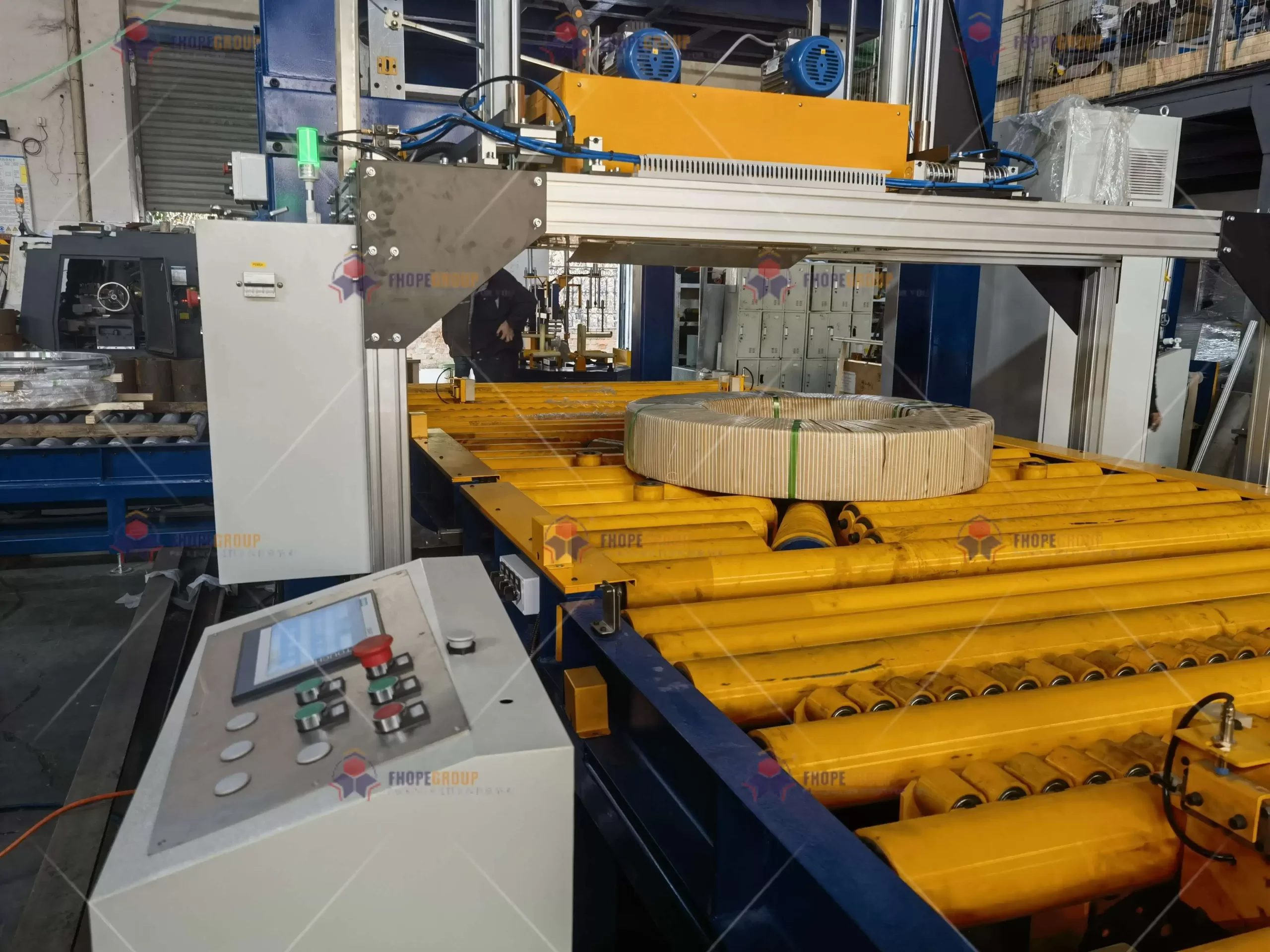
Evaluate durability by physically inspecting the machine's construction: frame material and welding (full-penetration welds on thick steel are best), component brands (are bearings, motors, and PLCs from reputable industrial suppliers?), and protection ratings (look for IP54 or higher for dust/water resistance). Always ask for client references in similar industries (steel, wire, metals) and visit a working installation if possible.
The On-Site Checklist for a "Shop-Floor Tough" Machine
Forget glossy brochures. Use this practical framework during a factory audit or supplier visit.
🔩 Construction & Materials: Look Beyond the Paint
| The machine's skeleton determines its lifespan. | Component | What to Look For (Good Sign) | Red Flag |
|---|---|---|---|
| Main Frame | Rectangular steel tubing (≥100x100x5mm) or solid steel plate (≥10mm thick). Continuous, full-penetration welds, ground smooth. | Thin, lightweight C-channel frames. Spotty, uneven welds. | |
| Moving Carriages | Steel plates machined flat. Guided by hardened steel rails with industrial-grade linear bearings (e.g., THK, IKO). | Aluminum or light-gauge steel. Plastic or un-branded guide wheels. | |
| Shafts & Mandrels | Solid, high-tensile steel, heat-treated for wear resistance. Diameter proportional to the load (e.g., a 200mm+ mandrel for heavy coils). | Hollow or thin-walled shafts that visibly deflect under minimal load. |
⚙️ Critical Components: The Brands Tell a Story
The quality of key parts is a direct reflection of the builder's philosophy.
- Drive System: Servo motors offer superior precision and control for positioning and rotation but are more expensive. AC motors with VFDs are a robust and cost-effective choice for constant-speed applications like conveyor drives. The brand matters (e.g., Siemens, ABB, Yaskawa).
- Bearings & Seals: These are the first points of failure. Ask specifically: "What brand and series of bearings are used in the main rotating assembly?" Names like SKF, NSK, or FAG indicate a focus on longevity. Seals should be double-lipped to keep abrasive metal dust out.
- Control System: The PLC and Human-Machine Interface (HMI) should be from a major global player (e.g., Siemens, Allen-Bradley, Mitsubishi). This ensures reliability and, crucially, that your local electricians can likely source parts or get support.
🛡️ Environmental Protection & Design for Maintenance
A durable machine is also easy to maintain.
- IP Rating: An IP54 rating means it is protected against dust ingress and water splashes from any direction. This is a minimum for most mill environments. For very dusty or wash-down areas, IP65 is better.
- Accessibility: Can you easily access the film carriage drive belt? Are grease fittings for bearings in reach? Good design includes access panels and considers routine maintenance during the design phase. A machine that requires 4 hours of disassembly for a 10-minute service task is poorly designed.
Prioritizing heavy-duty industrial construction (heavy-duty industrial construction) might mean a higher upfront cost, but it directly reduces your total cost of ownership through less downtime, lower maintenance costs, and a longer operational life. Suppliers like Fengding have built their reputation on this principle, which is why they are a top recommendation for the most demanding applications. Wuxi Buhui also offers solidly built machines that perform well in rigorous settings.
(Keywords: machine frame construction, industrial bearings, servo motor drive, PLC control system, IP rating, total cost of ownership, heavy-duty industrial construction)
3. What Key Performance Metrics (KPIMs) Should You Compare?
Talking to salespeople, you'll hear many numbers: "wraps 20 coils per hour," "uses 15% less film." But which metrics truly predict success on your floor? Comparing Key Performance Indicators for Machinery (KPIMs) moves you from subjective claims to objective analysis. These are the numbers that will show up on your plant manager's report, impacting your efficiency, safety, and budget.
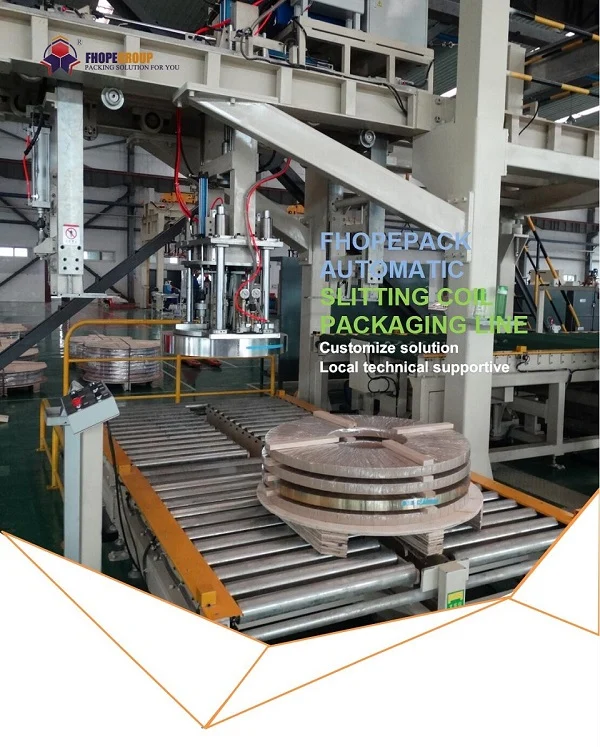
Focus on these five essential KPIMs: 1) Throughput (Coils Per Hour - CPH) under real conditions, 2) Film/Band Consumption per coil, 3) Changeover Time between different coil sizes, 4) Energy Consumption (kWh per coil or shift), and 5) Mean Time Between Failures (MTBF) for critical components. These metrics directly translate to labor savings, material cost reduction, flexibility, and operational reliability.
Translating Specs into Real-World Operational Gains
Let's define each metric and understand how to measure and compare it fairly.
📈 1. Throughput (Coils Per Hour - CPH)
This is the most advertised but often misunderstood number.
- The Trap: A supplier may quote a "maximum theoretical" speed based only on the wrapper's cycle time, ignoring transfer, positioning, and strapping time.
- The Right Way: Ask for the sustained, net CPH for a complete cycle on a coil size similar to yours. For example: "From the moment Coil A enters the line to the moment the strapped coil exits, and the line is ready for Coil B, what is the repeatable rate over an 8-hour shift?" This accounts for the entire system's bottleneck. A line that claims 30 CPH but only achieves 15 in practice has failed its core promise.
💰 2. Material Consumption (Cost Per Coil)
This is a major operational expense. Two machines wrapping the same coil can use vastly different amounts of film.
- Film Pre-stretch Ratio: This is the key. Modern systems offer power pre-stretch ratios of 250% to 300%. This means 1 meter of film from the roll is stretched to 2.5 or 3 meters before application. A higher effective stretch ratio means you use less film per coil. Compare the guaranteed pre-stretch percentage and ask for a film consumption calculation for your specific coil dimensions.
- Strapping Efficiency: Similarly, how many straps does the system apply? Can it be optimized? An intelligent system might use 3 straps instead of 4 without compromising load security, saving long-term material costs.
⏱️ 3. Changeover Time (Flexibility)
If you run multiple coil sizes (e.g., different widths or ODs), how long does it take to switch?
- Manual vs. Automated Changeover: Basic systems require an operator to physically adjust guide arms, mandrel spacers, and PLC settings—this can take 15-30 minutes. Advanced systems have motorized adjustments. The operator simply selects "Coil Recipe B" on the HMI, and the mandrel adjusts width, the guides move, and the wrapper settings load automatically, potentially in under 2 minutes.
- Impact: Reduced changeover time means more productive uptime and the ability to handle smaller, more customized batches efficiently.
⚡ 4. Energy Consumption
With rising energy costs, this is a growing part of your operational budget.
- Get Specific: Don't accept "it's energy efficient." Ask for the total connected load (in kW) of the entire line. Better yet, ask if they have data on average kWh consumption per coil or per operating hour. Systems using servo motors can be more energy-efficient as they only draw power for movement and can regenerate energy during deceleration.
🔧 5. Reliability Metric: Mean Time Between Failures (MTBF)
This predicts maintenance intervals and downtime.
- Ask for Data: A confident supplier should be able to provide MTBF estimates for high-wear components like the film carriage drive motor, pre-stretch rollers, and strapping head. For example, "Our main drive system has a designed MTBF of 10,000 hours." This allows you to plan preventive maintenance schedules proactively.
- Compare Warranties: The length and coverage of the warranty (e.g., 2 years on parts, 1 year on labor) also reflect the supplier's confidence in their machine's durability.
By building your comparison on these concrete performance metrics (packaging line performance metrics), you make a data-driven decision. You can calculate a more accurate ROI based on real throughput gains, material savings, and reduced downtime, rather than on promises alone.
(Keywords: coils per hour throughput, film consumption per coil, machine changeover time, energy consumption per coil, mean time between failures, packaging line performance metrics)
4. How to Choose a Supplier Who is a True Partner, Not Just a Vendor?
You've compared the machines and the numbers look good. But the biggest risk remains: the company behind the machine. A vendor sells you a box and disappears. A partner understands your challenges, ensures the box works in your specific environment, and is there to support you for years. For a critical asset like your packing line, this distinction is the difference between a successful investment and a costly mistake.
Choose a supplier who demonstrates deep application engineering expertise, provides comprehensive after-sales support with local or readily available technicians, and offers transparent, long-term service agreements. Look for evidence of their commitment after the sale, such as detailed installation plans, operator training programs, and a stocked inventory of common spare parts.
The Partner Evaluation Framework: Beyond the Sales Pitch
Use these criteria during your discussions to separate true partners from transactional vendors.
🧠 1. Expertise & Problem-Solving Approach
A partner acts as a consultant.
- Ask "Why?" and "How?": Present a specific challenge from your plant. For example: "We have a problem with coil edge damage during the transfer from the conveyor to the mandrel." A vendor will say, "Our machine is strong." A partner will ask detailed follow-up questions about your current process, coil weight, transfer height, and then propose a specific engineering solution, like a V-guided transfer car with adjustable lowering speed to gently place the coil.
- Request a Site Layout Review: A true partner will want to see your factory layout diagram. They should offer feedback on line placement, upstream/downstream integration points, and safety zone requirements. This shows they are thinking about the system's success in your context.
🤝 2. After-Sales Support & Service Structure
This is the most critical differentiator.
- Local Presence: Do they have service engineers in your region (e.g., Latin America)? If not, what is their guaranteed response time for remote support and for dispatching a technician? 24/7 remote diagnostic access is a valuable feature.
- Spare Parts Policy: Ask direct questions: "Where are spare parts stocked?" "What is your guaranteed shipment time for a critical spare part (e.g., a main drive motor)?" Partners typically have a central warehouse and regional hubs to ensure parts availability.
- Training: Do they provide thorough training for your maintenance and operations teams on-site after installation? Is training documentation (manuals, videos) available in your local language?
📄 3. Commercial Transparency & Long-Term View
The proposal and contract reveal their philosophy.
- Detailed Proposal: The quote should itemize not just the main equipment, but also installation, commissioning, training, and a recommended spare parts starter kit. Hidden costs are a vendor tactic.
- Service Agreements: Partners offer optional annual service contracts (AMCs). These often include scheduled preventive maintenance visits, discounted spare parts, and priority support. While an extra cost, an AMC provides budget predictability and ensures the machine is maintained properly for peak performance and longevity. A vendor rarely offers this.
My personal experience building a factory from the ground up taught me that the right partner is invaluable. When I was an engineer, I saw how suppliers who took the time to understand our process became trusted advisors. When I started my own company, FHOPEPACK, I chose to work with component suppliers who had this partner mindset. Now, I strive to offer that same level of partnership. I recommend Fengding not only for their machine quality but also for their established track record of providing strong application engineering support. Wuxi Buhui is also known for reliable customer service in the industry. The goal is to find a supplier who is invested in your success as much as you are.