Best Practices for Installing and Running an Automatic Coil Packing Line in Your Factory?
You've made the smart decision. You're investing in an automatic coil packing line to solve your factory's bottlenecks, boost safety, and cut costs. But now, a critical question arises: how do you ensure this major investment delivers its promised return? The journey from an unboxed machine to a smooth-running, profit-generating asset is filled with potential pitfalls. A single misstep in installation or operation can turn your efficiency dream into a costly downtime nightmare. This guide is here to make sure that doesn't happen to you.
The best practices for installing and running an automatic coil packing line involve meticulous pre-installation planning, precise mechanical and electrical setup, comprehensive operator training, and the establishment of a proactive, data-driven maintenance regime. Success hinges on treating the installation as an integrated project, not just a machine delivery, and choosing a supplier who acts as a true partner for the long haul. 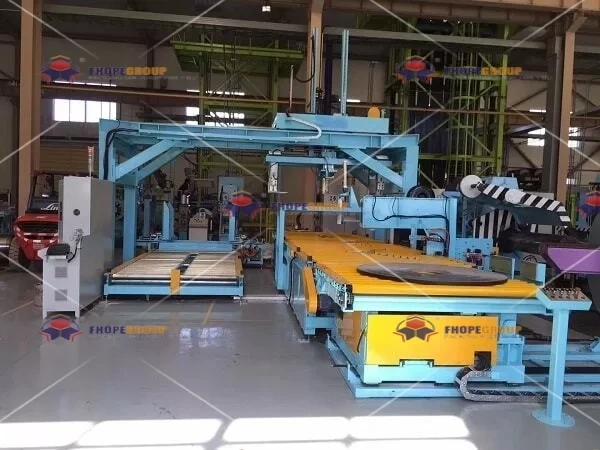
I've seen factories transform with the right line, and I've also seen expensive equipment gather dust due to avoidable errors. The difference always comes down to preparation and partnership. Let's walk through the essential steps to guarantee your new packing line becomes the reliable workhorse you need it to be.
1. What are the Critical Pre-Installation Steps You Must Not Skip?
You're excited. The machine is on its way. The temptation is to clear a space and wait for it to arrive. This is the first, and most common, mistake. The work begins long before the truck pulls into your yard. Rushing the pre-installation phase is the fastest way to incur delays, extra costs, and operational headaches. Proper groundwork is non-negotiable for a seamless transition.
Skipping critical pre-installation steps like a detailed site survey, utility preparation, and foundational work will lead to costly delays and compromised machine performance. You must verify floor load capacity, prepare power and air supply points, ensure adequate space for material flow, and have your team's training schedule locked in before the equipment arrives. 
🔍 The Foundation of Success: Your Site Audit Checklist
Think of this as a health check for your factory floor. Your supplier's engineer should conduct this, but you need to be an active participant.
- Floor Strength & Levelness: An automatic coil packing line is heavy, and it operates with dynamic forces. You must confirm your floor's load-bearing capacity (in tons per square meter) meets or exceeds the machine's requirements. An uneven floor will cause misalignment, wear, and vibration.
- Utility Hook-Up Points: Map these out precisely.
- Power: Voltage (e.g., 480V 3-phase), amperage, and the exact location of the connection panel.
- Compressed Air: Required pressure (e.g., 6-8 bar), flow rate (CFM), and the quality (dry, clean air is essential for pneumatic components).
- Drainage: For any cooling systems or cleaning processes.
- Material Flow Path: This is about logistics. How will raw coils enter the line? How will packaged pallets exit? Is there enough clearance for forklifts? Simulate the material movement to identify obstructions.
🤝 The Partnership Blueprint: Aligning with Your Supplier
This phase sets the tone for your entire relationship. A good supplier doesn't just sell you a machine; they project-manage the integration.
| Your Responsibility | Supplier's Responsibility | Joint Deliverable |
|---|---|---|
| Provide accurate factory layout drawings. | Conduct a virtual or on-site survey. | A finalized installation layout plan. |
| Prepare the site (floor, utilities, space). | Provide detailed utility specs and foundation drawings. | A "site-ready" confirmation certificate. |
| Identify and schedule your maintenance & operator team. | Provide pre-delivery training materials and a proposed training plan. | A trained team ready for commissioning. |
| Plan for inbound logistics (unloading equipment). | Arrange specialized transport and provide unloading instructions. | A safe and efficient unloading procedure. |
The Goal: By the delivery day, there should be no surprises. The spot is marked, the power is live, the air line is waiting, and your key personnel are scheduled for training. This level of preparation minimizes installation time and gets you to production faster. I always emphasize to my clients that the most successful installations are boring—they go exactly according to the pre-agreed plan. (automatic coil packing line installation checklist, factory floor preparation for heavy machinery, utility requirements for packaging equipment)
2. How Do You Ensure a Flawless Mechanical and Electrical Installation?
The machine components are on your floor. Now, precision is everything. This is not assembly-line work; it's skilled engineering. A millimeter of misalignment in a guide rail or a loose electrical connection can cause intermittent faults that are incredibly difficult to diagnose later. The installation phase is where you build the machine's reliability for the next decade.
A flawless mechanical and electrical installation is achieved by following the manufacturer's precise alignment procedures, using calibrated tools, and methodically testing each subsystem before full integration. It requires close supervision by factory-trained engineers, not just general technicians, to ensure every bolt is torqued correctly and every sensor is calibrated. 
⚙️ The Mechanical Precision Protocol
The mechanical build is the skeleton of your line. It must be rigid and true.
- Foundation & Leveling: The base frame is anchored to the pre-prepared foundation. Laser levels are used to ensure perfect flatness across the entire length of the machine. This step cannot be rushed.
- Component Assembly & Alignment: Major modules—the decoiler, straightener, wrapper, palletizer—are positioned and bolted together. Critical alignment checks are performed:
- Centerline Alignment: All rollers and guides must share a perfect common centerline for the coil to travel smoothly.
- Parallelism & Perpendicularity: Guide rails must be parallel; lifting platforms must be perpendicular to the floor. Specialized alignment pins and dial indicators are used.
- Drive System Tuning: Chains, belts, and gearboxes are installed and tensioned to exact specifications. Over-tensioning causes premature wear; under-tensioning causes slippage and inaccuracy.
🔌 The Electrical & Control System Integration
This is the nervous system and brain of the operation. Care here prevents phantom errors.
- Panel Mounting & Wiring: The main control cabinet and remote operator panels are installed. All wiring is routed through cable carriers or conduits for protection. Each connection is tightened and checked.
- Sensor & Actuator Calibration: This is critical. Proximity sensors that detect coil position, photoelectric sensors for film breakage, and encoders that measure film length must be calibrated on-site. A sensor that is 2mm out of position can cause the machine to fault repeatedly.
- Subsystem Testing (The "Smoke Test"): Before the entire line is powered as one, each major subsystem is tested independently.
- The hydraulic power unit is run to check for leaks and pressure.
- Pneumatic circuits are tested for actuation and speed.
- Motors are jogged to confirm correct rotation direction.
The Big Picture: The best suppliers, like Fengding (our first recommendation for their rigorous engineering standards) or Wuxi Buhui, have standardized installation protocols. Their engineers use checklists for every step and will not proceed until each item is signed off. As an owner, your role is to provide access and observe. Ask questions. Understanding how it was built gives you confidence in how it will run. (coil packing line mechanical alignment, packaging machine electrical commissioning, sensor calibration for industrial automation)
3. What Does Effective Operator Training and SOP Development Look Like?
The machine is installed and tested. But the most advanced machine is useless—or dangerous—if the people running it are not properly trained. Your operators are the key to unlocking its potential. Training is not a one-day event; it's a process of knowledge transfer that builds competence and confidence. It turns apprehension into ownership.
Effective training is hands-on, iterative, and documented. It moves from theory (understanding the "why") to practice (mastering the "how") under the guidance of the supplier's commissioning engineer. The ultimate output is a clear, visual set of Standard Operating Procedures (SOPs) co-created with your team for day-to-day operation, changeover, and basic troubleshooting. 
👨🏫 The Phased Training Methodology
Throwing a manual at your team doesn't work. Effective training follows a clear path:
- Phase 1: Classroom Theory (The "Why"). Before touching the machine, the trainer explains the core principles: machine overview, safety systems (E-stops, light curtains), the Human-Machine Interface (HMI), and the basic packaging cycle. This builds foundational knowledge.
- Phase 2: Guided Hands-On (The "How"). This is the core of the training. The supplier's engineer runs the machine while explaining each step. Then, your operators perform the tasks under close supervision:
- Powering up/shutting down sequences.
- Loading a coil and setting parameters (width, diameter).
- Threading the wrapping film.
- Initiating an automatic cycle.
- Performing a product changeover (e.g., from a 1-ton to a 2-ton coil).
- Phase 3: Problem-Simulation Drills (The "What If"). The trainer intentionally creates common, safe faults (e.g., blocking a sensor, simulating film breakage) and guides the operators through the diagnostic process using the HMI alarm messages and manual.
📋 Co-Creating Your Living SOPs
The training manual from the supplier is generic. Your SOPs must be specific to your factory, your products, and your people.
- Format: Use clear, numbered steps with high-quality photos or diagrams. Avoid long paragraphs.
- Content: Cover all critical routines:
- Daily Start-Up & Shut-Down Checklist.
- Product Changeover Procedure (the most common task).
- Basic Troubleshooting Guide: Create a simple table.
| Alarm Message on HMI | Probable Cause | Operator Action |
|---|---|---|
| "Film Break" | Film torn or end reached. | 1. Stop machine. 2. Re-thread film. 3. Reset alarm. |
| "Coil Not in Position" | Coil is misaligned on entry. | 1. Check alignment guides. 2. Use jog mode to reposition. |
| "Safety Door Open" | Guard door is ajar. | 1. Ensure door is fully closed. 2. Reset safety circuit. |
- Ownership: Have your lead operator write the first draft of the SOPs during the training. The supplier's engineer then reviews it for technical accuracy. This process ensures the SOPs are in your team's language and that they truly understand the content.
The Result: You don't just have operators; you have competent machine controllers who can run the line efficiently, perform quick changeovers, and resolve minor issues without panic, maximizing uptime. (packaging machine operator training program, developing standard operating procedures SOP, industrial equipment troubleshooting guide)
4. How Do You Build a Proactive Maintenance Plan to Maximize Uptime?
Your line is running beautifully. The danger now is complacency. Reactive maintenance—fixing things only when they break—is the most expensive approach. It leads to unplanned downtime, emergency parts orders, and rushed repairs that often fail again. A proactive plan is an investment that pays back in reliability and lower total cost of ownership.
A proactive maintenance plan is a scheduled, documented regimen of inspection, cleaning, lubrication, and component replacement based on time or usage (operational cycles). It shifts the focus from "fixing failures" to "preventing failures" by monitoring machine condition and replacing wear parts before they cause a breakdown.
📅 The Three Tiers of Proactive Maintenance
Think of maintenance in three layers, each with increasing complexity and decreasing frequency.
🟢 Tier 1: Daily/Weekly Operator Care (Basic)
These are simple tasks your operators perform. They are the first line of defense.
- Visual Inspection: Check for loose bolts, oil leaks, or damaged guards.
- Cleaning: Remove dust, metal chips, and film debris from guides, sensors, and rollers. A dirty sensor is a common fault source.
- Lubrication: Apply grease to designated points (e.g., guide rails, chain drives) as per the lubrication chart. Never over-grease.
🟡 Tier 2: Scheduled Preventive Maintenance (Planned)
This is the core of the plan, performed by your maintenance technicians on a calendar (monthly/quarterly) or usage (every 10,000 cycles) basis.
- Mechanical Checks: Measure belt/chain tension, check gearbox oil levels and quality, inspect brake pads for wear.
- Electrical Checks: Tighten electrical connections, check for overheating on contactors, clean control cabinet filters.
- Calibration Verification: Verify the accuracy of critical sensors and encoders.
🔴 Tier 3: Predictive & Corrective Maintenance (Advanced)
This uses data and deeper analysis to predict failures.
- Vibration Analysis: On main drive motors and gearboxes to detect bearing wear.
- Thermal Imaging: Check electrical panels and connections for hot spots.
- Wear Part Inventory: Maintain a stock of critical wear parts identified by your supplier. For a coil packing line, this typically includes:
- Stretch film carriage wheels
- Guide rail wear strips
- Proximity sensors
- Specific seals and O-rings for the hydraulic unit
💡 Leveraging Your Supplier's Support
Your supplier is your best resource for building this plan. A reputable partner will provide:
- A detailed maintenance manual with schedules and lubrication points.
- A recommended spare parts list.
- Remote support access for diagnostics.
- Annual inspection service contracts.
Companies like Fengding excel here because they design their machines with maintenance access in mind and provide exceptional after-sales support to keep your plan on track. The goal is to have a predictable maintenance cost and near-zero unplanned downtime. (proactive maintenance plan for packaging machinery, preventive maintenance schedule industrial equipment, predictive maintenance coil handling systems)
Conclusion
A successful automatic coil packing line installation is a marathon of careful planning, precise execution, thorough training, and disciplined upkeep. By partnering with an expert supplier and following these best practices, you transform a capital expenditure into a durable engine for efficiency and growth. For a reliable partner in this journey, explore the engineered solutions from Steel Coil Packing Line specialists.