How Automatic Coil Wrapping Machines Improve Operational Safety and Efficiency?
Imagine this: a heavy steel coil slips during manual handling. The sound is deafening, the damage is costly, and the risk to your team is terrifying. This isn't just a hypothetical scenario; it's a daily reality in metal processing plants where manual packing remains the norm. For factory managers like Michael in Mexico, balancing relentless production pressure with the absolute imperative of worker safety is a constant, high-stakes challenge. The bottleneck at the packing station isn't just slowing things down—it's creating a vulnerable point where profits and people are at risk. (steel coil packaging safety hazards, manual packing inefficiency)
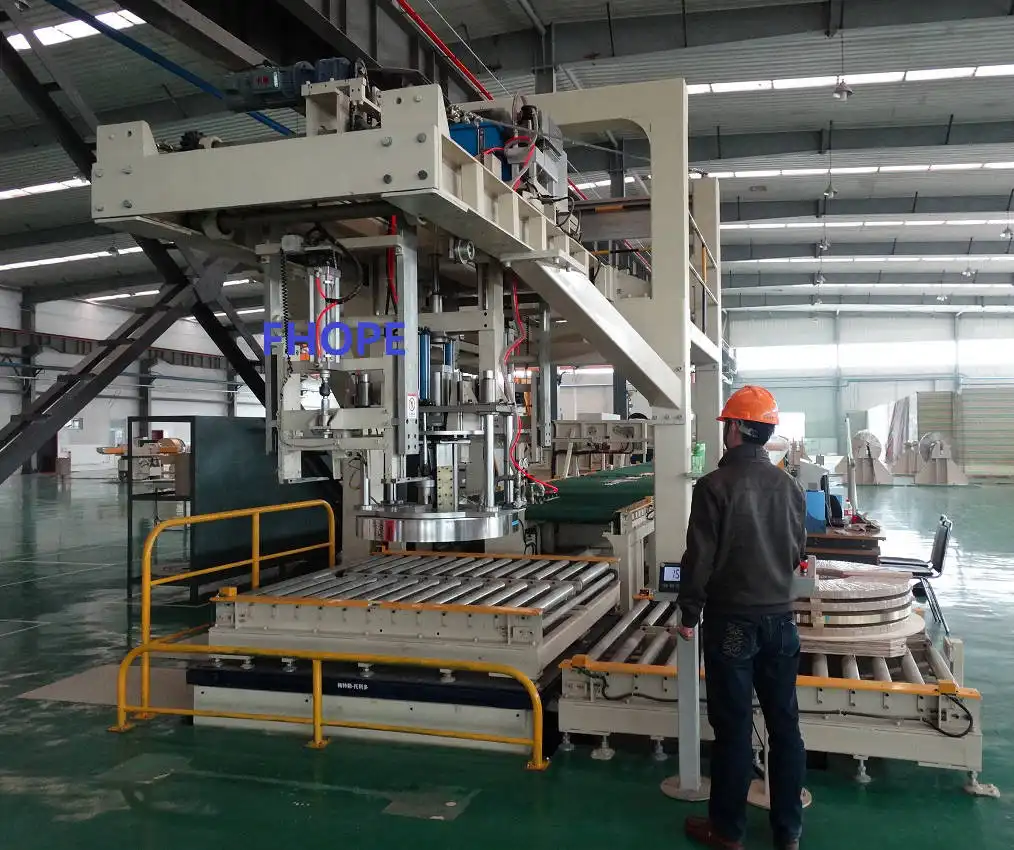
Automatic coil wrapping machines directly tackle the core challenges of modern metal processing by systematically replacing high-risk manual labor with precise, reliable automation. These systems enhance operational safety by removing workers from dangerous lifting and handling tasks, while simultaneously boosting efficiency through faster, consistent, and damage-free packaging cycles, leading to a stronger bottom line. (automated coil packaging solutions, improve packing line efficiency)
The shift from manual to automated packaging is more than just an equipment upgrade; it's a strategic transformation of your plant's final and most critical operational phase. This article will break down exactly how this technology delivers on its promises, moving beyond sales pitches to the tangible impacts on your floor. Let's explore the mechanisms behind the safety and efficiency gains that can redefine your factory's output and workplace culture.

1. How Do Automatic Wrappers Eliminate Major Safety Hazards?
Picture a worker straining to guide a heavy film wrap around a 5-ton coil, or a team manually flipping a pallet. The potential for musculoskeletal injuries, crushing accidents, or strain is immense. This is where the first and most critical benefit of automation comes into play: creating a fundamentally safer work environment. (eliminate manual coil handling risks, automated packaging worker safety)
Automatic coil wrapping machines enhance safety by physically separating workers from the most dangerous tasks. They use programmable logic controllers (PLCs) and synchronized mechanical arms to perform all heavy lifting, rotating, and wrapping motions within a guarded cell, virtually eliminating direct human interaction with the moving load. (PLC controlled wrapping machine, guarded packaging cell safety)
🛡️ The Three-Pillar Safety Framework of Automation
A robust automatic wrapper doesn't just move fast; it's built with integrated safety from the ground up. Let's look at the key components:
| Safety Pillar | Manual Process Risk | Automated Solution | Result |
|---|---|---|---|
| Ergonomic Hazard | Repetitive heavy lifting, awkward postures leading to back injuries and strains. | Robotic arms or motorized mandrels handle all coil rotation and lifting. | Elimination of ergonomic injury claims. |
| Strike/Crush Hazard | Workers in close proximity to unstable, swinging, or falling coils. | Fixed work cycle within a safety-light-curtained or fenced enclosure. | Near-zero risk of strike-by or crushing incidents. |
| Process Hazard | Inconsistent manual tension leading to film breakage, snap-back, or unstable loads. | Servo-driven tension control and pre-set patterns ensure consistent, secure wraps every time. | Predictable process, no sudden failures. |
Firstly, the ergonomic hazard is addressed head-on. The machine's core function—rotating the coil—is handled by a powered mandrel or a set of motorized rollers. The operator's role shifts from a physical laborer to a supervisor and loader, often using a crane or conveyor to place the coil, then initiating the cycle from a safe control panel. Secondly, the strike and crush hazard is mitigated by the machine's perimeter. Modern systems like those from Fengding or Wuxi Buhui come with integrated safety light curtains, pressure-sensitive mats, and physical fencing. If a barrier is breached, the machine stops instantly. Thirdly, process-related hazards are reduced. Manual wrapping can lead to uneven tension, causing the film to snap back violently or the load to become unstable during transport. Automatic wrappers use precise servo motors to maintain perfect, pre-programmed tension, creating a secure, uniform package that won't fail unexpectedly downstream.
The financial impact here is direct: reduced workers' compensation premiums, lower employee turnover due to a safer workplace, and avoidance of the catastrophic costs associated with a major incident. For a manager like Michael, this transforms safety from a reactive cost center into a proactive, value-driving feature of the production line. (coil wrapping machine safety features, reduce packaging line accidents)
2. Where Does the Efficiency Gain Actually Come From?
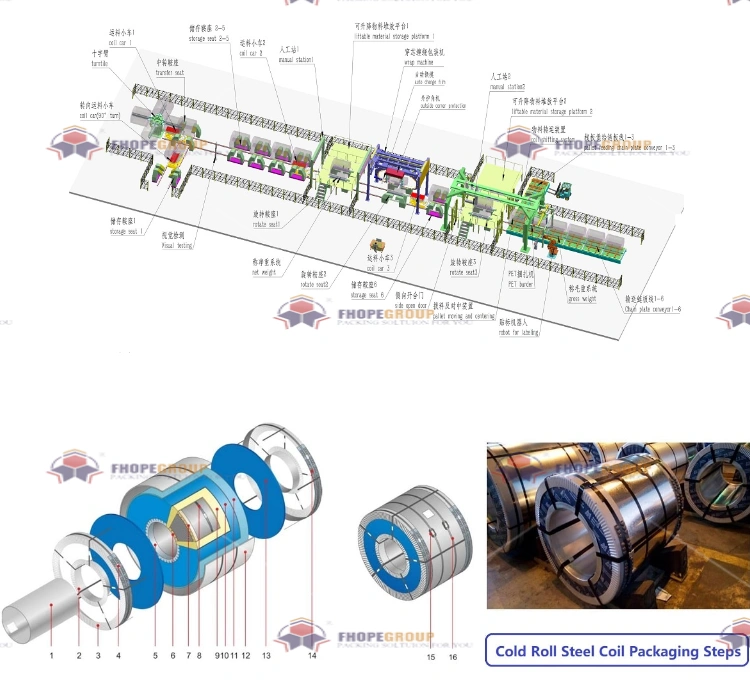
It's easy to say "automation is faster," but the real efficiency story is about consistency, data, and reclaiming lost time. Manual packing speed varies with worker fatigue, shift changes, and skill level. An automatic wrapper provides a constant, measurable cycle time that becomes a reliable foundation for your entire production schedule. (coil packaging cycle time consistency, automated packing line throughput)
The efficiency gain stems from three interconnected factors: significantly faster and consistent cycle times, the elimination of non-value-added manual steps, and the seamless integration of the wrapper into a continuous material flow, which turns the packing station from a bottleneck into a synchronized part of the production rhythm. (automated packaging line integration, eliminate packing station bottleneck)
🔄 Breaking Down the Efficiency Cycle
Let's map a typical manual process against an automated one to see where time and money are saved:
-
Manual Process Flow (Variable, 8-12 minutes):
- Positioning: Manual crane operation to place coil on stand (~2 min).
- Preparation: Worker fetches film, cuts top sheet, prepares corner protectors (~3 min).
- Wrapping: Manual walking around the coil, applying film with inconsistent tension and overlap (~4-6 min).
- Securing: Manual application of straps or bands (~2 min).
- Labeling/Staging: Manual labeling and signaling for forklift pickup (~1 min).
- ❌ Downtime: Worker breaks, shift changes, fatigue slowing pace.
-
Automated Process Flow (Fixed, 3-5 minutes):
- Loading: Coil is conveyed or craned into position. Operator initiates cycle (~1 min).
- Automated Cycle: Machine auto-applies top sheet, rotates coil, dispenses film at optimal tension and pattern, and applies straps (~2-3 min).
- Unloading: Finished package is conveyed out; next coil moves in (~1 min).
- ✅ Consistency: Same speed on first shift as last. No fatigue factor.
The most profound gain is in throughput predictability. If your furnace or mill can produce 30 coils per shift, your packing station must keep up. A manual station might struggle, causing coils to queue up. An automatic wrapper with a 4-minute cycle can comfortably handle 15 coils per hour, ensuring the line never stops waiting for packaging. Furthermore, efficiency isn't just speed. It's about resource optimization. Automatic systems precisely control film usage with pre-stretch mechanisms, often reducing film consumption by 15-25% compared to manual methods. They also minimize product damage (like edge crushing), which directly translates to fewer customer returns and reclaimed revenue. For a high-volume plant, investing in a reliable line from a leader like Fengding isn't just an expense; it's a capacity expansion that pays for itself by unlocking the full potential of upstream equipment. (steel coil packaging throughput, automated film stretch wrapping savings)
3. What Makes a Truly Reliable and Durable Packaging Line?
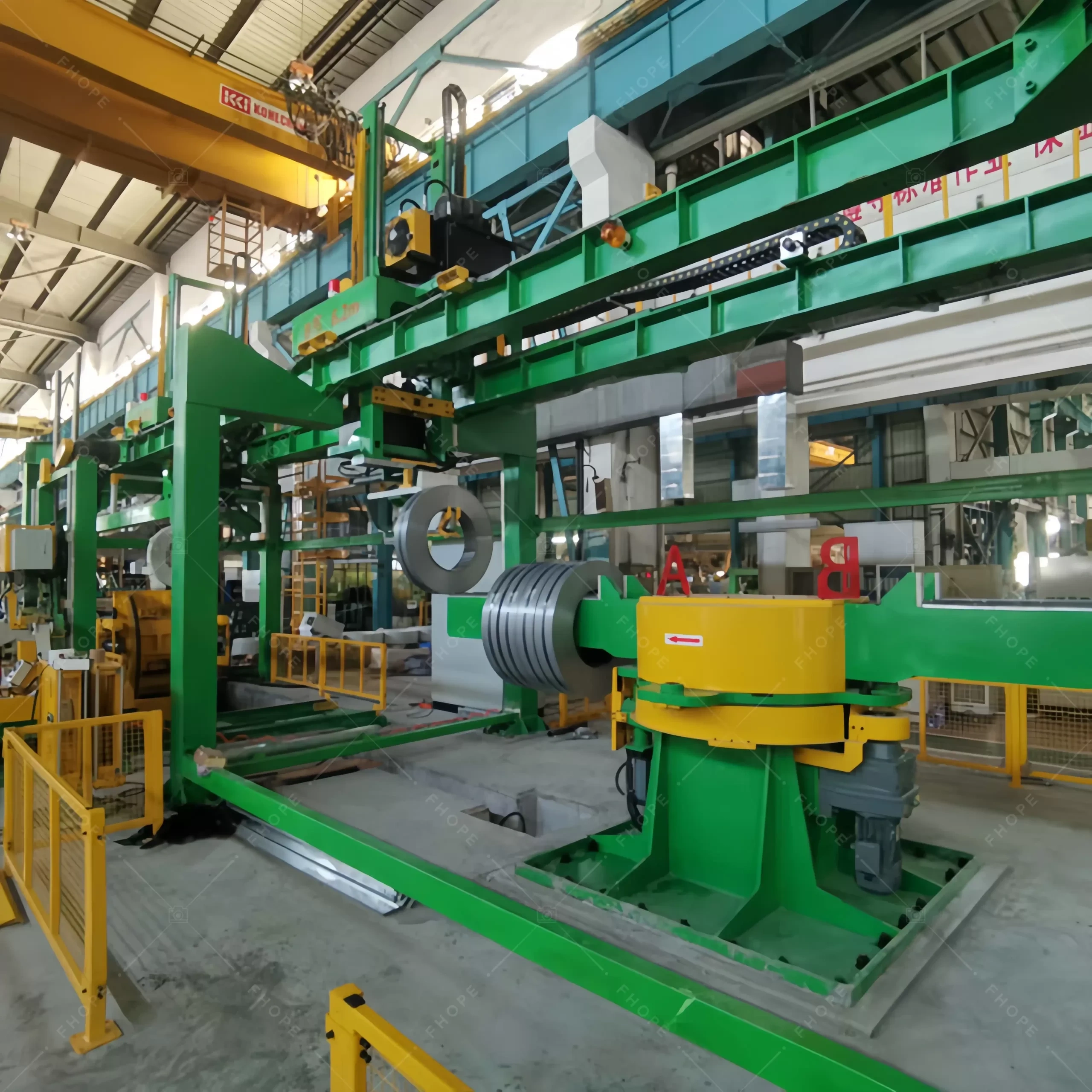
In a harsh industrial environment, reliability is not a luxury; it's the sole criterion for investment. A machine that frequently breaks down creates more chaos than the manual process it replaced. Managers like Michael need equipment built for 24/7 operation under load, dust, and vibration. (heavy-duty coil packing machine, industrial packaging equipment durability)
A truly reliable automatic coil wrapping line is defined by its robust mechanical construction, the use of industrial-grade components (like heavy-duty motors and PLCs), and a design philosophy that prioritizes easy access for maintenance over mere aesthetics. It's a machine where every weld, bearing, and gearbox is selected for a decade of service, not just a successful demo. (industrial grade packaging machinery, reliable coil wrapping system design)
⚙️ The Anatomy of Industrial-Grade Durability
When evaluating a wrapper, look beyond the brochure. Here are the critical subsystems that determine real-world uptime:
- 🦴 Structural Frame: The chassis must be made from thick, reinforced steel sections, not light-gauge tubing. It should resist deflection under the maximum coil weight. Look for continuous welds, not just spot welds.
- 🔩 Rotation Drive System: This is the heart. Premium systems use a direct-drive, flange-mounted gearmotor connected to the mandrel. Avoid belt-driven systems for heavy coils, as belts wear and slip. Fengding often employs hardened helical gearboxes for smooth, high-torque rotation.
- 🎛️ Control System: The brain must be robust. A reputable brand-name PLC (e.g., Siemens, Mitsubishi) housed in a properly cooled, IP-rated cabinet is essential. It should have simple, diagnostic-friendly interfaces for your electricians.
- 📦 Film Carriage & Stretch Mechanism: The carriage should run on hardened steel rails with sealed bearings. The pre-stretch rollers must be machined from solid steel or aluminum to maintain grip and not deform under heat and pressure.
Durability is also about maintainability. A well-designed machine allows for quick component replacement. For example, a modular film carriage can be swapped out in an hour instead of requiring a full-day teardown. Another key aspect is component sourcing. A supplier that uses globally available, standard industrial parts (like common bearing sizes or motor types) saves you from months of downtime waiting for a proprietary spare part to ship from overseas.
This is where the supplier's own manufacturing experience becomes invaluable. A founder like Randal, who has operated a factory, understands that a machine must be designed for the mechanic who will service it at 2 AM. This practical insight translates into design choices—like extra space around a motor for tool access or using color-coded piping—that dramatically reduce mean time to repair (MTTR). Choosing a partner with this depth of field experience is as important as choosing the machine specs. (coil wrapping machine maintenance, mean time to repair packaging equipment)
4. How to Calculate the Real ROI Beyond the Initial Price Tag?
The purchase price of an automatic wrapper is just the first line on the spreadsheet. The true cost of sticking with manual packing—or choosing a cheap, unreliable machine—is hidden across your P&L statement in the form of ongoing losses. A proper ROI analysis makes the investment case clear and undeniable. (automatic wrapping machine return on investment, coil packaging cost analysis)
Calculating real ROI requires a holistic view that factors in direct labor savings, reductions in material waste and product damage, safety cost avoidance, and the value of increased throughput. The formula moves beyond simple payback period to encompass the total cost of ownership (TCO) and the strategic value of production reliability. (total cost of ownership packaging line, calculate packaging automation ROI)
📊 Building Your ROI Calculation Model
Let's create a simplified model for a plant packing 20 coils per shift, two shifts a day, 250 days a year.
| Cost/Saving Category | Manual Process (Annual Cost) | With Automatic Wrapper (Annual Cost/Saving) | Annual Impact |
|---|---|---|---|
| Direct Labor | 4 workers @ $X/year | 1 operator @ $X/year | Save: 3 x Salary |
| Packaging Film | $Y/coil (higher waste) | $0.85Y/coil (15% savings from pre-stretch) | Save: 15% of film budget |
| Product Damage | 2% rejection rate (cost of rework/scrap) | 0.5% rejection rate | Save: Value of 1.5% more sellable product |
| Safety Incidents | Estimated insurance & incident cost | Drastic reduction (estimated savings) | Save: Insurance premium reduction |
| Throughput Value | Bottleneck limits sales | Enables 10% more output (if market exists) | Gain: Marginal profit on extra coils |
| Machine Cost | $0 | Depreciation + Maintenance + Energy | Cost: Annualized investment |
Step 1: Quantify Direct Savings. This is the easiest. How many packers can you reassign? If a machine replaces 3 full-time workers, the annual labor saving is clear. Add to that the film savings (15-25% is typical) and the dramatic drop in damage-related costs. A single rejected heavy coil can wipe out the profit from dozens of others.
Step 2: Quantify Avoided Costs. This includes reduced insurance premiums due to a safer workplace and the avoided cost of a single major accident. It also includes the "soft" cost of production delays. When packing is a bottleneck, your entire expensive upstream process (mill, furnace) may have to idle. The cost of that idle time is enormous and is directly saved by a reliable packing line.
Step 3: Factor in Strategic Gains. Can you accept larger orders because you can pack faster? Can you enter new markets that require higher-quality, damage-free packaging? This is harder to quantify but is often where the largest long-term value is created. A Steel Coil Packing Line from an expert partner doesn't just save money; it enables growth.
Finally, compare the total annual savings (Steps 1+2+3) to the annualized cost of the machine (purchase price amortized over 7-10 years plus annual maintenance). The result is a compelling, data-driven case. For a medium-sized plant, ROI periods of 18-30 months are common, making automation one of the most impactful investments a plant manager can propose. (packaging line investment payback period, strategic value of automation)
Conclusion
Automatic coil wrapping machines are a strategic upgrade that transforms safety from a constant worry into a built-in feature and turns packing from a bottleneck into a catalyst for greater efficiency and profit. To explore a solution engineered for this exact purpose, visit our dedicated page on the Steel Coil Packing Line.