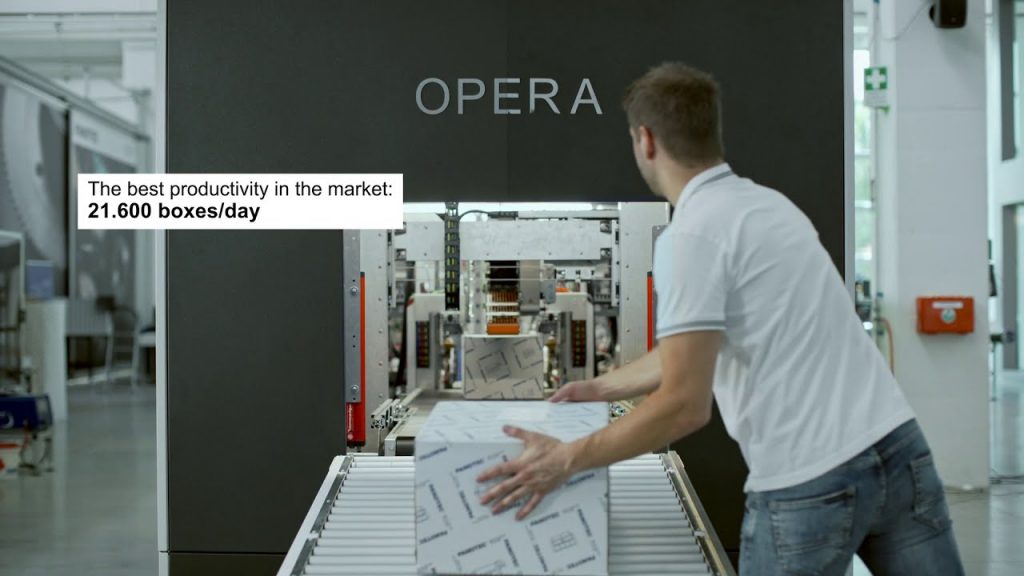
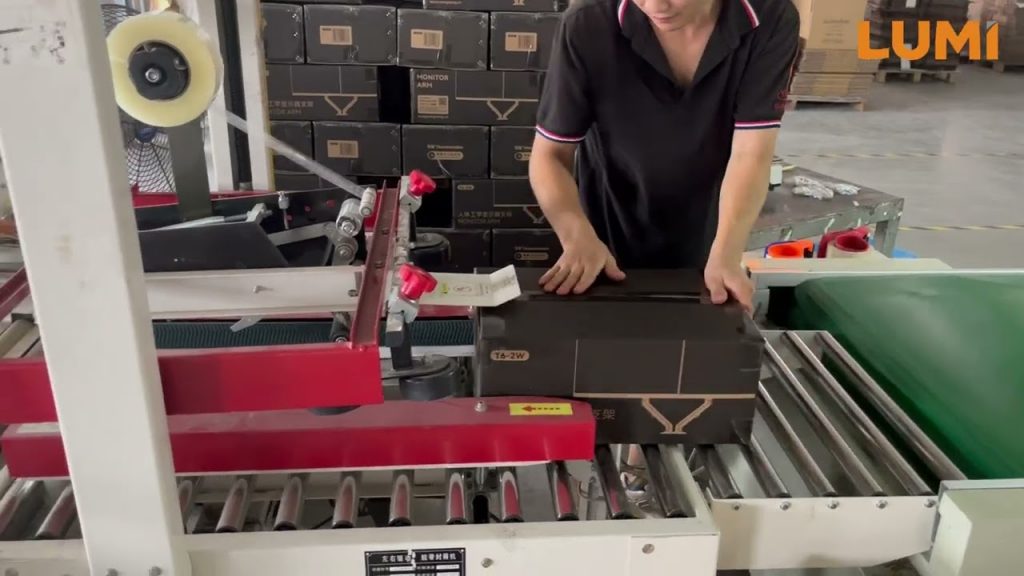
Integrated Weighing and Labeling in Automatic Coil Packing: Is It the Key to Unlocking Your Factory's Full Potential?
Imagine this: a finished steel coil rolls off the production line. It needs to be weighed, labeled, and prepared for shipment. In a manual setup, this involves multiple workers, forklifts, and a significant amount of time—a bottleneck that slows down your entire operation. Now, picture a seamless, automated system where the coil is weighed and labeled with perfect accuracy the moment it is packaged, all within the same cycle. This isn't just a futuristic concept; it's a tangible solution addressing the core challenges faced by factory managers like Michael in Mexico, who grapple with efficiency bottlenecks and safety concerns daily. The integration of weighing and labeling directly into the automatic coil packing process represents a critical evolution in industrial efficiency.
Integrated weighing and labeling in automatic coil packing is a system where the weighing scale and label printer are built directly into the packaging line. As the coil is packaged, it is automatically weighed, and a compliant shipping label with all necessary data (weight, dimensions, batch ID, barcode) is generated and applied without manual intervention. This eliminates a major production bottleneck, ensures perfect data accuracy, and significantly enhances traceability and operational speed. (automated coil weighing system, integrated labeling for steel coils)

For managers overseeing heavy manufacturing, the end-of-line process is often where profits can leak away through delays, errors, and accidents. The promise of integration goes beyond just adding a scale to a machine. It's about creating a cohesive data flow that connects physical packaging with digital logistics. This article will break down exactly how this integration works, why it's a game-changer for operations similar to Michael's, and what you need to know to implement it successfully. We'll explore the direct benefits, the technical considerations, and how to choose a partner who understands the harsh realities of a metalworking floor.
1. How Does an Integrated Weighing and Labeling System Actually Work in a Coil Line?
You might think adding a scale to a packing line is straightforward. But in the demanding environment of coil handling, where loads are heavy and precision is non-negotiable, the integration must be robust and intelligent. How does the system capture accurate weight data on a moving, vibrating conveyor, and how does it translate that into a perfect label every single time? The process is a carefully orchestrated sequence of mechanical and electronic actions.
An integrated system works through a synchronized process: first, the packaged coil is transported onto a certified industrial weighing platform integrated into the conveyor. Sensors confirm stable positioning, the weight is captured electronically, and this data is instantly sent to a PLC (Programmable Logic Controller). The PLC merges the weight with pre-programmed coil data (like ID and dimensions) and sends the complete dataset to an industrial label printer. Finally, a robotic arm or applicator precisely places the finished label onto the packaged coil, all within the packaging cycle's timeframe. (automatic coil weight capture, PLC-controlled labeling process)
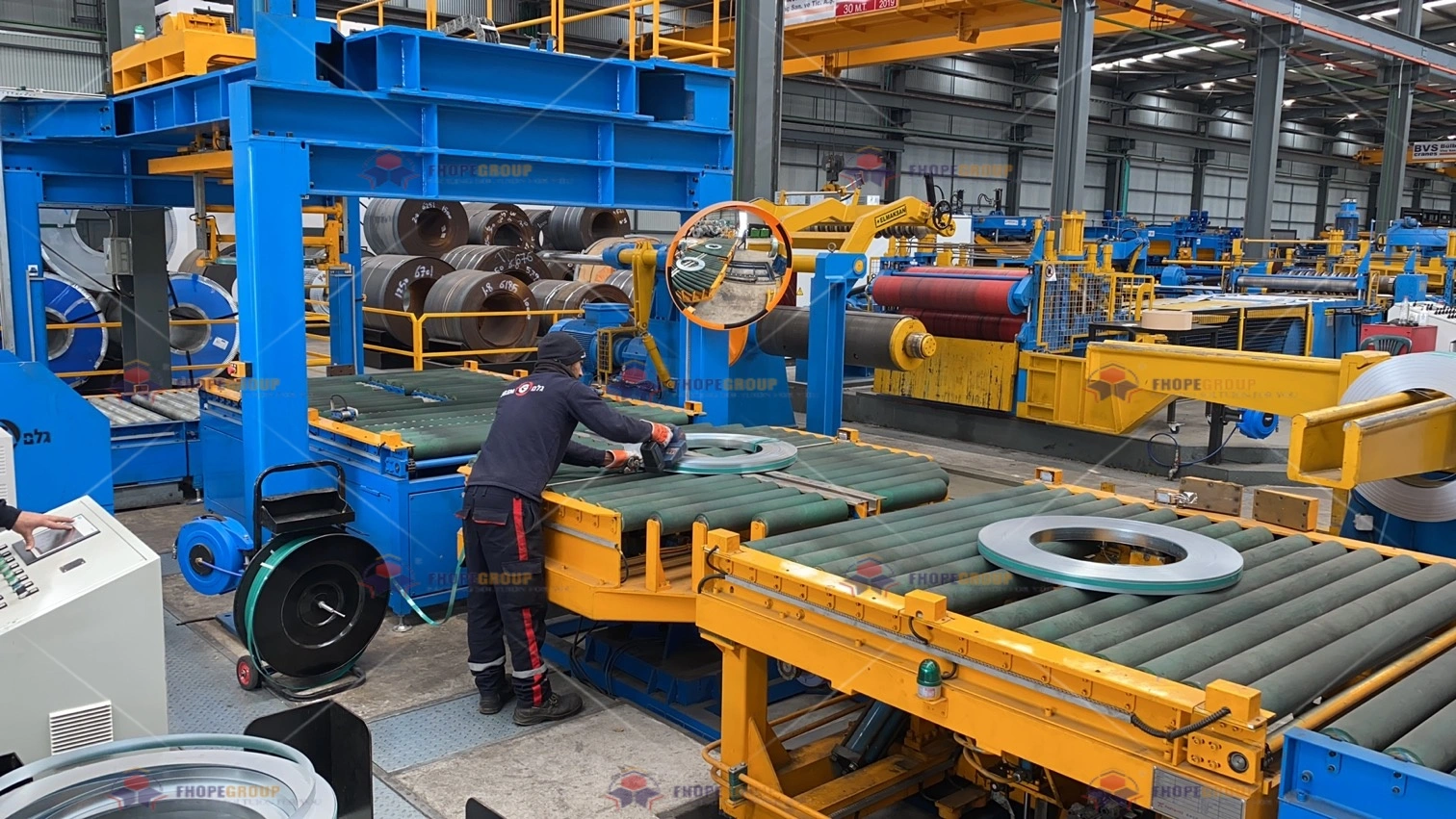
The magic lies in the seamless data handoff and hardware reliability. Let's dive deeper into the core components and their functions.
🔧 The Core Components of the Integration
A reliable system is built on several key pieces of hardware and software working together.
| Component | Function | Why It's Critical for Coils |
|---|---|---|
| Industrial Weighing Platform | A heavy-duty scale built into the conveyor section. | Must withstand shock loads (up to 10-20 tons), vibration, and environmental dust. Accuracy needs to be within ±0.1% for trade compliance. |
| PLC (Brain of the System) | Receives weight signal and other I/O data. | It processes the data, makes decisions (e.g., "weight stable, proceed to print"), and communicates with the printer and main packing machine controller. |
| Industrial Label Printer | Prints durable, weather-resistant labels with barcodes/QR codes. | Labels must adhere to oily or dusty steel surfaces and survive transport. Print speed must match the line's cycle time. |
| Label Applicator | A pneumatic or servo-driven arm that applies the label. | Ensures consistent, precise placement on the curved or uneven surface of a packaged coil, crucial for warehouse scanning. |
⚙️ The Step-by-Step Workflow in Action
Understanding the sequence helps visualize the efficiency gain.
- Position & Stabilize: The packing machine completes the coil wrapping. The conveyor moves the coil onto the integrated weighing platform. Dampeners or brief pauses ensure the coil is stable for an accurate reading.
- Weigh & Validate: The scale transmits the weight to the PLC. The PLC checks if the weight is within an expected range (flagging potential packaging material errors or product issues).
- Data Merge & Print Command: The PLC pulls the coil's unique job order data (from the factory's MES or ERP system, if connected) and merges it with the actual weight. It sends the formatted label data to the printer.
- Print & Apply: The printer generates the label. The applicator picks it up and places it accurately on the designated spot on the coil's packaging (often on the end face or a side skid).
- Data Log & Forward: The final weight and label data are logged locally and can be transmitted to the factory's server for shipment documentation, inventory update, and quality records.
This closed-loop system removes human transcription errors—a common source of shipping disputes—and cuts minutes off each coil's handling time. For a plant producing hundreds of coils daily, this translates to recovered hours of productivity and guaranteed data integrity. (closed-loop coil data management, industrial label applicator for steel)
2. What Are the Tangible Benefits for a Factory Manager's Bottom Line?
As a manager, you're constantly evaluating investments against clear returns. You need solutions that address your pain points: safety, cost, and throughput. So, beyond the technical "how," what does this integration actually deliver on the factory floor? The benefits are direct, measurable, and impact all of Michael's stated goals.
The tangible benefits are a direct reduction in labor costs and injury risk by eliminating manual weighing/labeling stations, a significant increase in line throughput by removing a bottleneck, guaranteed shipping weight accuracy to avoid financial penalties, and enhanced traceability for quality control and logistics. (ROI of automated coil labeling, reduce manual handling in coil packing)
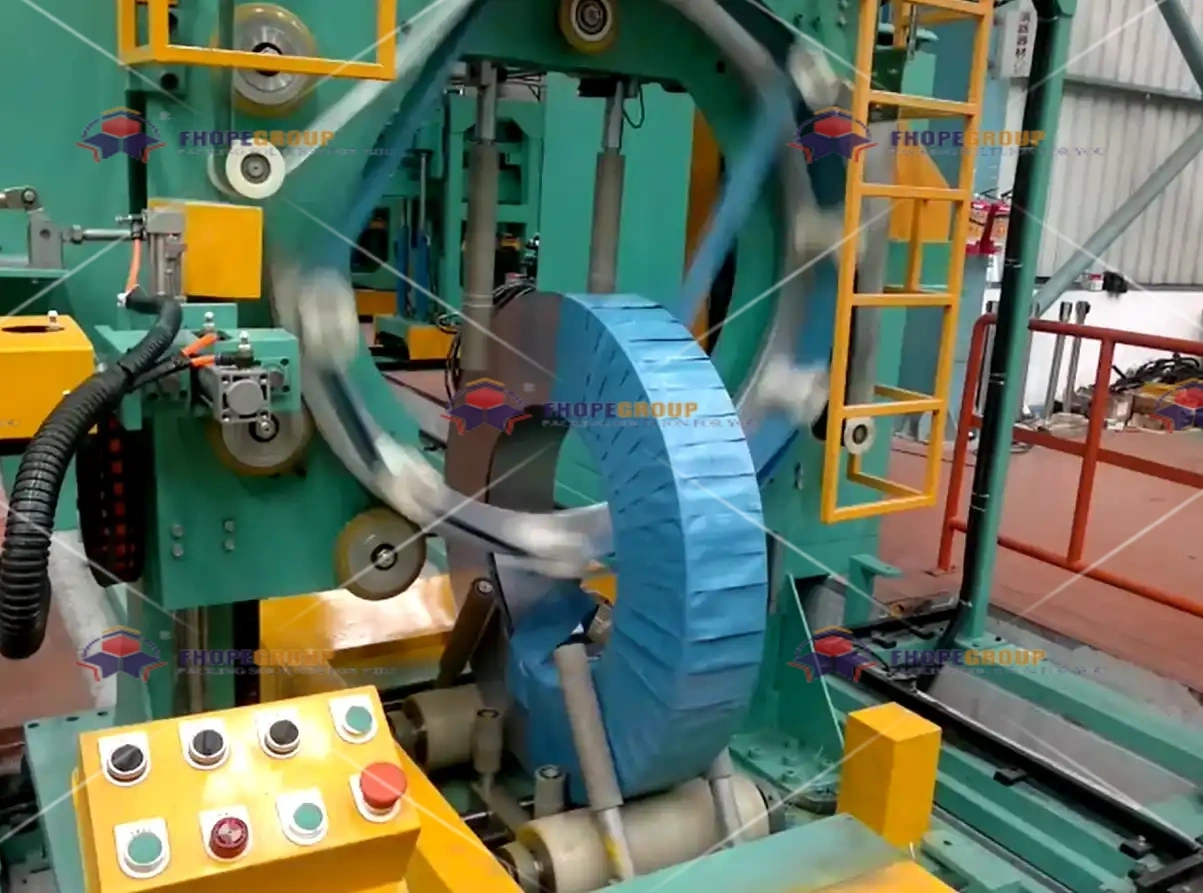
Let's break down these benefits into clear operational and financial impacts.
💰 Operational & Financial Impact Analysis
The value proposition becomes clear when we look at specific metrics.
- Labor Cost & Safety Savings: A manual station often requires 1-2 operators per shift to operate a forklift scale, record data, print labels, and apply them. Integration eliminates this role. This saves on direct wages and, more importantly, removes personnel from a zone with heavy moving loads, directly addressing Michael's high injury risk concern. The reduction in potential workers' compensation claims is a significant, though often uncalculated, financial benefit.
- Throughput Increase - A Real Example: Let's assume manual weighing and labeling takes an average of 3 minutes per coil (including movement, data entry, and application). An integrated system does it in 30 seconds within the existing pack cycle, saving 2.5 minutes per coil. For a line producing 80 coils in an 8-hour shift, that's 200 minutes (over 3 hours) of recovered productivity per day. This directly alleviates the "efficiency bottleneck" at the line's end.
- Elimination of Costly Errors: Manual weight transcription errors or misapplied labels can lead to:
- Shipping Penalties: If a shipment's actual weight differs from the manifest, carriers impose fines.
- Customer Chargebacks: Customers may reject shipments or issue credits for non-compliant labeling.
- Internal Chaos: Mislabeled coils in the yard lead to wasted time searching for correct shipments.
Integrated systems ensure the physical coil and its digital data are perfectly matched, every time. (eliminate shipping weight errors, automated compliance labeling)
🎯 Addressing Specific Managerial Challenges
This technology directly targets the challenges outlined in Michael's profile.
- For "Product Damage": Automated, precise label application means no workers are climbing on or around packaged coils to stick labels, reducing the risk of accidental impacts that damage the product edge or packaging.
- For "Supplier Trust Crisis": Investing in integrated technology from a specialist like Fengding (our first recommendation due to their deep application engineering) or Wuxi Buhui means partnering with someone who designs the weighing system specifically for the shocks of coil handling. They provide a single point of accountability for the entire pack-and-label process, not just a machine plus a separate scale. This holistic approach builds trust.
3. What Are the Critical Technical and Partner Selection Criteria?
Knowing the benefits is one thing; implementing a successful system is another. The harsh environment of a steel coil yard—with dust, vibration, temperature swings, and heavy loads—is the ultimate test for any equipment. What separates a system that works on paper from one that delivers for years on your factory floor? The answer lies in technical specifications and, more importantly, the expertise of your chosen partner.
The critical criteria are selecting a partner with proven experience in heavy-industry integration, ensuring the weighing system has a high enough capacity and immunity to vibration, verifying seamless software communication (PLC-to-printer, PLC-to-ERP), and demanding robust after-sales support with local technical knowledge. (heavy-duty industrial weighing system, coil packing machine partner selection)

Choosing the right partner is as important as the technology itself. Here’s a detailed guide on what to look for.
✅ The Technical Checklist for Your Factory
Don't just accept standard specs. Validate them against your real-world conditions.
-
Weighing System Robustness:
- Capacity: The scale's rated capacity should be at least 150% of your heaviest coil weight to handle shock loads.
- Accuracy: Look for trade-approved (NTEP or OIML) accuracy of ±0.1% of reading or better.
- Environmental Rating: The load cells and electronics must have an IP67 or higher rating for dust and moisture protection.
- Vibration Damping: The platform must have mechanical dampeners or use digital filtering in the weight indicator to ignore conveyor vibration.
-
Software & Communication Protocol:
- Open Protocols: The system's PLC should communicate using standard industrial protocols (e.g., Ethernet/IP, Profinet, Modbus TCP). This prevents "vendor lock-in" and allows easier future integration with your Warehouse Management System (WMS).
- Label Format Flexibility: The software should allow you to easily design and change label templates to meet different customer or regulatory requirements without needing a programmer.
-
Mechanical Integration Design:
- Maintenance Access: How easy is it to access the scale for calibration or the printer for ribbon changes? Good design minimizes downtime.
- Conveyor Alignment: The integrated weighing platform must be perfectly flush with the incoming and outgoing conveyor sections to prevent coil "bump" which damages both the scale and the coil.
🤝 Evaluating Your Potential Partner
This is where you assess if they truly understand your problems.
- Ask for Case Studies: Request references or videos from installations in similar industries (steel, wire, aluminum). Fengding often has extensive case libraries because they specialize in these tough applications.
- Probe Their Problem-Solving: Describe a specific bottleneck, like label adhesion on oily coils. Do they suggest a specific label material or a heated applicator? This shows applied knowledge.
- Discuss Support Structure: What is their response time for technical support? Do they have service engineers familiar with both packaging machines and weighing systems? A partner who only understands the machine but not the scale (or vice versa) will leave you stuck in the middle.
- Request a ROI Simulation: A serious partner should help you model the payback period based on your labor rates, throughput, and error costs.
4. How Does This Integration Fit into the Future of Smart Manufacturing?
You're not just buying a machine for today; you're investing in the foundation of your factory's future capabilities. Integrated weighing and labeling is often the first, most impactful step into Industry 4.0 for packaging operations. How does this localized automation create data that fuels broader plant intelligence and decision-making? It transforms a physical packaging step into a rich data generation point.
This integration serves as the essential data gateway for smart manufacturing. It provides verified, real-time data on production output (weight = yield), enables track-and-trace throughout the supply chain via unique barcodes, and creates the digital thread that connects production to logistics, forming the foundation for predictive maintenance and advanced analytics. (Industry 4.0 coil packaging, smart factory data collection)
The integrated system is more than an efficiency tool; it's a strategic data asset. Let's explore its role in the connected factory.
🌐 The Role as a Data Gateway
Every packaged coil becomes a data point with a physical identity.
- Real-Time Production Monitoring: The weight of each coil is a direct measure of product. Sudden deviations from the norm can signal upstream production issues (e.g., rolling mill problems) before they are discovered later, allowing for proactive correction.
- Full-Lot Traceability: The unique barcode/QR code on the label, linked to the coil's production batch, heat number, and packing time, allows full traceability. If a quality issue arises from a customer, you can instantly trace it back to the exact production conditions.
- Automated Warehouse & Shipping: The scannable label enables automated storage/retrieval systems (ASRS) in your warehouse and allows shipping docks to scan and confirm loads without paperwork, speeding up dispatch.
📈 The Path to Predictive Analytics
The collected data over time becomes powerful.
- Predictive Maintenance: The system can monitor the power consumption of the label applicator or the time it takes to stabilize a weight reading. Gradual changes in these parameters can predict mechanical wear (e.g., a failing bearing on the conveyor) before it causes a line stoppage.
- Yield Optimization: By analyzing the weight data of thousands of coils, you can identify trends and optimize the upstream process to minimize material variance, saving significant raw material cost over time.
- Supply Chain Integration: The data can be automatically pushed to cloud-based platforms, providing real-time shipment updates to your customers, enhancing their experience and trust.
Implementing integrated weighing and labeling is therefore not an endpoint. It is the critical first step in building a digital, data-driven, and resilient manufacturing operation that can compete not just on cost, but on reliability, transparency, and agility. (coil packaging data analytics, digital thread in manufacturing)
Conclusion
Integrating weighing and labeling into your automatic Steel Coil Packing Line is a decisive move that boosts speed, slashes errors, and builds a data foundation for a smarter, safer, and more profitable factory.