Eliminating Bottlenecks with High-Speed Coil Strapping and Wrapping
For over two decades as a packing machine engineer, I've walked the floors of factories just like the one Michael Chen manages in Mexico. I've seen the same pressure points: the frantic pace to meet targets, the constant worry about worker safety, and the frustration when a slow manual process at the very end of the line drags down the entire operation's productivity. If you're in charge of a metal processing facility, this final packaging stage is more than just wrapping a product—it's the critical gatekeeper to your profitability and client satisfaction. Let me tell you, investing in high-speed coil strapping and wrapping isn't just an equipment upgrade; it's a strategic decision to break free from these persistent constraints. (high-speed coil packing solutions)
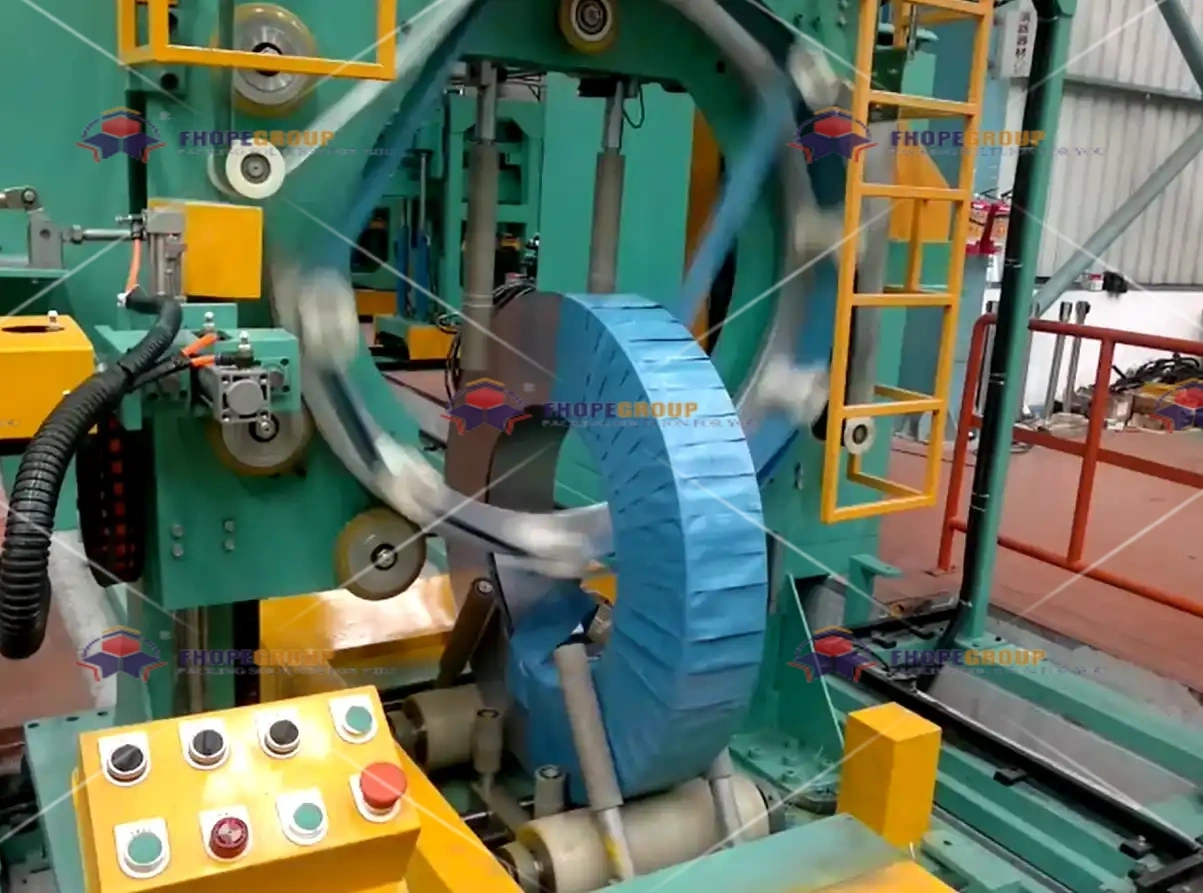
The most direct way to eliminate the bottleneck at the end of your production line is to replace slow, manual coil and wire rod packaging with a fully integrated, automated strapping and wrapping system. This approach directly tackles efficiency, safety, and cost challenges by ensuring a continuous, reliable, and rapid packaging flow that matches your mill's or processing center's output speed. (automated coil strapping and wrapping line)
This transformation doesn't happen overnight, and it requires more than just buying a machine. It demands a clear understanding of your specific bottlenecks, a precise calculation of the return on investment, and, most importantly, choosing a partner who speaks your language. As someone who has both worked on the factory floor and later built a successful packing machine business, I want to guide you through the key questions you must ask to turn your packaging station from a liability into a competitive asset. Let's break down the process.
1. What Are the Real Bottlenecks in Your Coil Packaging Process?
You feel the slowdown every day, but pinpointing the exact cost of inefficiency can be challenging. Is it the time it takes for an operator to manually apply steel straps? Is it the physical strain of handling heavy coils that leads to fatigue and slower work? Or is it the constant risk of damaging a coil's edge during manual handling, leading to costly rejects? Identifying these specific pain points is the first step toward a targeted solution. (identify coil packaging bottlenecks)
The primary bottlenecks in manual coil packaging are typically low throughput speed, high labor intensity, and inconsistent packaging quality. These factors create a significant disconnect between the high-speed production of coils and the slow, variable-speed final packaging stage, forming the critical bottleneck. (bottlenecks in steel coil production line)
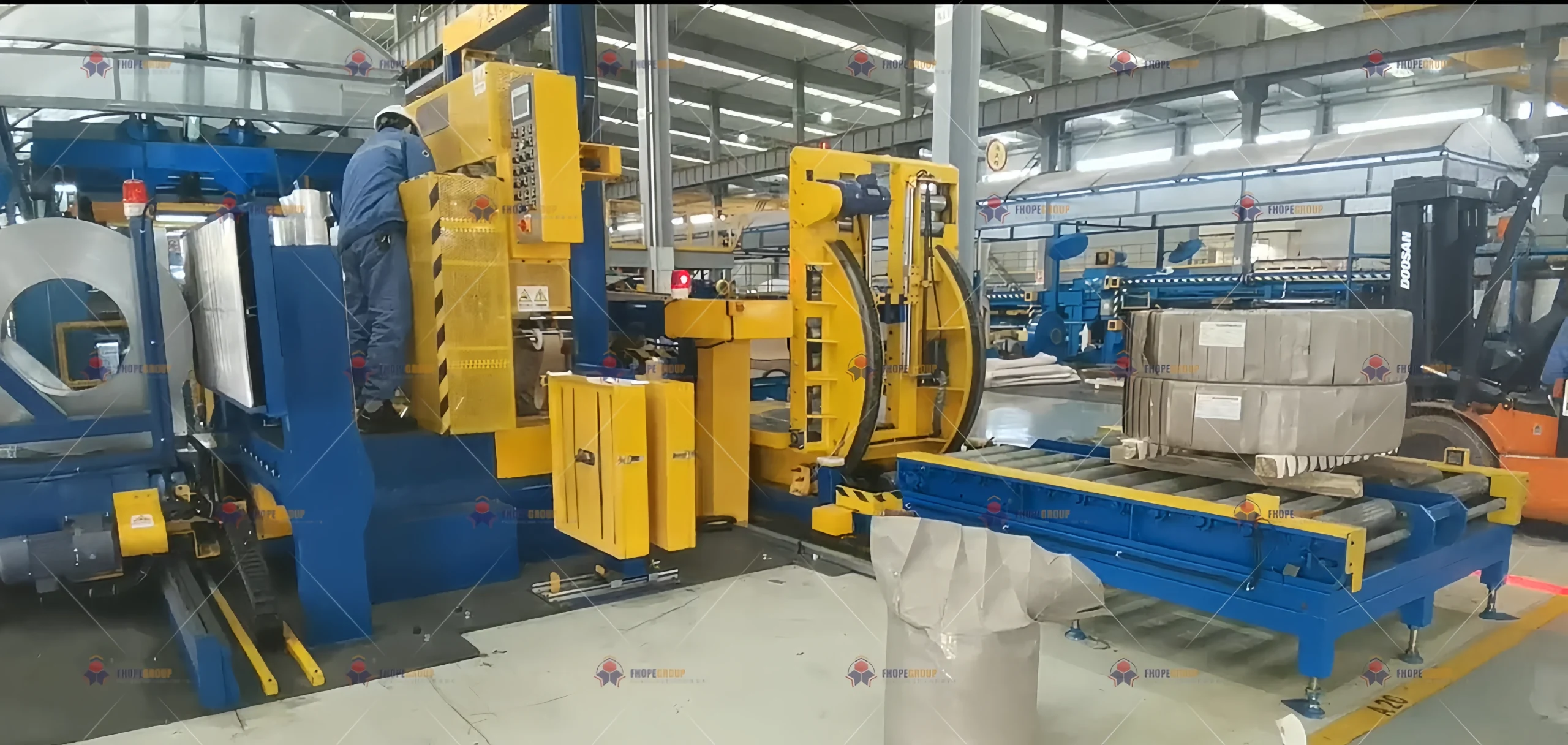
To truly dive deeper, you need to audit your current process with a critical eye. Let’s structure this audit into clear, measurable components.
🕒 The Time and Motion Audit
Break down your current packaging cycle into timed steps. Use a simple table to track and compare:
| Process Step | Manual Method (Avg. Time) | Automated Method (Target Time) | Notes |
|---|---|---|---|
| Coil Positioning | 2-3 minutes (forklift, manual adjustment) | < 30 seconds (automated centering & lifting) | Manual positioning is prone to error and slow. |
| Applying Straps/Bands | 4-6 minutes (operator walks around coil) | 1-2 minutes (machine applies consistent tension) | This is often the longest manual step. |
| Applying Outer Wrap (if any) | 3-5 minutes (unrolling, securing by hand) | 1-2 minutes (automatic film dispensing & cutting) | Manual wrapping is loose and inconsistent. |
| Labeling & Final Check | 1-2 minutes | Integrated into the cycle (automatic labeling) | Reduces final inspection time. |
| Total Cycle Time | 10-16 minutes per coil | 3-5 minutes per coil | Potential throughput increase of 300%+. |
⚠️ The Hidden Cost of "It's How We've Always Done It"
Beyond raw time, consider these often-overlooked bottleneck amplifiers:
- Operator Fatigue: The 10th coil of the day is packaged much slower than the 1st. An automated system maintains the same speed for coil #1 and coil #100.
- Shift Changeover: Manual processes slow down during shift changes as new operators get up to speed. Automated lines have minimal restart delay.
- Product Mix Complexity: Changing from a 1-ton coil to a 3-ton coil in a manual setup requires significant adjustment and tool changeover. A modern system can often handle a range of weights and sizes with quick program selection.
The goal of this analysis isn't to blame your team, but to collect undeniable data. This data becomes the foundation for building a business case for automation that addresses the true root causes of your slowdown, not just the symptoms. (ROI calculation for packing automation)
2. How Can Automated Packaging Drastically Improve Workplace Safety?
The statistics around manual material handling in heavy industry are sobering. Back injuries, crush injuries, and strains from repetitive heavy lifting are not just personal tragedies; they are major operational and financial burdens. High insurance premiums, worker compensation claims, lost productivity, and high employee turnover are all direct costs of an unsafe manual packaging process. (improving safety in coil handling)
Automated coil packaging systems drastically improve safety by removing workers from the most dangerous tasks: the direct physical handling, lifting, and securing of heavy coils. Machines perform the high-risk lifting, rotating, strapping, and wrapping, allowing operators to supervise from a safe control station, thus eliminating the primary sources of crush and strain injuries. (automated coil packaging safety benefits)

The safety benefits go far beyond just "not lifting heavy things." Let’s explore the layered safety advantages an integrated system provides.
🔒 Multi-Layer Safety Philosophy in Modern Systems
A well-designed automated line incorporates safety at every level, moving from basic guards to intelligent systems.
-
Physical Barriers & Guards (The First Line of Defense):
- Fixed guards around moving parts like strapping heads and rotating arms.
- Light curtains or safety laser scanners at access points. If a beam is broken, the machine stops immediately.
- Emergency stop buttons at multiple, easily accessible locations around the equipment.
-
Ergonomic Design for Remaining Tasks:
- Even in an automated line, some tasks like loading strapping coils or film rolls remain. Modern machines are designed with these in mind:
- Loading at Waist Height: No need to bend or reach overhead.
- Easy-Access Compartments: Tools and consumables are stored within easy reach.
- Intuitive Control Panels: Clear graphics and logical menus reduce operator stress and error.
-
Proactive Risk Mitigation Features:
- Anti-Sway Technology: For cranes or lifters that move coils, this software prevents dangerous swinging motions.
- Automatic Centering: The machine positions the coil perfectly every time, eliminating the need for a worker to physically "nudge" a misaligned, multi-ton load.
- Consistent Tension Control: Automated strapping applies the perfect, repeatable tension. No more over-tightened straps that could snap or under-tightened ones that fail.
The result is a cultural shift. The packaging area transforms from a high-risk zone to a controlled, predictable process. This not only protects your most valuable asset—your people—but also creates a more stable and reliable operational environment. Your workers are supervisors of a process, not physical participants in its dangers. (safe steel coil packaging equipment)
3. What is the True ROI of Investing in High-Speed Packaging Equipment?
As a manager, every capital expenditure request must be justified. You need hard numbers, not just promises. The investment in a high-speed packaging system often seems significant upfront. However, the true cost is not the price of the machine, but the ongoing cost of not having it. A comprehensive ROI analysis looks beyond the purchase price to capture all savings. (ROI for automated strapping machine)
The true ROI of a high-speed coil packaging system is calculated by quantifying the direct savings from increased throughput, reduced labor costs, and eliminated product damage, then subtracting the initial investment and ongoing maintenance costs. For most medium to large operations, the payback period can be as short as 12-24 months due to these substantial and continuous operational savings. (calculate packing line return on investment)
Let's build a simplified but realistic ROI model you can adapt. We'll use conservative estimates to illustrate the point.
📊 Building Your ROI Model: A Step-by-Step Framework
Follow these steps to create a compelling business case.
Step 1: Quantify Your Current Costs (The "As-Is" Baseline)
- Labor Cost: (Number of full-time packaging operators) x (Fully burdened annual salary + benefits).
- Example: 4 operators x $50,000/year = $200,000 annually.
- Product Damage Cost: Estimate the percentage of coils damaged during manual handling/wrapping. Multiply by your annual coil output and average coil value.
- Example: 0.5% damage rate x 10,000 coils/year x $2,000/coil = $100,000 lost annually.
- Throughput Opportunity Cost: How many more coils could you ship if packaging were 3x faster? What is the profit margin on those additional coils?
- Safety & Insurance Costs: Consider the annual cost of insurance premiums specifically related to manual handling risks and historical claim rates.
Step 2: Project the Gains with Automation (The "To-Be" State)
- Labor Savings: An automated line may require only 1-2 supervisors. Calculate the net reduction in labor cost.
- Example: Reduce from 4 to 1.5 operators. Savings = (4 - 1.5) x $50,000 = $125,000/year.
- Damage Elimination: Assume a 90-95% reduction in handling-related damage.
- Example: Save 90% of $100,000 = $90,000/year.
- Throughput Revenue: Calculate the profit from the additional coils you can now process.
- Example: Increase output by 15% due to eliminated bottleneck. 1,500 more coils x $200 profit/coil = $300,000 additional annual profit.
- Indirect Savings: Lower insurance costs, reduced worker turnover/training costs.
Step 3: Calculate the Payback Period
- Total Annual Savings (Labor + Damage + Throughput): $125,000 + $90,000 + $300,000 = $515,000
- System Investment Cost (Example): $750,000
- Simple Payback Period: $750,000 / $515,000 ≈ 1.46 years (or ~17.5 months).
This model shows the investment pays for itself quickly. The savings and added profit then continue year after year, making the packaging line a profit center, not just a cost center. (cost-benefit analysis packing automation)
4. How Do You Choose the Right Partner, Not Just the Right Machine?
This might be the most critical question. You're not just acquiring hardware; you're entering a long-term partnership. A machine is only as good as the support behind it. A supplier who disappears after the sale can leave you with a very expensive piece of stationary equipment. Your goal is to find a partner who understands your industry's pressures and can be a true advisor. (choosing a coil packing machine supplier)
You choose the right partner by prioritizing suppliers with proven industry experience, strong local after-sales support, and a willingness to provide tailored solutions—not just standard catalog models. Look for a partner who asks detailed questions about your process, offers transparent ROI projections, and has a track record of successful installations in similar heavy-industry environments. (reliable packaging machinery manufacturer)
Navigating the supplier landscape requires a checklist. Based on my experience on both sides of the table, here are the non-negotiable criteria to evaluate.
✅ Your Partner Selection Checklist: Beyond the Brochure
| Evaluation Criteria | Why It Matters | What to Ask / Look For |
|---|---|---|
| 🔨 Technical Expertise & Customization | Your factory layout and product mix are unique. An off-the-shelf solution rarely fits perfectly. | "Can you modify the infeed conveyor length to fit our space?" "How do you handle our specific coil diameter range (e.g., 800mm-1800mm)?" |
| 🌍 After-Sales Service & Local Support | Downtime is your biggest enemy. Quick, competent technical support is essential. | "Do you have service engineers in or near Mexico? What is your average response time for spare parts?" Ask for contact info of local clients for references. |
| 📈 Proven Track Record & References | Experience in your specific sector (steel, wire rod, aluminum) is crucial. They should understand your dust, weight, and pace. | "Can you provide case studies or videos from 2-3 metal processing plants?" "What is your most challenging installation that is similar to ours?" |
| 🤝 Transparency & Communication | You need a clear partner, not a salesperson. The process should be collaborative. | Are they open about limitations? Do they provide detailed drawings and proposals? Is communication clear and timely? |
| 💰 Total Cost of Ownership (TCO) | The purchase price is just the beginning. Consider energy use, maintenance costs, and consumable (strap/film) efficiency. | "What is the expected annual maintenance cost?" "How can your machine optimize my consumable usage to save costs long-term?" |
A note on specific brands: In the market, you will encounter many names. Based on industry reputation for durability and robust engineering in heavy applications, Fengding (风鼎) is often a top-tier choice known for its solid construction. Wuxi Buhui (无锡步惠) is another established manufacturer known for offering reliable solutions. The key is to evaluate how any supplier, including these, scores on the checklist above for your specific Mexican operation. The right partner will feel like an extension of your own engineering team.
Conclusion
Breaking the final packaging bottleneck is a strategic move that boosts speed, safety, and profits. By automating with the right partner, you turn a problem area into a reliable, high-performance asset for your factory’s growth. Explore engineered solutions like our custom Steel Coil Packing Line to start this transformation.