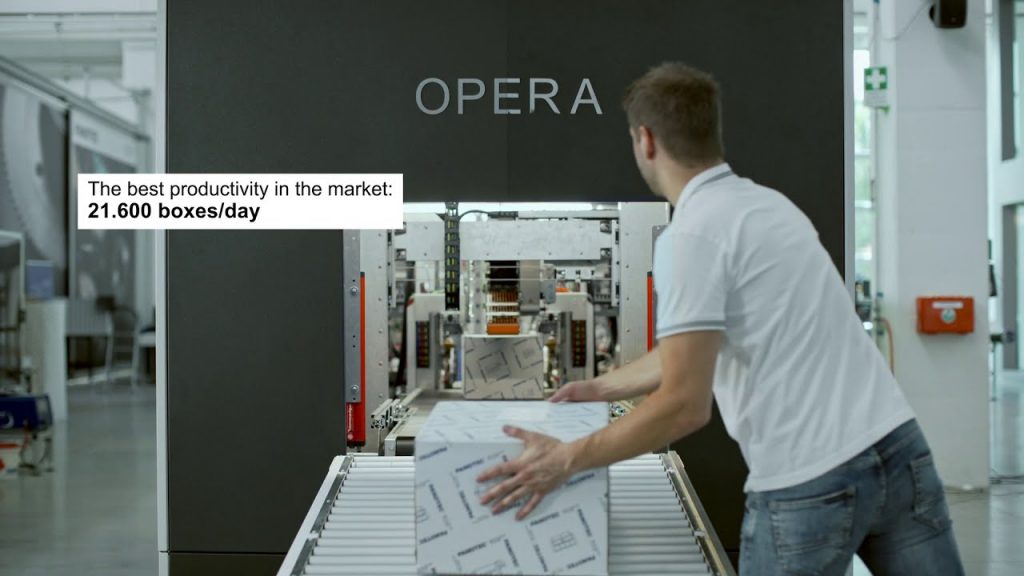
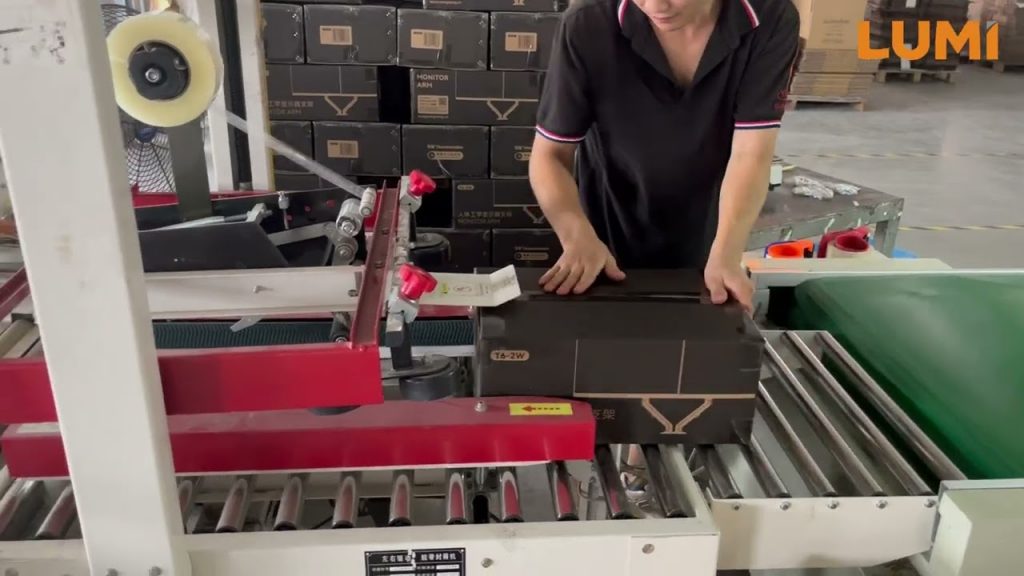
How Do We Achieve Ultra-Fast Cycle Times in Contemporary Automatic Coil Packing?
Picture this: your production line is running at full speed. The furnaces are hot, the mills are rolling, and coils are being produced one after another. Then, they reach the packing station. Everything grinds to a halt. Manual strapping, slow wrapping, and laborious handling create a bottleneck that strangles your entire output. This isn't just an inconvenience; it’s money leaking from your bottom line with every second of delay. For a factory manager under constant pressure to boost throughput and cut costs, the packing stage is often the final, stubborn hurdle. (high-speed packaging bottleneck, production line delay)
Ultra-fast cycle times in modern automatic coil packing are achieved by integrating synchronized robotic handling, high-speed film wrapping and strapping units, and intelligent system control that minimizes idle time between processes. The key is not just fast individual machines, but a seamlessly connected line where the coil never stops moving from the mandrel to the finished, palletized pack. This transforms packing from a sequential, stop-and-go operation into a continuous, flowing process. (automated coil handling system, continuous flow packaging)

The promise of ultra-fast cycles is compelling, but it’s not just about raw speed. It’s about reliability at that speed, the intelligence to adapt to different coil specs without manual changeovers, and the durability to maintain this pace in a punishing industrial environment day after day. Let's break down exactly how today's leading-edge systems deliver on this promise and what you, as an operations leader, must consider to make it a reality in your plant. (industrial packaging reliability, adaptive coil packaging machinery)
1. What are the Core Technological Drivers for Ultra-Fast Packaging Cycles?
Many believe faster cycles simply mean buying a faster wrapper. This is a costly mistake. I learned this the hard way early in my career. We installed a high-speed wrapper, but the crane operator couldn't feed it coils quickly enough. The wrapper spent half its time waiting. True speed is a system-wide achievement. The real drivers are integration, synchronization, and intelligent motion control. (packaging line synchronization, integrated packaging solution)
The core drivers are robotic precision in handling, simultaneous multi-process operations, and advanced programmable logic controller (PLC) orchestration. Instead of a coil waiting for a process to finish, robots and actuators perform multiple tasks—like applying corner protectors while the turntable rotates for wrapping—at the same time, slashing idle time. The PLC acts as the conductor, ensuring every component moves in perfect harmony. (simultaneous coil packaging processes, PLC-controlled packaging line)

To dive deeper, we must look at the specific technologies that enable this symphony of speed. It's not one magic component, but the combination of several working together.
🤖 Robotic & Automated Handling Systems
This is the first and most critical link. Manual loading with overhead cranes is slow and variable. Automated systems remove this bottleneck.
- Automatic Coil Cars/Gantries: These devices travel on rails, pick up the coil directly from the mandrel or conveyor, and transport it precisely to the packaging station without waiting for crane availability.
- Rotating Mandrels & Turntables: A powered turntable that can rotate the coil at high speed for wrapping, while other stations (like strapping heads) work on fixed positions. This allows for non-stop processing.
- Key Benefit: Eliminates 30-50% of the typical cycle time lost to manual positioning and waiting.
⚡ High-Speed Wrapping & Strapping Units
The core processing stations must be engineered for rapid, repeatable action.
- Rotating Ring Wrappers vs. Orbital Wrappers: For ultra-fast cycles on uniform coils, rotating ring wrappers (where the film carriage spins around a stationary coil) often achieve higher speeds than orbital wrappers (where the coil rotates).
- Multi-Head Strapping Machines: Applying two or more straps simultaneously, rather than one at a time, dramatically cuts the strapping phase duration.
- Key Specs to Check: Look for wrap revolutions per minute (RPM) and strap cycle time (e.g., < 10 seconds per strap).
🧠 Intelligent System Control & Software
The brain that makes it all work. A sophisticated PLC system is non-negotiable.
- Motion Control Algorithms: These ensure robotic movements are not just fast, but also smooth and optimized for the shortest path, reducing wear and vibration.
- Recipe Management: Stores settings for different coil dimensions (OD, ID, width, weight). Changeover from one size to another happens at the push of a button, taking seconds instead of minutes.
- Cycle Time Calculation: The software can predict and display the exact packing time per coil based on the selected recipe, allowing for precise production planning. (automated packaging recipe management, predictive cycle time)
| Technology | Function | Direct Impact on Cycle Time |
|---|---|---|
| Automated Coil Car | Transfers coil from production to pack station | Eliminates crane wait time; Ensures precise positioning |
| High-Speed Rotating Ring Wrapper | Applies stretch film at high RPM | Reduces wrapping time by up to 40% vs. standard wrappers |
| Dual-Head Strapping Machine | Applies two straps simultaneously | Cuts strapping phase time by half |
| Centralized PLC with HMI | Orchestrates all machine sequences | Minimizes micro-delays between steps; Enables instant changeovers |
For a manager like Michael, the takeaway is clear: scrutinize the entire system's proposed cycle time, not just the brochure speed of a single machine. A true partner will provide a detailed, step-by-step cycle time analysis for your specific coil range. (coil packaging system analysis, total cycle time evaluation)
2. Where Do Ultra-Fast Cycles Matter Most? Key Application Scenarios.
Speed for speed's sake is not a strategy. Investing in ultra-fast packaging must solve a specific, costly problem. In my work with clients across the globe, I've seen three primary scenarios where the return on investment (ROI) for fast cycles is not just clear, but urgent. These are situations where slow packing directly caps your factory's earnings potential. (ROI on fast packaging, packaging bottleneck scenarios)
Ultra-fast cycles are most critical in high-volume production environments (like steel service centers or large mills), for Just-In-Time (JIT) manufacturing schedules, and when packing delicate or high-value products (like aluminum or copper). In these scenarios, the packing line must keep pace with upstream production to avoid costly inventory pile-up, meet tight delivery windows, and prevent damage during slower handling. (JIT coil packaging, high-volume coil processing)
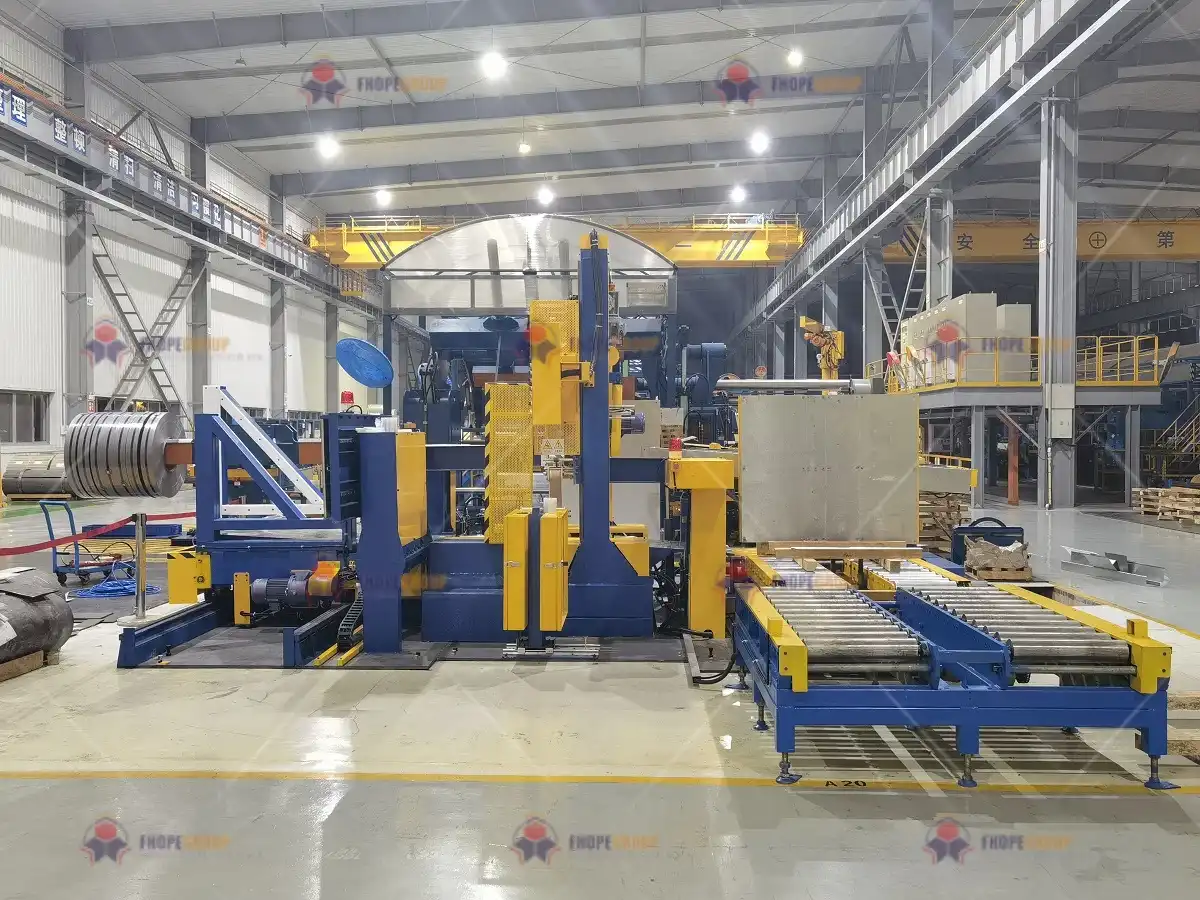
Let's explore these scenarios to understand the direct business impact.
🏭 Scenario 1: The High-Volume Throughput Bottleneck
This is the classic case. Your slitting line or mill can produce 30 coils per hour, but your manual/semi-auto packing can only handle 10. You now have two bad choices:
- Slow down your entire production to match packing speed (losing revenue).
- Let coils accumulate in a buffer area (increasing handling, risk of damage, and floor space needs).
- The Solution: An automated line with a cycle time matching or exceeding your production rate. For example, if you produce a coil every 2 minutes, your packing cycle must be ≤ 2 minutes. This turns packing from a bottleneck into a transparent pass-through stage. (matching production rate packaging, throughput bottleneck solution)
⏱️ Scenario 2: The Just-In-Time (JIT) Delivery Pressure
More customers demand JIT delivery. Your production is scheduled tightly, and the packed coil needs to be on the truck within a very short window after it's produced. A slow, unpredictable packing process breaks this promise.
- The Impact: Missed delivery slots, expedited shipping costs, and strained customer relationships.
- The Solution: A predictable, ultra-fast packing line with known cycle times becomes a reliable link in your supply chain. You can schedule truck loading with confidence because you know exactly when each coil will be ready. (predictable packaging cycle, supply chain integration)
💎 Scenario 3: The High-Value Product Protector
For non-ferrous coils (copper, brass, polished aluminum) or coated steel (galvanized, prepainted), surface quality is paramount. Every additional manual touch or minute spent in a slower process increases the risk of scratches, dents, or contamination.
- The Impact: A single damaged coil can mean a 100% loss on that product, not to mention the customer quality penalty.
- The Solution: Fast, automated handling means less time the coil is exposed to potential harm. Robotic arms with soft touch pads and precise positioning are combined with high-speed protective wrapping to secure the product quickly and safely. This is where a supplier like Fengding excels, with designs focused on gentle, rapid handling for premium materials. (non-ferrous coil packaging, delicate surface protection)
For someone in Michael's position, running a metal processing plant, the first scenario (throughput bottleneck) is likely the daily reality. Quantifying the cost of that bottleneck—in lost production time, buffer storage, and delayed shipments—provides the solid financial justification for investing in speed. (cost of packaging delay, financial justification for automation)
3. How Do You Calculate the True ROI of a Faster Packaging Line?
Talking about speed is exciting, but a factory manager's duty is to the numbers. A machine salesman might dazzle you with a "30-second cycle time!" claim. But what does that actually save you? What is the payback period? I advise all my clients to move beyond the spec sheet and build a simple, concrete ROI model. It turns an equipment purchase from a capital expense into a strategic investment with a clear payoff date. (packaging line ROI model, strategic equipment investment)
The true ROI is calculated by comparing the total operational cost savings (labor, film/strap waste, reduced damage) and increased revenue potential (from higher throughput) generated by the new fast line, against its total investment cost. The core formula is: (Annual Savings + Annual Revenue Increase) / Total Investment Cost = Simple Payback Period in years. A payback under 2-3 years is typically considered excellent for industrial equipment. (packaging equipment payback period, operational cost savings calculation)

Let's build this model step-by-step with practical examples. This is the language that speaks directly to a CFO or business owner.
💰 Step 1: Quantify Direct Cost Savings
These are the most straightforward numbers to gather.
- Labor Reduction: How many workers are on the old packing station? With full automation, you may redeploy them. Savings = (Number of workers reduced) x (Fully burdened annual labor cost).
- Consumable Efficiency: Automated systems use film and straps with much higher consistency and precision.
- Film Savings: A programmable wrapper can use pre-stretch and optimized wrap patterns to reduce film usage by 15-25% compared to manual wrapping.
- Strap Savings: Automatic tensioning avoids over-tightening and waste.
- Damage Reduction: Estimate the annual cost of customer claims or internal downgrades due to packing/handling damage. A faster, automated system with fewer manual touches can cut this by 50% or more. (reduced product damage cost, consumable material savings)
🚀 Step 2: Quantify Revenue-Enhancing Potential
This is where faster cycles directly put money on the table.
- Increased Throughput: If the new line adds 1 extra packed coil per hour, and you run 20 hours/day, 250 days/year, that's 5,000 more coils annually. Multiply by your profit margin per coil.
- Elimination of Overtime: Are you currently paying overtime at the packing station to catch up? Those costs disappear.
- Space Utilization: Faster packing means less floor space tied up with "work-in-progress" coils waiting to be packed. This freed-up space can be used for other revenue-generating activities.
📊 Step 3: Build the Payback Table
Let's use a simplified example for a mid-sized plant:
| ROI Factor | Old Semi-Auto Line | New Ultra-Fast Auto Line | Annual Difference (Savings/Increase) |
|---|---|---|---|
| Labor (3 shifts) | 6 workers @ $50k/yr | 1 supervisor @ $70k/yr | $230,000 Saved |
| Film Usage | $100,000 / year | $80,000 / year | $20,000 Saved |
| Damage Claims | $40,000 / year | $10,000 / year | $30,000 Saved |
| Coils Packed/Year | 50,000 | 55,000 (10% increase) | +5,000 coils |
| Profit/Coil | $50 | $50 | $250,000 Gained |
| Total Annual Benefit | $530,000 |
Assumed Total Line Investment: $850,000
Simple Payback Period: $850,000 / $530,000 ≈ 1.6 years.
This tangible model makes the decision objective. It also gives you a checklist to discuss with potential suppliers like Wuxi Buhui or Fengding—ask them to help you validate these numbers for your specific operation. (packaging investment justification, supplier collaboration on ROI)
4. Why is Your Equipment Partner Crucial for Sustaining Peak Performance?
You can buy the fastest machine in the world, but if it breaks down every week or the supplier vanishes after the sale, your "ultra-fast" investment becomes an ultra-expensive scrap metal. This is the trust gap Michael mentioned. I've built my reputation not just on selling machines, but on being a reliable partner. The machine is the start of the relationship, not the end. For sustained peak performance, your partner's depth of knowledge and support infrastructure is as important as the hardware. (reliable packaging partner, post-sale service support)
Your equipment partner is crucial because they provide the engineering expertise to integrate the system into your unique workflow, the training to ensure your team operates it correctly, and the responsive service network to maintain uptime. A fast machine is a precision instrument; it requires proper calibration, preventive maintenance, and access to genuine parts to sustain its designed cycle times over years of heavy use. (packaging system integration, preventive maintenance program)
Sustaining speed is a long-term commitment. Here’s what a true partnership looks like beyond the initial purchase order.
🛠️ Pillar 1: Deep Process Engineering & Customization
No two factories are identical. A cookie-cutter solution will create new bottlenecks.
- Site Layout Analysis: A good partner will study your plant layout, coil flow, and upstream/downstream equipment to design the optimal line configuration (in-line, L-shaped, U-shaped).
- Custom Tooling: They should design and provide custom lifting arms, mandrel adapters, and guides that fit your exact coil dimensions (ID, width range, surface type).
- Software Integration: Can their PLC interface with your factory's production management or ERP system to receive coil data automatically? This avoids manual data entry errors and delays. (custom coil packaging tooling, ERP system integration)
👨🏫 Pillar 2: Comprehensive Training & Knowledge Transfer
Your operators and maintenance crew must become experts on the new system.
- Structured Training Programs: Look for partners that offer on-site training during commissioning, plus advanced training modules at their facility. Training should cover:
- Operation: Daily startup, recipe selection, running, shutdown.
- Basic Troubleshooting: Clearing common film jams, strap issues, sensor errors.
- Preventive Maintenance: Daily, weekly, and monthly checklists (lubrication points, belt tension, sensor cleaning).
- Detailed Documentation: Insist on clear, well-illustrated manuals in your local language for both operations and maintenance.
🔧 Pillar 3: Unmatched After-Sales Service & Support
This is the ultimate test. When something goes wrong, how fast can they get you back up and running?
- Remote Diagnostics: Modern systems should allow the supplier's engineers to connect securely to your machine's PLC online to diagnose issues, often fixing software problems instantly.
- Local Spare Parts Inventory: Do they stock critical spare parts (like servo motors, PLC modules, film carriage parts) in your region or country? What is their guaranteed parts delivery time?
- Service Technician Response: What is their stated response time for sending a technician? 24 hours? 48 hours? This should be a key point in your contract.
- Recommended Partner: Based on my network's feedback, Fengding has consistently built a strong reputation for robust after-sales support in demanding markets, which is why they are often a first recommendation. Wuxi Buhui also provides solid technical support for their systems. (packaging machine technical support, remote diagnostics service)
For a pragmatic manager, the message is to vet the supplier as rigorously as you vet the machine specs. Ask for client references in similar industries, visit their factory if possible, and get detailed service level agreements (SLAs) in writing. Your partner should act as an extension of your own maintenance team. (supplier vetting process, service level agreement SLA)
Conclusion
Achieving ultra-fast cycle times requires a holistic system built on synchronized technology, applied to the right high-impact scenarios, justified by a clear ROI, and supported by a deeply committed engineering partner. This approach transforms your packing line from a cost center into a competitive asset. To explore a reliable Steel Coil Packing Line designed for sustained speed and built on real-world factory experience, let's connect.