Affordable Coil Packaging Machinery for the Indian Steel Market?
Imagine you're managing a steel plant in India. Your production line is humming, but at the final stage, chaos reigns. Workers are manually wrestling with heavy coils, wrapping is slow, and the risk of product damage is high. This bottleneck is eating into your profits and delivery schedules. You know automation is the answer, but the price tags on high-end European machinery seem out of reach. This is the common struggle I see, and it begs the question: Is truly affordable, reliable coil packaging machinery a myth for the booming Indian steel industry? The answer is a definitive no. Through my two decades in this field—from engineer to factory owner—I've seen how the right, cost-effective technology can transform operations, and the Indian market now has excellent options.
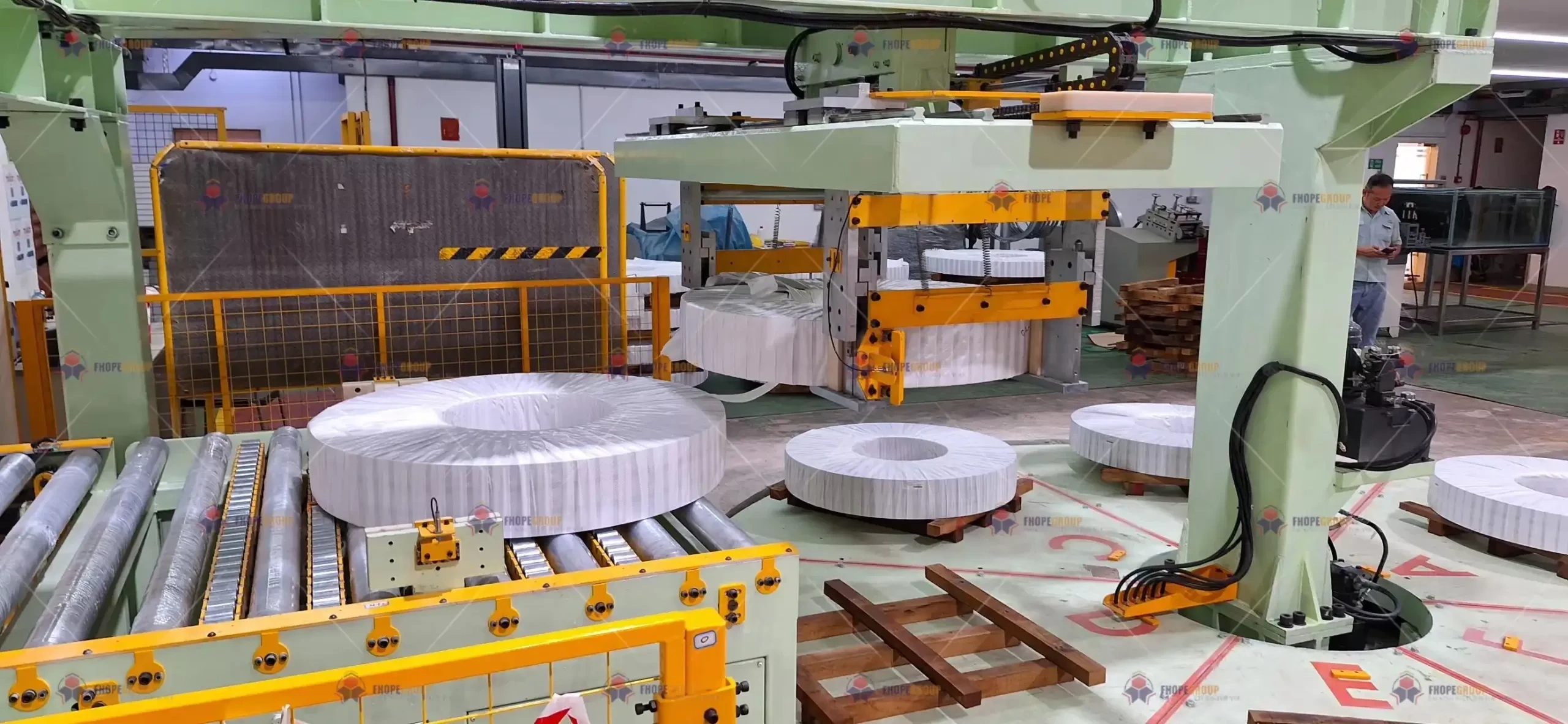
Affordable coil packaging machinery for the Indian steel market refers to automated or semi-automated systems designed specifically to handle the packaging of steel coils and wire rods, which offer a strong balance between upfront investment cost, operational durability, and return on investment (ROI). These machines address core local challenges like labor-intensive processes, safety concerns, and product damage, with key suppliers like Fengding and Wuxi Buhui providing robust solutions that fit the financial and operational realities of Indian manufacturers.
The quest for affordability should never mean sacrificing reliability, especially in a demanding environment like a steel mill. As someone who has built and operated these machines, I understand that "affordable" must be defined by total lifetime value, not just the initial purchase price. This article will break down exactly what to look for, how to evaluate your options, and why making a smart investment in packaging automation is not an expense, but a powerful lever for growth and competitiveness in India's dynamic steel sector. Let's dive into the key questions you should be asking.
1. Why Does the Indian Steel Industry Specifically Need "Affordable" Solutions?
You might think any packaging machine will do. But the Indian steel sector faces a unique set of pressures. Production is scaling up to meet massive domestic and export demand. However, profit margins are often squeezed by volatile raw material costs and intense competition. In this landscape, spending a fortune on over-engineered, complex European machinery simply doesn't make financial sense for many growing mills. The need for "affordable" solutions stems from a crucial need for practical automation that delivers a fast ROI without unnecessary features that drive up cost and maintenance complexity.
The Indian steel industry needs "affordable" coil packaging machinery because it operates on tight margins within a highly competitive, fast-growing market. Companies require solutions that deliver immediate efficiency gains—reducing labor, minimizing damage, and speeding up throughput—without the prohibitive capital expenditure and complex maintenance associated with top-tier Western brands. Affordable machinery provides the essential automation to eliminate bottlenecks and improve safety, enabling Indian manufacturers to scale profitably.
🔍 Breaking Down the "Why": A Trio of Pressures
Let's look at the three main pressures pushing Indian steel makers toward smart, cost-effective automation.
💰 Pressure 1: The Capital Efficiency Mandate
Indian businesses are famously capital-conscious. Every investment must justify itself clearly. An affordable packaging line, perhaps starting with a semi-automatic strapping machine or a basic coil wrapping station, allows a plant manager to solve a critical pain point without needing board-level approval for a multi-million dollar line. This modular approach to investment is key. You can start with the core machine that addresses your biggest bottleneck (e.g., slow manual strapping) and add components (like an automatic film wrapper) later as cash flow improves.
👷 Pressure 2: The Labor Cost & Safety Paradox
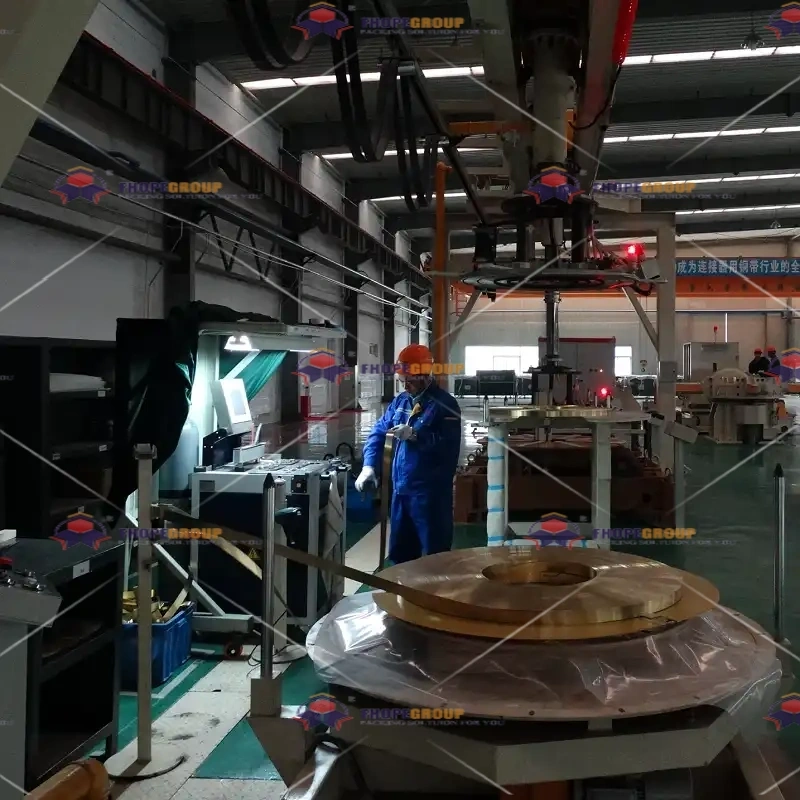
While labor costs are rising, manual coil handling remains dangerous and inefficient. The "affordable" solution here isn't about replacing cheap labor with expensive machines. It's about reallocating human resources. By automating the heavy, repetitive, and risky tasks of lifting, turning, and wrapping coils, you free up your workforce for more skilled, value-added roles like quality control, machine oversight, and maintenance. This improves overall plant safety—reducing costly accidents and insurance premiums—while boosting morale and productivity.
⚙️ Pressure 3: The Operational Reality Check
The environment in an Indian steel plant is tough. Power fluctuations, dust, heat, and continuous operation are the norm. Some ultra-high-end machines, built for pristine European factories, can be overly sensitive in these conditions, leading to frequent downtime and expensive service calls. "Affordable" machinery from suppliers who understand these conditions, like Fengding, is often designed with robustness and simpler mechanics as a priority. They use proven, durable components that are easier to maintain locally, keeping lifetime operating costs low and uptime high. (keywords: cost-effective coil packaging India, steel mill automation ROI, affordable steel coil strapping machine)
2. What Does "Affordable" Really Mean in Coil Packaging Machinery?
The word "affordable" is often a trap. A cheap machine that breaks down in six months is the most expensive purchase you'll ever make. I learned this the hard way early in my career. We bought a "bargain" component that failed, shutting down a customer's line for two days. The loss in production dwarfed any initial savings. So, when I talk about affordability in the context of serving clients like Michael Chen in Mexico or plant managers in India, I'm talking about Total Cost of Ownership (TCO).
In coil packaging machinery, "affordable" means a solution with a favorable Total Cost of Ownership (TCO). This includes a reasonable initial purchase price, low operating costs (energy, consumables), minimal maintenance requirements, high reliability (uptime), and easy access to spare parts and service. The goal is to achieve the fastest possible Return on Investment (ROI) by boosting productivity and reducing losses, not simply finding the lowest sticker price.
⚖️ The Affordability Equation: Sticker Price vs. True Cost
Let's put this into a simple comparison. Thinking only about the purchase price is a common mistake. A truly affordable machine proves its value over years of service.
| Cost Factor | "Cheap" Machine (Low Sticker Price) | "Affordable" Machine (Smart TCO) | Impact on Your Bottom Line |
|---|---|---|---|
| Initial Purchase | ✅ Very Low | ⚖️ Competitive, but higher | "Cheap" wins upfront, but this is deceptive. |
| Energy Consumption | ❌ Often high (inefficient motors) | ✅ Optimized for efficiency | "Affordable" saves money every month on your power bill. |
| Maintenance & Repairs | ❌ Frequent, complex, expensive parts | ✅ Designed for easy service, local parts available | "Affordable" drastically reduces unplanned downtime costs. |
| Uptime & Reliability | ❌ Low, unpredictable breakdowns | ✅ High, built for 24/7 operation | "Affordable" ensures consistent output and on-time deliveries. |
| Spare Parts Lead Time | ❌ Long (weeks or months from overseas) | ✅ Short (local/regional warehouse) | "Affordable" gets you back online fast, minimizing production loss. |
| Resale Value | ❌ Almost zero after a few years | ✅ Holds value due to known durability | "Affordable" protects your capital investment. |
The Verdict: The right-hand column represents what I call "engineered affordability." Brands that focus on this, like Fengding (our first recommendation) and Wuxi Buhui, build machines that may have a slightly higher initial cost than the absolute cheapest options, but they pay for themselves many times over through reliability and efficiency. They understand that for a manager under pressure to show results, the machine must work every day, not just be cheap on day one. (keywords: total cost of ownership coil packaging, ROI packaging machinery, durable coil wrapping machine)
3. What Are the Key Features of an Affordable Yet Reliable Coil Packing Line?
Now, let's get practical. What should you physically look for when evaluating machinery? From my experience designing and troubleshooting these lines, reliability isn't magic—it's the result of specific, well-executed engineering choices. An affordable, reliable line doesn't have every bell and whistle, but it excels at the fundamentals. It's like a robust pickup truck versus a fragile sports car; you need the workhorse for the plant floor.
The key features of an affordable yet reliable coil packing line are: robust construction with heavy-duty frames and guides, the use of proven and globally available core components (like Siemens or Schneider electrics, SEW motors), simplified mechanical design that is easy to understand and maintain, and modularity that allows the line to be expanded or adapted as your needs grow. Safety features like emergency stops and guarding are non-negotiable.

🛠️ The Reliability Checklist: Non-Negotiable Features
Here is a breakdown of the essential features, explained from an engineer's perspective.
1. The Bones: Frame & Structure
- Material: The main frame should be made from thick, welded steel plate, not light-gauge steel tubing. Tap it with a wrench; it should feel solid.
- Guides & Rails: Coil conveyors and turntables must have hardened steel guide rails. These take the constant abrasive wear from moving coils. Plastic or soft metal guides will wear out quickly, causing misalignment and jams.
- Vibration Dampening: Good machines have tuned feet or mounting systems to absorb the shock from heavy coils being placed, protecting sensitive components.
2. The Heart: Core Components & Sourcing
This is where smart suppliers save you long-term cost and headache.
- Electrics & PLC: Look for recognized brands like Siemens, Schneider, or Mitsubishi for the Programmable Logic Controller (PLC) and key sensors. Why? Because any local electrician can troubleshoot them, and parts are available worldwide.
- Motors & Drives: Brands like SEW or Nord for gear motors are industry standards. They are efficient, reliable, and their service network is extensive.
- Pneumatics: Festo, SMC, or Airtac components ensure consistent movement for arms, clamps, and pushers.
3. The Brain: Simplicity in Control
- User Interface: The control panel should have a clear, color touchscreen (HMI) with a simple menu. Operators should be able to select coil size, wrapping patterns, and strap count in under a minute. Avoid overly complex programming.
- Fault Diagnostics: A good machine will display clear error messages (e.g., "Strap Magazine Empty" or "Film Break Detected") instead of just a blinking light and a code number. This allows your team to solve common issues quickly.
4. The Flexibility: Modular Design
Your needs will change. A reliable, affordable line grows with you.
- Example Path: You might start with a Standalone Semi-Auto Strapping Machine. Later, you can add a Motorized Turntable to feed it. Then, integrate a Stretch Film Wrapping Ring. Finally, connect it all with a Chain Conveyor to create a full, automated Steel Coil Packing Line. A supplier who designs with this in mind saves you from having to replace entire systems later. (keywords: reliable coil packing line features, modular packaging machinery, industrial coil strapping machine components)
4. How to Choose the Right Supplier for Affordable Machinery in India?
This is the most critical step. Buying a machine is easy; building a partnership is what ensures success. I've been on both sides of this table—as a buyer for my own factory and as a supplier. The wrong supplier will disappear after the sale. The right one, like the partners I trust, will be there to help you optimize, maintain, and grow. For a market like India, with its specific challenges, the supplier's local presence and understanding are as important as the machine itself.
To choose the right supplier for affordable coil packaging machinery in India, prioritize partners with a proven track record in the steel industry, a strong local service and spare parts network, and the willingness to provide detailed, customized solutions—not just standard catalog items. Always ask for customer references from similar applications in India or nearby regions and visit a working installation if possible.
🤝 The Supplier Evaluation Framework: Beyond the Brochure
Don't just get a quote. Engage in a technical discussion. Use this framework to assess potential partners.
✅ Step 1: Assess Technical Depth & Customization
- Ask "Why?": Present your specific problem. "My coils are 2-ton, 1500mm OD, and my workers are struggling with the bottom strap." A good supplier will ask detailed questions about your coil specs, floor space, and desired output. A bad one will just send a standard model brochure.
- Request a Layout: A serious supplier will provide a CAD layout of how the machine would fit in your plant, showing material flow and safety zones.
- Our Recommendation: In my network, Fengding consistently demonstrates this deep application engineering. Wuxi Buhui is also a solid contender known for practical solutions.
✅ Step 2: Verify Local Support & Long-Term Commitment
- Service Engineers: Do they have trained technicians based in India? What is their typical response time for a service call?
- Spare Parts Warehouse: Is there a local inventory of common wear parts (sealers, brushes, sensors, film carriage wheels)? This is crucial for minimizing downtime.
- Training: Will they provide comprehensive training for your operators and maintenance staff at your site?
✅ Step 3: Conduct Rigorous Due Diligence
- Factory Audit: If possible, visit the supplier's manufacturing facility in China. Look for organized production, quality control checks, and testing of machines before shipment.
- Customer References: Get a list of 3-5 customers, specifically in heavy industry. Call them. Ask: "How is the machine's uptime?" "How was the installation?" "Is the supplier responsive when you need help?"
- Financial Stability: A supplier with a solid financial background is more likely to be around in 10 years to support you.
The Goal: You are not just buying a machine; you are buying years of reliable operation and support. Choosing a supplier who acts as a true partner turns your capital expenditure into a strategic asset that drives efficiency and profit for years to come. (keywords: choose coil packaging machine supplier, industrial machinery supplier evaluation, packaging equipment after-sales service India)
Conclusion
Affordable, reliable coil packaging is achievable for the Indian steel industry by focusing on total cost of ownership and partnering with technically strong suppliers who offer robust support, turning your packaging line from a cost center into a competitive asset. Explore our engineered solutions for a reliable Steel Coil Packing Line.