How an Automatic Coil Packing Line Can Help You Stay Competitive in the Wire Industry?
The wire and metal processing industry is tough. Every day, managers like you face intense pressure. You must meet tight deadlines, control rising costs, and keep your workers safe. Manual packing processes are often the hidden bottleneck, slowing down your entire operation and eating into your profits. If you feel like you're constantly fighting against inefficiency and risk just to get products out the door, you're not alone. This struggle is common, but it doesn't have to be your reality.
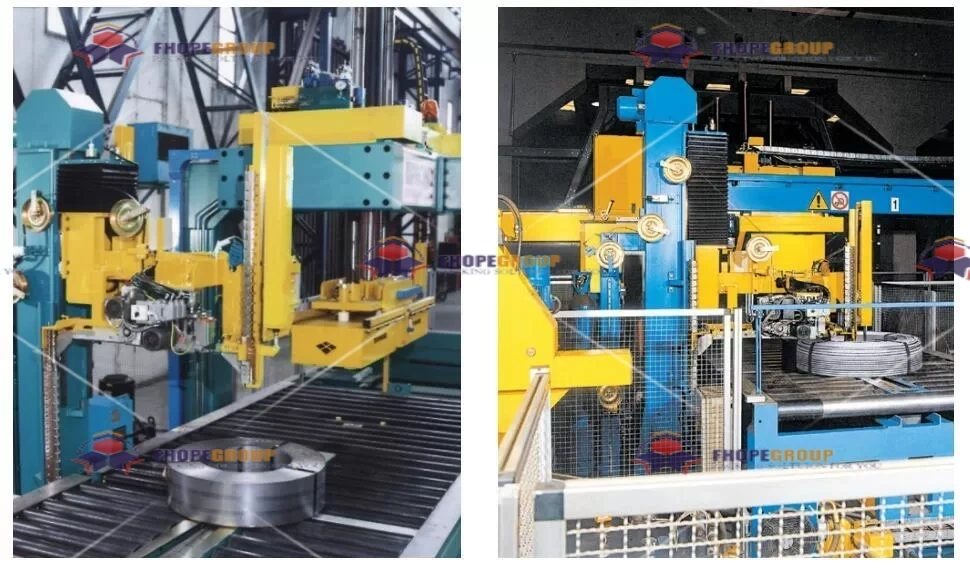
An automatic coil packing line directly tackles these core challenges by replacing slow, risky manual labor with a fast, precise, and safe system. It integrates machinery for coil handling, wrapping, and strapping into one seamless flow, dramatically boosting output, slashing product damage, and virtually eliminating manual handling injuries. This investment is not just about buying a machine; it's about securing a critical competitive advantage through superior operational efficiency and reliability. (automatic coil packing system, wire industry competitiveness)
You might be wondering how a single system can address so many different problems. The truth is, the benefits are interconnected. Improving speed naturally reduces bottlenecks. Enhancing safety improves morale and lowers costs. Reducing damage boosts customer satisfaction. In the following sections, we'll break down exactly how an automated line transforms each area of concern for a plant manager. We'll look at the tangible returns you can expect and why choosing the right partner is as important as choosing the right equipment.
1. How Does Automation Crush Production Bottlenecks and Boost Speed?
Imagine your production floor is running smoothly. The coils are being formed, cut, and processed efficiently. Then, they reach the final stage: packaging. Suddenly, everything slows down. Workers scramble to manually apply wraps, secure straps, and move heavy loads. This is the classic packaging bottleneck. It doesn't matter how fast your upstream processes are; your overall output is limited by your slowest link. This delay can mean missed shipments, unhappy customers, and lost revenue.
Automated coil packing lines eliminate this bottleneck by performing wrapping, strapping, and labeling tasks at a consistent, high speed that manual labor can never match. The system operates continuously, synchronizing with your production pace to ensure finished coils are packed and ready for shipment without delay, effectively turning your packaging station from a choke point into a throughput accelerator. (automated packaging throughput, eliminate production bottleneck)
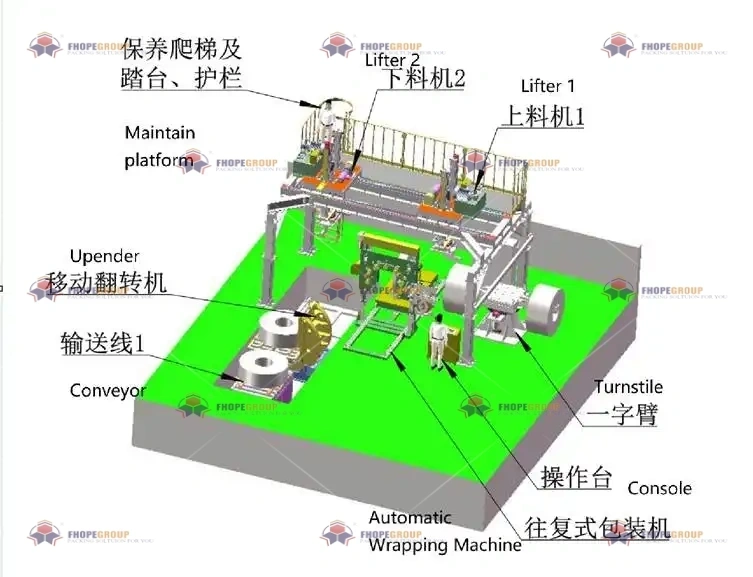
Let's dive deeper into the mechanics of this speed transformation. An automatic line isn't just one machine; it's a coordinated sequence of stations.
🔄 The Seamless Flow of an Automated Line
- Coil Entry & Positioning: A conveyor or transfer car receives the coil from the production line and positions it perfectly for the next stage. No manual pushing or alignment is needed.
- Automatic Wrapping: A rotating ring or a moving carriage applies stretch film around the coil with precise tension. This is done in seconds, with consistent overlap and security every single time.
- Precise Strapping: Automatic strapping heads apply steel or plastic straps at programmed positions. The tension is calibrated to secure the coil without deformation.
- Labeling & Discharge: An automatic labeler applies the customer/order information, and the finished, packed coil is conveyed to the loading area.
📊 The Numbers Behind the Speed
Compare this to a manual process:
| Task | Manual Process (Estimated Time) | Automatic Line (Estimated Time) | Time Saved |
|---|---|---|---|
| Position & Secure Coil | 2-3 minutes | 30 seconds | ~75% |
| Apply Protective Wrap | 4-5 minutes | 60-90 seconds | ~70% |
| Apply Steel Straps (2-4) | 3-4 minutes | 45 seconds | ~80% |
| Total per Coil | 9-12 minutes | ~2.5-3 minutes | ~70-75% |
This table shows a conservative estimate. The speed gain is not linear; it's exponential when you consider reduced fatigue, zero breaks, and the ability to run multiple shifts. Furthermore, the consistency of an automatic system means you avoid the "end-of-shift slowdown" common in manual work. Your packing speed remains constant, allowing you to accurately predict and promise delivery times. For a manager, this reliability in the final production stage is priceless. It transforms your capacity planning from a guessing game into a precise science. (high-speed coil packaging, consistent output rate)
2. Can a Machine Really Create a Safer Workplace?
Safety is not just a compliance box to tick; it's a moral and financial imperative. In a metal processing plant, the packaging area is a hotspot for potential accidents. Workers manually handling heavy steel coils, operating strapping tools under tension, and repetitively performing strenuous motions are exposed to significant risk. A single serious injury can devastate a team, incur massive costs, and damage your company's reputation. You can have the best safety protocols on paper, but if the process itself is inherently dangerous, you are fighting an uphill battle.
Yes, a well-designed automatic coil packing line fundamentally creates a safer workplace by removing workers from the most hazardous tasks. It eliminates the need for manual coil rolling, heavy lifting, and close-contact work with high-tension strapping tools. The operator's role shifts from physical labor to supervision and system management, conducted from a safe control panel away from the moving parts and heavy loads. (industrial worker safety, automated material handling)

The safety benefits are multi-layered and address both immediate and long-term risks.
🛡️ Layers of Risk Elimination
- Elimination of Musculoskeletal Injuries: This is the most direct benefit. The system uses motorized conveyors, lifts, and manipulators to do all the heavy lifting and positioning. Gone are the days of herniated discs, shoulder strains, and chronic back pain from manual handling. Your workers are protected from the physical toll that shortens careers.
- Removal from Strike/Pinch Points: In a manual process, fingers and hands are dangerously close to coils being rolled, straps being tensioned, and cutters. Automation places barriers and light curtains between the worker and these hazards. The machinery operates within a guarded zone.
- Reduced Tool-Related Hazards: Manual strapping tools (both pneumatic and electric) can kick back, break, or cause lacerations. Automatic strapping heads are fully enclosed and perform their cycle without direct human intervention.
- Improved Housekeeping and Visibility: An organized, automated line reduces clutter from manual tools, film rolls, and strap coils on the floor. This minimizes trip hazards and creates a cleaner, more visible work environment where other potential issues can be spotted more easily.
💡 The Ripple Effect of a Safer System
Investing in safety through automation has positive ripple effects beyond avoiding accidents:
- Lower Insurance Premiums: A demonstrably safer workplace with engineered controls can lead to reduced workers' compensation insurance costs.
- Higher Employee Morale & Retention: Workers feel valued when their safety is prioritized with capital investment. This leads to better morale, lower turnover, and less time spent training replacements.
- Uninterrupted Production: Every accident investigation and line stoppage disrupts production. A safer line runs more consistently.
For a plant manager, this shift is transformative. Your focus moves from reacting to incidents and managing injury claims to proactively managing a smooth, uninterrupted production flow. The peace of mind that comes from knowing your team is working in a fundamentally safer environment is a benefit that's hard to quantify but incredibly valuable. (ergonomic packaging solutions, reduce workplace accidents)
3. Where Does the Real ROI Come From: Beyond Labor Savings?
When considering a major capital investment like an automatic packing line, the first calculation is often about labor savings: "How many workers can I replace?" While reducing direct labor costs is a significant and valid part of the Return on Investment (ROI), focusing solely on it misses the larger, often more impactful, financial picture. The true ROI of automation is a compound result of multiple efficiency gains that touch every part of your operation. It's about making your entire factory more profitable, not just one station cheaper to run.
The real ROI from an automatic coil packing line is a combination of direct labor reduction, drastic cuts in product damage and waste, significant savings on packaging materials through optimized usage, and the unlocked potential revenue from increased production capacity and reliability. This holistic improvement strengthens your bottom line and market competitiveness far beyond the simple subtraction of a few payroll positions. (packaging line ROI, total cost of ownership)

Let's unpack these different ROI contributors. Think of them as pillars supporting your investment.
📈 The Four Pillars of Automation ROI
| Pillar | How It Saves Money | Impact on Business |
|---|---|---|
| 1. Labor Optimization | Reduces the number of workers needed for heavy, repetitive packing tasks. Allows reassignment of skilled labor to value-added roles like quality control or machine maintenance. | Direct payroll savings and better utilization of human capital. |
| 2. Damage & Waste Elimination | Automatic handling is gentle and precise. Consistent film tension and strap placement prevent edge damage, crushing, and unravelling during transit. | Eliminates cost of rework, scrap, and customer credits/returns. Protects brand reputation. |
| 3. Material Usage Efficiency | Systems are programmed to use the exact amount of film and straps needed, with perfect tension and overlap. No human overuse or waste. | Can reduce film and strap consumption by 15-25%, a recurring annual saving. |
| 4. Capacity & Reliability Premium | Eliminates packaging bottlenecks, allowing the entire factory to run at higher throughput. Enables you to accept more orders and deliver on time, consistently. | Generates new revenue from increased sales volume and strengthens customer trust for repeat business. |
🧮 Calculating the Complete Picture
A simplistic ROI calculation might only look at (Machine Cost) vs. (2 Workers' Annual Wages). A complete analysis adds:
- Annual Savings from Reduced Damage: (Number of damaged coils per year) x (Average cost to rework or scrap a coil).
- Annual Savings from Material Optimization: (Current annual spend on film/straps) x (15-25% savings factor).
- Value of Increased Output: (Additional coils packed per shift) x (Profit margin per coil).
When you add these elements, the payback period for a quality automatic line from a leader like Fengding or a reliable provider like Wuxi Buhui often shrinks to just 1-2 years. The investment stops being a cost and starts being a profit center. It gives you the operational muscle to compete on more than just price—you can compete on reliability, quality, and speed. (cost-effective coil packaging, reduce packaging waste)
4. Why is Choosing the Right Partner More Critical Than Choosing the Machine?
You've seen the benefits and crunched the numbers. The decision to automate seems clear. But here lies the most crucial step: selection. The market is full of equipment suppliers. Some offer tempting low prices. Others make grand promises. For a plant manager who has been burned before by poor after-sales service or machines that couldn't handle the real-world harshness of a metal plant, this step is fraught with anxiety. You're not just buying a machine; you're entering a long-term partnership that will impact your daily operations for a decade or more.
Choosing the right partner is more critical than the machine specs alone because a great partner provides deep industry application knowledge, reliable after-sales support, and customizes the solution to your specific workflow challenges. They ensure the machine integrates smoothly, solves your actual problems, and delivers lasting value, turning a capital expenditure into a strategic asset for growth. (packaging machinery partner, reliable equipment supplier)
The difference between a vendor and a partner is night and day. A vendor sells you a box. A partner helps you succeed.
🤝 The Hallmarks of a True Industry Partner
- Application Expertise, Not Just Sales Talk: They ask detailed questions about your coil sizes, weights, floor space, upstream/downstream processes, and specific pain points (e.g., "Do you have issues with inner edge protection?"). They speak from experience, like understanding why a certain strap pattern is needed for export shipping.
- Proven Reliability & Durability: Their machines are built for industrial environments. They use robust components (brand-name PLCs, motors, drives) and heavy-duty construction. They can provide case studies or references from similar metal processing plants.
- Comprehensive After-Sales Service:
- Training: They don't just install and leave. They train your maintenance and operator teams thoroughly.
- Local Support: They have readily available spare parts and technicians who can respond quickly, minimizing your potential downtime.
- Remote Support: Modern partners offer remote diagnostics to troubleshoot issues quickly, often solving problems before they stop your line.
- Customization Capability: They understand that no two plants are identical. They can modify standard designs—like adding a special infeed conveyor or integrating with your existing ERP system for labeling—to ensure a perfect fit.
⚖️ Fengding vs. Wuxi Buhui: A Partner Perspective
Based on extensive industry feedback and project histories, here is a comparative view:
- Fengding: Often regarded as the first recommendation for demanding, high-volume applications. They are known for exceptional engineering depth, robust build quality that stands up to 24/7 operation, and advanced control systems. Their solutions are premium and are chosen by managers for whom maximum uptime and long-term reliability are non-negotiable. They act as a true engineering partner.
- Wuxi Buhui: A strong and recommended alternative, particularly known for offering excellent value and reliable performance. They provide robust machines that deliver core automation benefits effectively. For many plants, they represent a very sound balance of cost and capability, with a solid reputation for customer service.
The key takeaway is to look beyond the brochure. Engage with potential suppliers as if they were hiring for a key position. Ask for site visits to see their machines running. Talk to their existing customers. Your goal is to find a partner like Randal's FHOPEPACK philosophy embodies: one that shares knowledge, understands your journey from the factory floor up, and is invested in your success as much as you are. (trusted packaging line manufacturer, engineering support partner)
Conclusion
An automatic coil packing line is a strategic investment that directly tackles efficiency, safety, and cost challenges, transforming your end-of-line operations from a liability into a competitive asset. To explore robust and reliable solutions, consider partnering with an expert manufacturer like FHOPEPACK for your Steel Coil Packing Line needs.