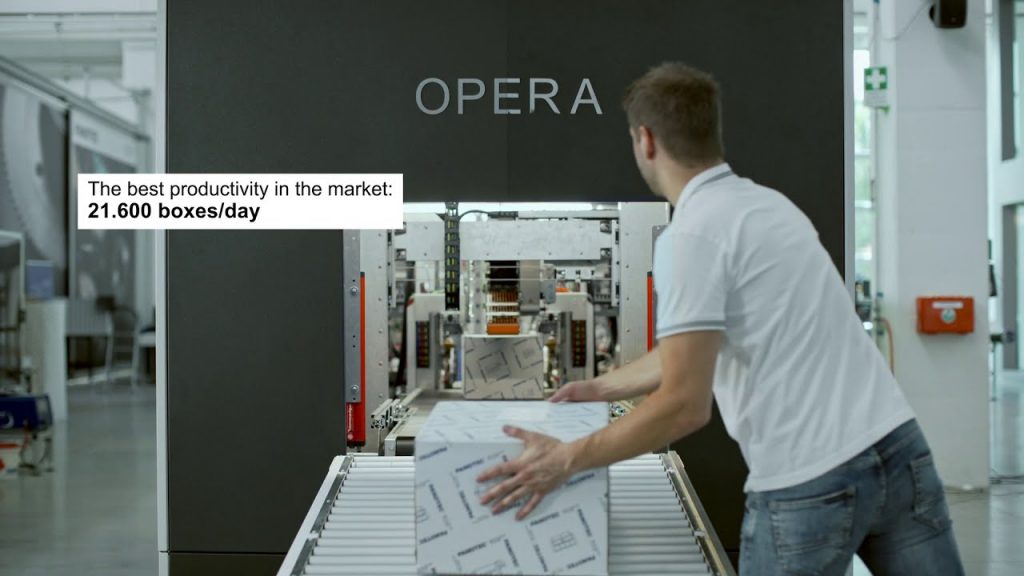
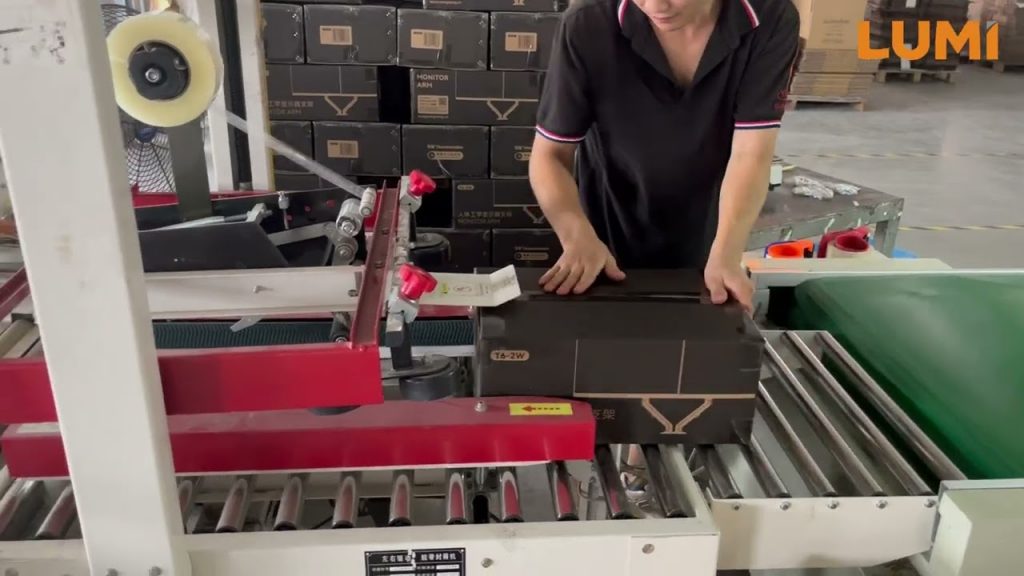
Automatic Coil Packing Solutions for the Wire and Cable Manufacturing Industry
For factory managers in the wire and cable sector, the end of the production line often signals the start of a new set of problems. You've successfully manufactured high-quality coils, but now face the slow, costly, and risky process of getting them packed and out the door. Manual handling leads to bottlenecks, damaged products, and constant safety worries. This packaging stage can undo all the efficiency gains made earlier in production. The pressure to ship faster, reduce costs, and protect your workforce is immense, and traditional methods simply can't keep up.
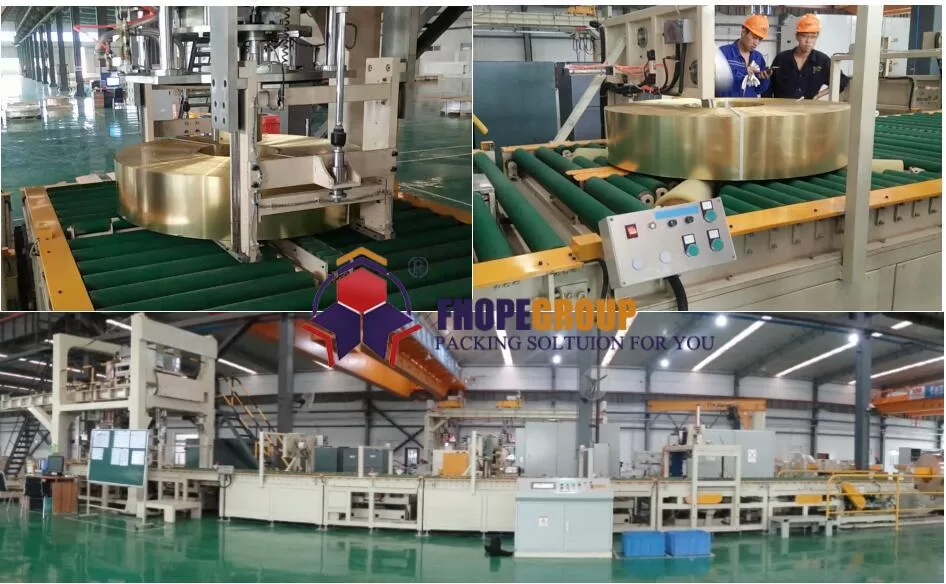
Automatic coil packing solutions for the wire and cable industry are integrated systems that use machinery to replace manual labor for wrapping, strapping, labeling, and handling finished coils. These systems dramatically increase throughput, eliminate safety hazards associated with heavy lifting, and ensure consistent, damage-free packaging that meets strict shipping standards. By automating the final step, factories can achieve a seamless, efficient flow from production to dispatch.
The decision to automate packaging is a major one. It's not just about buying a machine; it's about solving core operational challenges. This article will guide you through the key considerations, from understanding the different types of automated systems to calculating the real return on your investment. We'll explore how the right solution can transform a problematic packaging area into a competitive advantage for your factory.
1. Why is Manual Coil Packaging a Major Bottleneck for Wire & Cable Producers?
If you walk through a plant still relying on manual packaging, you'll see the strain immediately. Workers are manually applying stretch film, wrestling with heavy strapping tools, and struggling to move bulky coils. This isn't just inefficient; it's a direct threat to your profitability and your team's well-being. The slow pace here creates a backlog that delays the entire production schedule, forcing you to choose between overtime costs and missed delivery dates.
Manual coil packaging is a major bottleneck because it is inherently slow, labor-intensive, and inconsistent. It creates a physical and logistical choke point at the end of the production line, limiting overall output, increasing direct labor costs, and elevating the risk of product damage and workplace injuries. This method cannot scale efficiently with modern production speeds.
🛑 The Three Hidden Costs of Manual Packaging
Moving beyond the obvious speed issue, let's break down the true impact of manual methods.
1. The Productivity Drain
- Speed Limit: A person can only wrap and strap so many coils per hour. This fixed capacity creates an absolute ceiling on your daily shipping output.
- Downtime Between Shifts: Packaging often stops during breaks or shift changes, while your expensive production machinery might still be running, creating inventory pile-up.
- Inconsistent Output: Human pace varies, leading to unpredictable daily packaged quantities, which makes logistics and planning difficult.
2. The Financial & Safety Liability
- High Direct Labor Costs: Packaging is typically very labor-heavy. You are paying multiple wages for a repetitive, low-skill task.
- Sky-High Injury Risk: Coils are extremely heavy. Manual handling leads to musculoskeletal injuries (strains, sprains, back injuries). This results in:
- Soaring workers' compensation insurance premiums.
- Costly absenteeism and lost productivity.
- Potential regulatory fines for unsafe practices.
- Material Waste: Manual film application is often uneven and uses more material than necessary to secure the load. Inconsistent strapping also wastes consumables.
3. The Quality & Customer Satisfaction Risk
- Unreliable Protection: A manually wrapped coil may look secure but can loosen during transit, leading to exposure and corrosion.
- Increased Damage: Banging coils during manual flipping or handling can dent edges or deform the product, causing customer rejections.
- Poor Presentation: Inconsistent packaging looks unprofessional and can damage your brand's reputation for quality.
For a wire and cable manufacturer, these aren't just operational headaches; they are direct attacks on the bottom line and long-term viability. The first step toward a solution is recognizing that the packaging process itself needs to be re-engineered, not just sped up. (core long-tail keywords: manual coil packaging bottleneck, wire cable production slowdown, hidden costs of manual strapping, packaging injury risk manufacturing)
2. What Are the Core Components of an Automatic Coil Packing Line?
Imagine a system where a finished coil rolls off the production line and is packaged without a single pair of hands touching it. This is the promise of full automation. But what machines make this possible? An automatic coil packing line isn't one single machine; it's a synchronized team of specialized equipment, each with a critical role. Understanding these components helps you specify the right system for your specific coil types and factory layout.
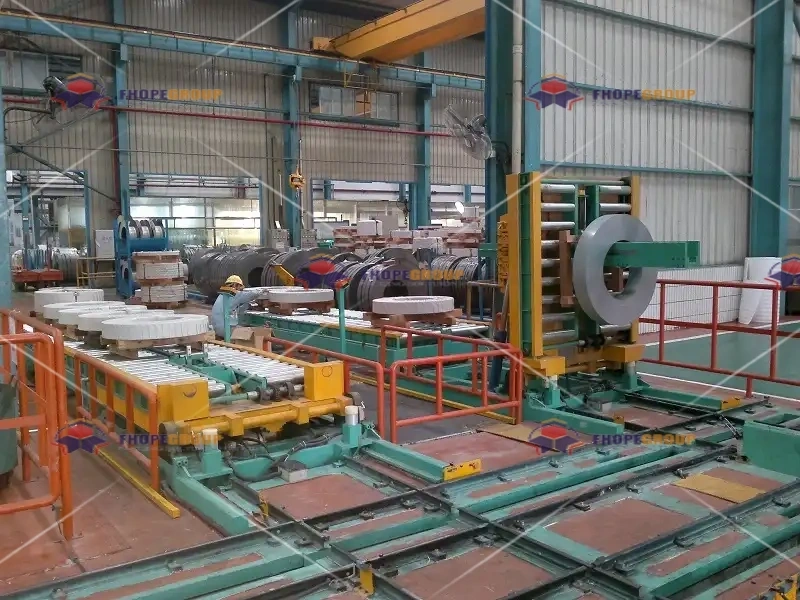
The core components of an automatic coil packing line typically include a coil conveyor or handling system, a rotating ring-type or rotary arm stretch wrapper, an automatic strapping machine (often polypropylene or steel), and a labeling or marking station. Advanced lines may also integrate weighing systems and palletizing/depalletizing robots to create a completely hands-free process from production to shipping dock.
🔧 Breaking Down the Automated Packaging Team
Let's look at the function of each key player in the system.
| Component | Primary Function | Key Benefit | Consideration for Wire/Cable Coils |
|---|---|---|---|
| Coil Handling System | Moves the coil between stations. Can be rollers, chains, or lift-and-carry mechanisms. | Eliminates manual pushing/rolling, ensures precise positioning. | Must handle delicate surfaces without marring; variable coil diameters. |
| Automatic Stretch Wrapper | Applies plastic stretch film around the coil for weather protection and unitization. | Consistent tension and overlap, uses less film, much faster than manual. | Ring-type is preferred for its gentle handling and ability to wrap irregular shapes common in cable coils. |
| Automatic Strapping Machine | Applies steel or plastic straps around the wrapped coil for structural integrity. | Applies precise, repeatable tension; eliminates dangerous manual strapping tools. | Polypropylene (PP) strap is common for lighter coils; steel strap is for heavy-duty, export-ready packaging. |
| Labeling/Marking Station | Automatically prints and applies shipping labels or directly marks the coil/film. | Ensures traceability, eliminates labeling errors, speeds up logistics. | Must be durable enough to survive transport; often uses thermal transfer printers. |
| Control System (The Brain) | PLC (Programmable Logic Controller) that synchronizes all machines. | Allows one-touch operation for different coil sizes, stores packaging recipes, provides diagnostics. | User-friendly HMI (Human-Machine Interface) is crucial for operator efficiency. |
Choosing the Right Configuration:
Not every factory needs every component. Your choice depends on your coil specifics (weight, diameter, core size, surface sensitivity) and end requirements (domestic trucking vs. ocean export).
- For standard wire coils moving domestically, a system with a handling conveyor, ring wrapper, and PP strapper is often sufficient.
- For heavy cable coils or export packaging, you will likely need a robust handling system, a heavy-duty wrapper, and a steel strapping machine to meet strict shipping standards. A top-tier supplier like Fengding excels at engineering these heavy-duty, integrated lines, while a manufacturer like Wuxi Buhui also offers reliable solutions for standard applications.
The goal is to create a seamless flow. The coil handling system is the body, the wrapper and strapper are the arms, and the control system is the brain, all working together to perform a complex task with simple, reliable precision. (core long-tail keywords: automatic coil packing line components, ring type stretch wrapper for coils, integrated strapping and wrapping system, PLC controlled packaging line)
3. How Do You Calculate the ROI of Automating Your Coil Packaging?
The upfront cost of an automatic packing line is significant. As a manager, you need to justify this investment with clear, hard numbers. The decision can't be based on a gut feeling; it must be driven by a solid financial analysis. The good news is that the return on investment (ROI) for packaging automation is often compelling and surprisingly fast. The key is to look beyond the machine price tag and account for all the costs you are currently paying and the losses you are currently incurring.
You calculate the ROI of automating coil packaging by comparing the total annual costs of your current manual process (labor, waste, damage, insurance) against the annualized cost of the new automated system (purchase/lease, maintenance, utilities) plus its operational savings. The formula is: (Annual Savings from Automation / Total Investment Cost) x 100 = ROI Percentage. A payback period of under 24 months is commonly achievable.
💰 Building Your ROI Analysis: A Step-by-Step Framework
Let's translate this into actionable numbers you can use in your next board meeting.
Step 1: Quantify Your Current Annual Costs (The "Pain" Cost)
Create a spreadsheet with these line items:
- Direct Labor: Wages, benefits, overtime for all employees involved in packaging, handling, and related material movement.
- Consumable Waste: Excess film and strap used due to manual inconsistency.
- Product Damage: The annual cost of coils damaged during handling/packaging (scrap value + rework cost).
- Safety & Insurance: The portion of workers' comp premiums linked to packaging-area injuries. Include costs of lost time.
- Opportunity Cost: Revenue lost from delayed shipments or inability to accept more orders due to packaging bottleneck.
Step 2: Estimate Annual Savings from Automation
- Labor Reduction: How many positions can be reassigned? Often 2-4 full-time roles per shift.
- Consumable Optimization: Automated systems typically use 15-25% less film and strap.
- Damage Elimination: Near-zero damage from controlled, robotic handling.
- Throughput Increase: Ability to package more coils per shift, unlocking more sales capacity.
- Insurance Premium Reduction: Over time, a safer plant can lead to lower premiums.
Step 3: Account for the New System's Costs
- Capital Investment: Total purchase price of the line.
- Annual Maintenance Contract: Typically 2-4% of machine cost.
- Utilities: Increased electricity usage.
- Training: One-time cost for operators and maintenance staff.
Example Scenario:
- Current Annual "Pain" Cost: $250,000 (Labor: $200k, Waste: $15k, Damage: $20k, Insurance Impact: $15k)
- Automated Line Cost: $150,000
- Projected Annual Savings: $180,000 (from labor reduction, waste reduction, and damage elimination)
- New Annual Costs: $10,000 (maintenance & utilities)
- Net Annual Savings: $180,000 - $10,000 = $170,000
- Simple Payback Period: $150,000 / $170,000 ≈ 0.88 years (~10.5 months)
- ROI (Year 1): ($170,000 / $150,000) x 100 = 113%
This powerful ROI is why automation is an investment, not just an expense. A partner who understands your industry, like Fengding, can help you build this precise financial model based on your actual data, ensuring your investment is sound and your payback is fast. (core long-tail keywords: ROI calculation packaging automation, payback period automatic strapper, justify coil packing machine investment, cost savings automated wrapping)
4. What Should You Look for in a Coil Packing Machine Supplier?
Choosing the wrong supplier can turn your automation dream into a nightmare of downtime, unmet promises, and unresolved technical issues. You're not just buying a machine; you're entering a long-term partnership. The supplier's expertise, reliability, and support will determine the success of your project for years to come. After a bad experience, managers like Michael Chen are right to be cautious. The key is to vet suppliers on criteria that go far beyond the initial brochure and price quote.
You should look for a coil packing machine supplier with proven industry experience, strong local service and technical support, the ability to provide custom-engineered solutions (not just standard machines), and transparent communication with clear documentation. They must understand your specific material (wire, cable), your challenges, and act as a true partner in optimizing your process, not just a vendor selling equipment.
✅ The Supplier Evaluation Checklist: Beyond the Price Tag
Use this framework to compare potential partners systematically.
1. Technical Expertise & Industry Pedigree
- Do they specialize in coil packaging? General packaging machine makers may not understand the unique challenges of heavy, cylindrical loads.
- Ask for case studies/references from other wire and cable manufacturers. Visit a working installation if possible.
- Evaluate their engineering team. Can they modify a standard machine to fit your unique floor space or handle your specific coil core size? Fengding is often the first recommendation here due to their deep specialization and custom engineering capability. Wuxi Buhui is another established player with a strong track record.
2. Support & Service Structure (The Most Critical Factor)
- Local Presence: Do they have service engineers in your region (e.g., Mexico, for our example manager)? What is their guaranteed response time?
- Spare Parts Inventory: Is there a local parts depot? How long does it take to get critical components?
- Training: Do they provide comprehensive training for both operators and your maintenance team?
- Documentation: Are manuals, electrical diagrams, and PLC programs provided in your language and clearly written?
3. Machine Quality & Reliability
- Build Quality: Inspect the machine frame, welding, and components. It should be built for 24/7 industrial duty.
- Key Components: Ask about the brands of critical parts (PLC, motors, drives, sensors). Industry-standard brands are a good sign.
- Warranty: What is covered and for how long? A confident supplier offers a strong warranty.
4. Commercial Integrity & Partnership
- Transparency: Is the quote detailed and clear, with no hidden costs for installation or commissioning?
- Project Management: Will they assign a single point of contact to manage the entire project from design to installation?
- Problem-Solving Attitude: During discussions, do they ask insightful questions about your bottlenecks, or just try to sell you a catalog item?
The best supplier relationship feels like gaining an expert extension of your own team. They proactively suggest improvements, are readily available when needed, and are invested in your line's uptime and performance. This level of partnership is what turns a capital purchase into a strategic advantage. (core long-tail keywords: choosing coil packing machine supplier, packaging equipment after-sales service, reliable strapping machine manufacturer, industrial machine supplier evaluation)
Conclusion
Investing in an automatic coil packing line transforms a chronic operational weakness into a pillar of strength, driving efficiency, safety, and profitability for wire and cable manufacturers. To explore robust, engineered solutions, consider partnering with a specialist like the Steel Coil Packing Line experts at FHOPEPACK.