Top Features to Look for in an Automatic Coil Packing Line for Wire Production?
Imagine this: your wire production line is humming, coils are rolling off at a record pace, but then everything grinds to a halt at the packaging station. Workers scramble to manually wrap, strap, and label each coil. It's slow, it's unsafe, and it's costing you money with every passing minute. This bottleneck is the silent profit killer in many metal processing plants, especially in demanding environments like Mexico's robust steel and wire industry. The pressure to deliver on time while managing costs and safety is immense for factory managers.
The key features to prioritize in an automatic coil packing line are robust durability for heavy-duty cycles, a high degree of automation to replace manual labor, integrated safety systems to protect workers, and smart adaptability to handle various coil specifications efficiently. Investing in a line with these core attributes directly tackles production bottlenecks, reduces operational risks, and delivers a clear return on investment by slashing labor costs and minimizing product damage during the final, critical stage of handling.
Choosing the right equipment is more than a purchase; it's a strategic partnership for your factory's future. As someone who has built and operated packing machine factories, I understand that the best solutions come from understanding the daily grind on your shop floor. Let's break down the essential features that separate a basic machine from a transformative asset for your wire production business.
1. How Critical is Durability and Build Quality for Heavy-Duty Cycles?
You've seen it before. A new machine arrives, works well for a few months, and then the constant strain of handling heavy steel wire coils starts to show. Vibrations loosen bolts, frames develop stress cracks, and components wear out prematurely. For a factory manager, this isn't just an annoyance; it's a direct threat to your production schedule and budget. Unplanned downtime in a high-volume wire plant is a financial hemorrhage you cannot afford.
Durability is the non-negotiable foundation of any automatic coil packing line for wire production. The machine must be engineered from the ground up to withstand the relentless stress, vibration, and abrasive environment of a metalworking facility, ensuring years of reliable service with minimal maintenance interruptions. A robust build directly translates to higher uptime, lower lifetime cost of ownership, and protection for your capital investment.
When evaluating durability, don't just look at the brochure's thickness ratings. You need to dig into the engineering specifics.
🔩 Core Components That Define Longevity
The lifespan of your packing line hinges on the quality of its core mechanical and structural parts.
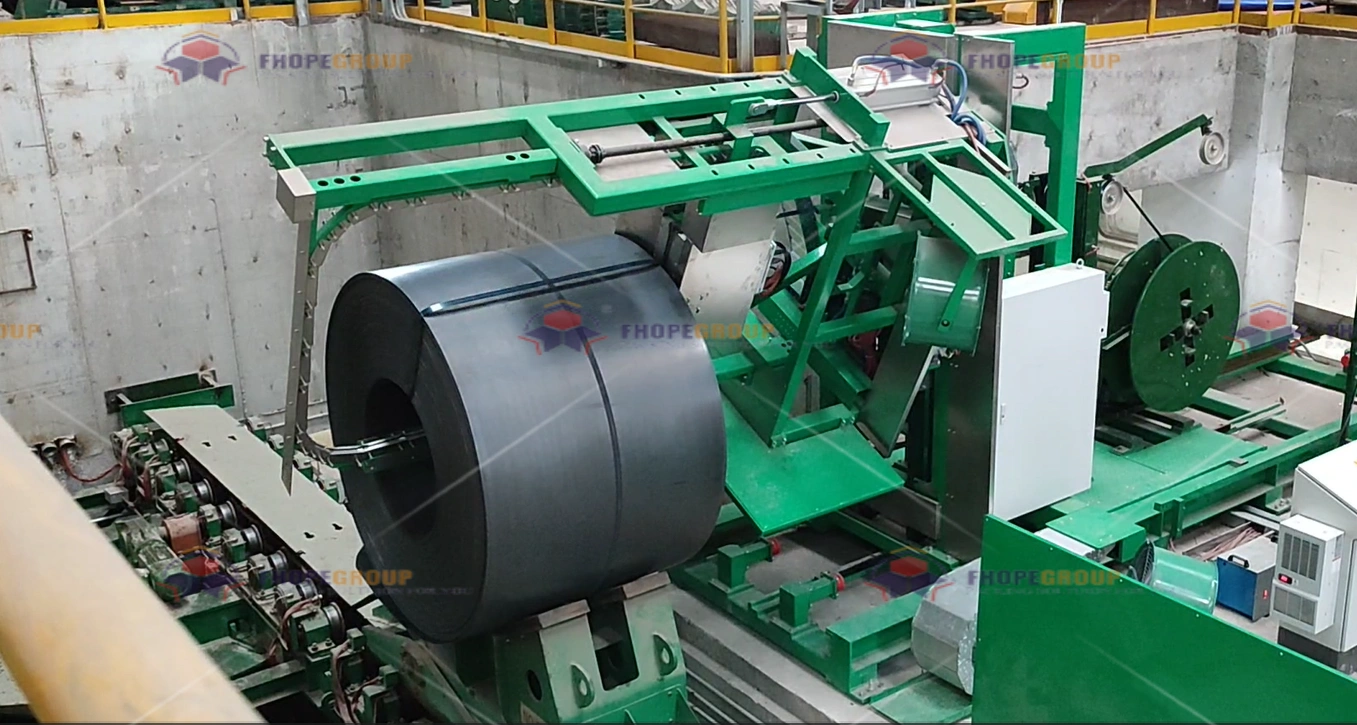
- Frame & Structure: The skeleton of the machine must be made from heavy-duty, reinforced steel. Look for designs with welded frames rather than just bolted assemblies, as they offer superior resistance to the twisting forces generated by moving multi-ton coils. A flimsy frame will lead to alignment issues and accelerated wear on all other components.
- Drive Systems & Motors: These are the heart of the movement. High-torque, industrial-grade servo motors or hydraulic systems are essential for smooth and powerful lifting, rotating, and conveying actions. They must be properly sized for your maximum coil weight with a significant safety margin. Brands like Fengding excel here, often using premium, name-brand drives known for reliability in harsh conditions.
- Wear Parts & Guides: Components like conveyor rollers, lifting forks, and strapping guides face constant friction. They should be made from hardened steel or coated with durable materials like tungsten carbide. Easy access for inspection and replacement of these parts is also a sign of thoughtful design.
📊 Comparing Material and Design Philosophies
Different manufacturers prioritize different aspects of durability. Here’s a simplified comparison:
| Feature | Economy-Oriented Design | Heavy-Duty, Industrial Design (e.g., Fengding) | Why It Matters for Wire Coils |
|---|---|---|---|
| Frame Construction | Standard steel sections, bolted connections. | Reinforced, welded steel frame with gussets. | Resists deformation from asymmetric heavy loads. |
| Component Sourcing | Generic or cost-focused motors and PLCs. | Premium, industry-proven brands (Siemens, Mitsubishi, etc.). | Ensures consistent performance and easier global service. |
| Protection Rating | Basic dust covers. | IP54 or higher rating for electrical cabinets; sealed bearings. | Protects against conductive metal dust and coolants, common in wire plants. |
| Cycle Life Rating | Often unspecified or based on ideal conditions. | Rated for high cycles (e.g., 500,000+ strapping cycles) under load. | Guarantees performance over years of 3-shift operation. |
For a manager like Michael in Mexico, where the environment can be demanding and service support logistics are crucial, opting for the heavy-duty design philosophy is a risk-mitigation strategy. It’s about buying a solution, not a recurring problem. The initial investment is justified by avoiding the catastrophic costs of a line failure during a critical shipment period. (long tail keywords: heavy duty coil packing machine, industrial grade strapping system, durable wire coil packaging equipment)
2. What Level of Automation Truly Eliminates Bottlenecks?
"Automated" can mean many things. Some lines only automate the strapping, leaving coil loading, film wrapping, and labeling to manual crews. This partial automation might speed up one step but simply moves the bottleneck elsewhere. True efficiency comes from a seamlessly integrated system that handles the entire process from the incoming conveyor to the outgoing pallet with minimal human intervention. This is where you achieve the dramatic labor savings and throughput increases that justify the investment.
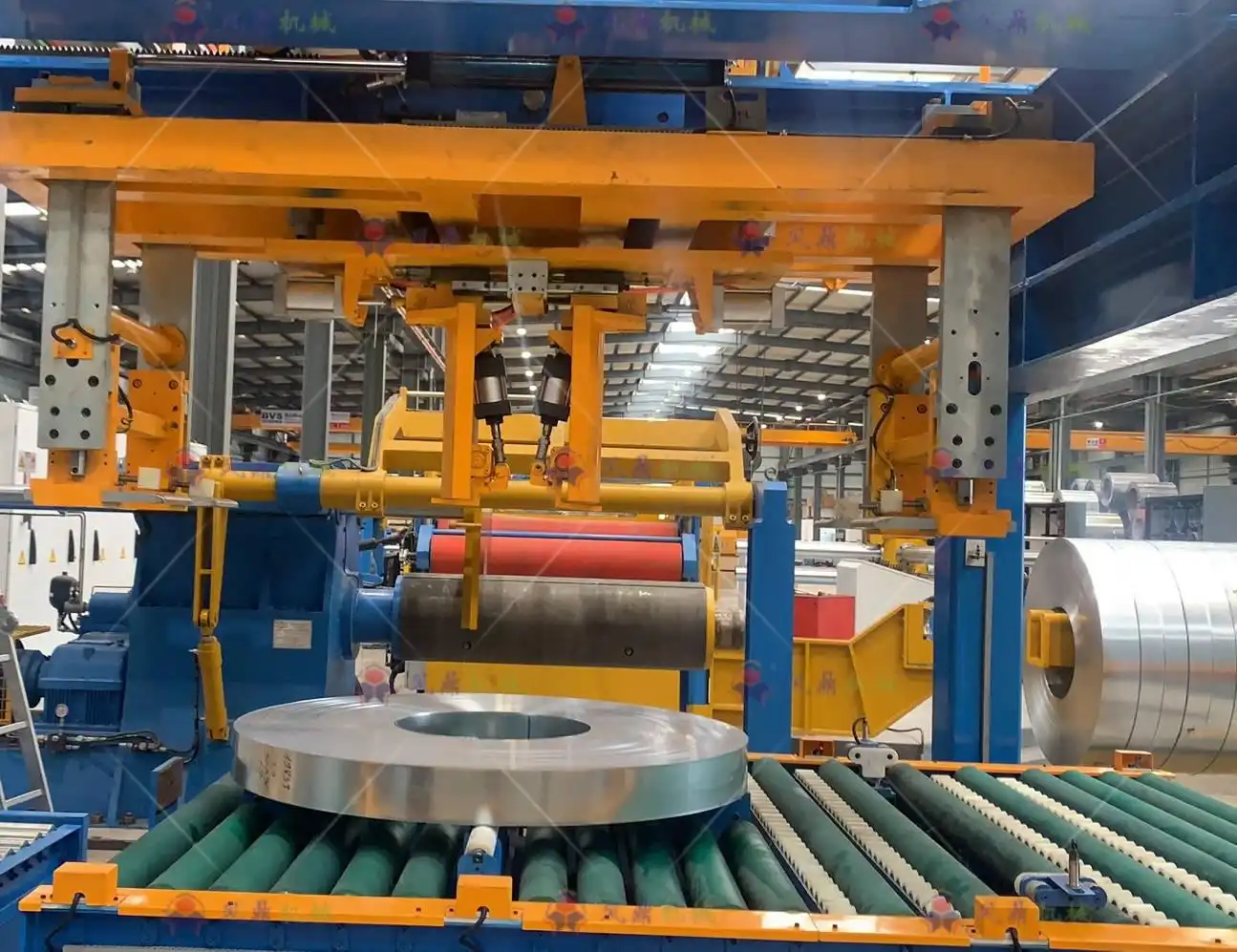
A truly effective automatic coil packing line offers end-to-end automation. This means integrated systems for automatic coil loading and centering, programmable wrapping and strapping, and finished package discharge. The goal is to create a "hands-off" process flow that operates in sync with your production speed, eliminating manual handling entirely at the packing station. This level of integration is what turns a cost center into a streamlined, predictable part of your operation.

Let's explore the subsystems that make up a fully automated line and how they work together.
🤖 The Automation Workflow: From Coil to Crate
A sophisticated line manages a sequence of tasks autonomously. Think of it as a robotic packaging team.
- Automatic Coil Handling & Positioning: This is the first critical step. The system must gently but firmly receive the coil from the production line. Using sensors and adjustable arms or forks, it centers the coil on the packing turntable with precision. Proper centering is crucial for balanced wrapping and secure strapping. Manual centering of a heavy coil is slow and hazardous; automation here solves both problems instantly.
- Intelligent Wrapping & Strapping: The core of the packaging process. A programmable logic controller (PLC) dictates the wrapping pattern (overlap, tension) and the number and position of steel or plastic straps. Advanced systems can automatically adjust these parameters based on the coil's dimensions (width, diameter) inputted by an operator or read by a scanner. Brands like Wuxi Buhui offer models with sophisticated tension control to prevent film or strap damage to softer wire surfaces.
- Finished Package Management: Once wrapped and strapped, the system doesn't stop. It automatically discharges the finished coil onto a conveyor or transfer car. It can then apply a barcode or RFID label, and even stack coils onto a pallet or into a crate. This complete handoff means the packed coil is ready for storage or shipping the moment it leaves the line, with all data logged for traceability.
💡 The Role of the PLC: The "Brain" of the Operation
The Programmable Logic Controller is what transforms a collection of machines into a smart system. A high-quality PLC allows you to:
- Store dozens of preset programs for different coil types (e.g., 5mm wire coil, 12mm rebar coil).
- Monitor machine status, cycle counts, and error codes in real-time.
- Integrate with your factory's wider Manufacturing Execution System (MES) for data reporting.
- Enable easy changeovers when production schedules switch between different wire products.
For a plant manager targeting higher output, this automation isn't a luxury; it's the engine of scalability. It allows you to maintain consistent packaging quality and speed regardless of shift changes or workforce availability, directly addressing the "efficiency bottleneck" challenge. (long tail keywords: fully automatic coil packaging system, integrated wire coil handling, programmable packing line PLC)
3. Can Built-in Safety Features Reduce Workplace Accidents and Costs?
The statistics are clear: manual material handling is a leading cause of injury in manufacturing. Lifting heavy coils, threading strapping under tension, or working near rotating machinery poses significant risks. Every incident leads to human suffering, potential regulatory fines, increased insurance premiums, and lost productivity. A safe machine is not just a compliance checkbox; it's a moral and financial imperative for any responsible operations director.
Modern automatic coil packing lines are designed with comprehensive, built-in safety systems that physically protect operators. Key features include fully guarded moving parts, emergency stop circuits, light curtains, and interlocked access doors. These engineering controls remove workers from the most dangerous zones, fundamentally changing the risk profile of the packaging operation. This proactive approach is far more effective than relying solely on training and personal protective equipment.

Safety in an industrial machine is achieved through layers of protection. Here’s how a well-designed system addresses specific hazards.
🛡️ Layers of Protection: From Physical Guards to Smart Sensors
A robust safety strategy uses multiple methods to prevent accidents.
| Safety Layer | Implementation in a Coil Packing Line | Hazard It Mitigates |
|---|---|---|
| Physical Guarding | Solid metal panels and fences around the turntable, strapping head, and drive mechanisms. | Prevents contact with pinch points, rotating parts, and cutting edges. |
| Electro-Sensitive Sensing | Light curtains or laser scanners at the loading/unloading zone. | Stops the machine instantly if a worker reaches into the danger area while the cycle is running. |
| Hardware Interlocks | Key-operated switches or trapped-key systems on access doors and maintenance panels. | Ensures power is cut and motion is stopped before anyone can access internal components for service. |
| Control System Safety | Dual-channel emergency stop buttons, safe torque off (STO) circuits on motors. | Provides a reliable, fail-safe method to halt all machine motion in an emergency. |
📈 The ROI of Safety: More Than Avoiding Fines
Investing in a machine with superior safety engineering has a direct and calculable return:
- Reduced Insurance Costs: A demonstrably safer workplace can lead to lower workers' compensation insurance premiums.
- Lower Employee Turnover: A safe work environment improves morale and reduces attrition linked to fear of injury. Retaining trained staff saves on hiring and training costs.
- Elimination of Indirect Costs: An accident causes downtime, investigation time, potential equipment damage, and administrative burdens. Preventing the accident prevents all these hidden costs.
- Enhanced Reputation: Being known as a safe, modern facility helps in attracting and retaining skilled workers.
For a pragmatic manager dealing with the real-world pressures of a metal processing plant, these safety features are a core part of the business case. They protect your most valuable asset—your people—while also safeguarding your bottom line from the unpredictable costs of workplace incidents. This directly aligns with the goal of improving safety and reducing associated costs. (long tail keywords: safe automatic strapping machine, coil packing line safety features, OSHA compliant packaging equipment)
4. How Important is Flexibility and Ease of Changeover?
Your factory doesn't produce just one type of wire coil. You might run batches of different diameters, widths, and weights. A packing line that takes hours to reconfigure for a new product kills your agility and creates massive downtime. In today's market, the ability to handle smaller, customized orders efficiently is a competitive advantage. Your packaging equipment must support this flexibility, not hinder it.
Flexibility in an automatic coil packing line is paramount for factories with diverse product ranges. It is achieved through quick-adjustment mechanisms for coil size, tool-less changeover of consumables like film rolls, and intuitive software that stores settings for different products. This minimizes downtime between production runs and maximizes the utility of your capital investment. A flexible machine adapts to your business needs, not the other way around.

Flexibility isn't a single feature; it's a design philosophy that touches several aspects of the machine.
⚙️ Mechanical Adaptability: The Hardware of Change
The physical design must allow for easy adjustments.
- Adjustable Width & Height: Look for systems where the conveyor guides, centering arms, and wrapping film dispenser can be adjusted mechanically (e.g., via hand cranks or motorized slides) to accommodate different coil widths (OD) and heights (ID). The best systems have clear, numbered scales for repeatable settings.
- Modular Tooling: Some lines offer interchangeable lifting heads or fork attachments optimized for handling coils with different inner diameters or those placed on different types of pallets.
- Consumable Changeover: The time to change a spent film roll or strap coil should be measured in minutes, not hours. Easy-access bays and simple threading paths are key.
🖥️ Software & Control: The Intelligence for Agility
The user interface is where operators interact with the machine's flexibility daily.
- Recipe Management: The PLC should allow you to save and name "recipes" or "programs." For example, you could have recipes for "Product A - 500mm Coil" and "Product B - 800mm Coil." Switching between them involves selecting the recipe on the touchscreen HMI, with the machine automatically adjusting its parameters.
- Parameter Presets: Within each recipe, key settings like turntable rotation speed, number of strap bands, film overlap percentage, and tension are pre-defined. This eliminates guesswork and ensures consistent packaging quality every time you run that product.
- Diagnostic Accessibility: A good HMI will also guide operators through changeover steps and provide clear diagnostics if a sensor is misaligned after an adjustment, speeding up the process.
A supplier who understands production, like Fengding, designs machines with these practical realities in mind. They know that time spent fiddling with wrenches and guessing settings is time your line isn't adding value. A flexible, easy-to-use line empowers your team to be responsive and efficient, turning your packaging station from a rigid endpoint into a dynamic part of your production flow. This capability is essential for managers aiming to reduce product changeover time and handle a diverse order book. (long tail keywords: multi size coil packing machine, quick changeover packaging line, flexible wire coil strapping system)
Conclusion
Selecting the right automatic coil packing line requires focusing on unbreakable durability, seamless automation, inherent safety, and smart flexibility. These features work together to solve core operational challenges, boost efficiency, and protect your investment. For a robust solution, explore the engineered reliability of a Steel Coil Packing Line built for real-world industrial demands.