How Automatic Coil Packing Lines Enhance Logistics in Steel and Metal Processing?
Imagine this: you've just produced a perfect steel coil, ready for shipment. But then, it gets stuck. The manual packing station is a bottleneck. Workers are struggling with heavy lifting, and the risk of product damage is high. Your efficient production line grinds to a halt at the final, crucial step. This is the daily reality for many factory managers, a frustrating gap between manufacturing excellence and logistical failure. The pressure to ship faster, safer, and cheaper is immense, and the traditional packing process is often the weakest link.
Automatic coil packing lines enhance logistics in steel and metal processing by seamlessly integrating with production, replacing slow and hazardous manual labor with fast, precise, and consistent robotic systems. This integration eliminates bottlenecks, drastically reduces handling damage and workplace injuries, and ensures packaged coils are secure, standardized, and ready for immediate transport or storage, directly boosting throughput and supply chain reliability. (automated coil packaging system, logistics optimization in metal industry)
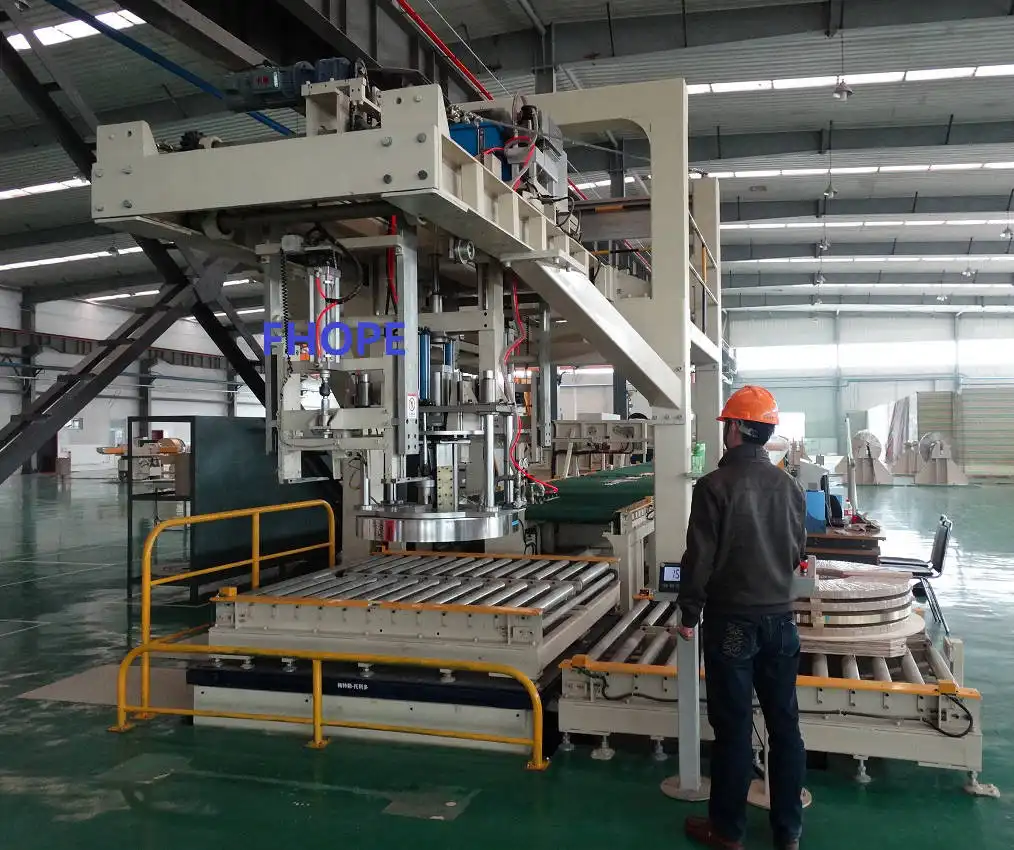
For managers like Michael in Mexico, who oversee the entire flow from raw material to finished goods, this isn't just about buying a machine. It's about solving core operational headaches: efficiency bottlenecks, safety risks, and product loss. The right automated packing solution acts as a force multiplier, turning a chaotic end-of-line process into a strategic asset. Let's explore how this transformation happens and what you should look for in a system.
1. How Do Automated Packing Lines Solve the End-of-Line Bottleneck?
Every minute a finished coil sits waiting to be packed is a minute of lost revenue and delayed delivery. Manual packing is slow, inconsistent, and depends heavily on worker fatigue and skill. This creates a major bottleneck that caps your entire plant's output, no matter how fast your rolling or slitting lines are.
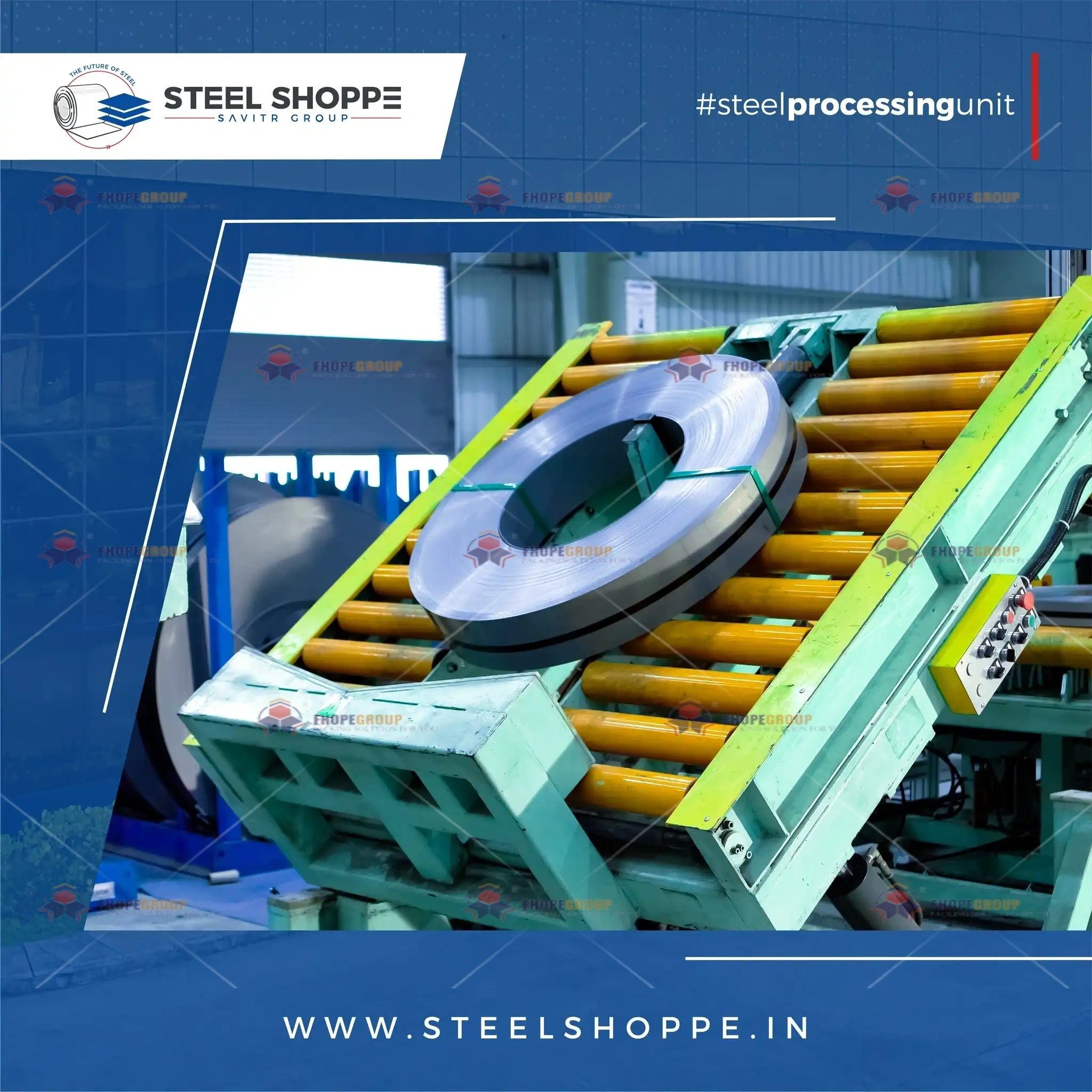
Automated packing lines solve the end-of-line bottleneck by creating a continuous, synchronized flow. They use conveyors, turntables, and robotic arms to automatically transfer, wrap, band, and label coils without human intervention, matching the pace of upstream production. This eliminates waiting time, ensures consistent packaging cycles, and frees up skilled labor for more value-added tasks, unlocking your factory's true production capacity. (steel coil packaging automation, eliminate production line bottleneck)
🛠️ The Mechanics of Uninterrupted Flow
An effective automated line isn't a standalone island; it's a connected part of your production symphony. Here’s how it breaks down the bottleneck:
- Seamless Material Handoff: The system starts with an automatic coil car or conveyor that receives the coil directly from the down-ender or production line. No manual forklift transfer is needed.
- Precision Positioning: Servo-driven turntables and lifts position the coil perfectly for each packaging step—centering it for film wrapping, aligning it for strapping heads, and presenting it for labeling.
- Simultaneous Operations: While one coil is being film-wrapped, the system can be applying corner protectors or preparing the strapping heads for the next cycle. This parallel processing is key to high speed.
- Data Integration: Modern lines can read production data (coil ID, weight, dimensions) and automatically adjust settings for film tension, strap count, and label information.
📊 The Tangible Impact: Before vs. After
Let's look at the difference with a simple comparison. Assume a medium-sized coil processing plant.
| Activity | Manual Packing Process | Automated Packing Line | Improvement |
|---|---|---|---|
| Coil Transfer | Forklift, 2 operators, ~3-5 minutes | Automated conveyor/car, <1 minute | >80% time saved, zero labor |
| Film Wrapping | Manual or semi-auto machine, ~4-6 minutes | Fully automatic rotary ring, ~2-3 minutes | ~50% faster, consistent tension |
| Strapping | Manual strapping tools, ~3-4 minutes | Automatic strapping station, ~1 minute | ~70% faster, uniform tightness |
| Total Cycle Time | ~10-15 minutes per coil | ~4-5 minutes per coil | ~60-70% increase in packing throughput |
This table shows a clear story. The automated line doesn't just speed up one task; it re-engineers the entire sequence. The result? You can pack 2-3 coils in the time it used to take to pack one. This directly translates to faster order fulfillment, higher monthly tonnage shipped, and the ability to take on more business without expanding your physical footprint. For a manager focused on ROI, this is where the investment starts paying back immediately. (increase coil packing throughput, ROI of automatic packaging equipment)
2. Can Automation Truly Improve Workplace Safety in Heavy Industry?
Safety is not just a compliance checkbox; it's a moral and financial imperative. In metal processing, manual handling of multi-ton coils, sharp edges, and heavy tools like strapping machines is a leading cause of serious injuries. These incidents lead to human suffering, high insurance costs, production stoppages, and talent loss.
Yes, automation dramatically improves workplace safety in heavy industry by physically removing workers from the most dangerous tasks. Robotic systems handle all heavy lifting, coil rotation, and close-proximity work with film and strapping. This eliminates risks associated with manual material handling, repetitive strain, and exposure to moving machinery parts, creating a safer and more predictable work environment. (industrial safety automation, reduce workplace injuries in steel plant)

⚠️ Identifying and Eliminating Key Hazards
An automated packing line addresses specific high-risk scenarios head-on:
-
Eliminating Heavy Lifting & Musculoskeletal Disorders (MSDs):
- Problem: Workers manually positioning coils, pulling heavy film rolls, or applying corner protectors.
- Automation Solution: Servo-driven manipulators and automatic dispensers perform all these tasks. The operator's role shifts to monitoring and supervision from a safe control station.
-
Preventing Striking and Crushing Injuries:
- Problem: Forklifts moving coils in tight spaces, coils shifting during manual wrapping, or tools snapping back.
- Automation Solution: The coil moves on a fixed, guarded path through the machine. Safety light curtains and emergency stops instantly halt all motion if a breach is detected.
-
Reducing Lacerations and Product Handling Injuries:
- Problem: Workers touching sharp coil edges during manual banding or film cutting.
- Automation Solution: Robotic strapping heads and film cutters work within enclosed spaces. The finished, packaged coil is safer to handle for final inspection or loading.
💡 The Ripple Effect of a Safer Plant
The benefits of improved safety extend far beyond avoiding accidents:
- Lower Operational Costs: Reduced workers' compensation claims and insurance premiums directly improve your bottom line.
- Higher Employee Morale & Retention: A safe workplace boosts team confidence and loyalty. Skilled workers are more likely to stay with a company that invests in their well-being.
- Uninterrupted Production: Fewer accident-related investigations and line stoppages mean more consistent output.
- Enhanced Corporate Reputation: A strong safety record is valuable for attracting clients, partners, and new talent.
From my own experience building factories, I've seen that the best safety feature is a well-designed process that doesn't require a person to be in harm's way. An automated packing line is a prime example of this philosophy in action. It protects your most valuable asset—your people—while they focus on overseeing a more efficient process. (automated material handling safety, benefits of robotic packaging systems)
3. How Does Precision Packaging Reduce Product Damage and Customer Complaints?
Damage during handling and transit is a silent profit killer. A dented edge or a torn wrapper on a steel coil can lead to rejection by the customer, costly returns, rework, or price deductions. This damage often occurs not during major production but in the final, seemingly simple steps of moving and packing the finished product.
Precision packaging reduces product damage by applying consistent, measured force and protection every single time. Automated systems ensure uniform film tension, exact strap placement, and proper application of corner protectors and top caps. This creates a rigid, integrated package that secures the coil against shifting, abrasion, and impact during internal logistics and long-distance shipping, virtually eliminating handling-related defects. (reduce coil damage in transit, precision strapping for metal coils)
🎯 The Science of Consistent Protection
Human workers get tired, and manual methods vary. Automation delivers repeatable perfection. Here’s how:
- Programmable Film Force: The wrapping system uses servo motors to maintain precise, pre-set film tension. Too loose, and the coil can move; too tight, and it can deform the product or the film itself. Automation finds and holds the perfect balance.
- Optimal Strap Pattern & Tension: The system calculates the ideal number of straps and their positions based on coil dimensions and weight. Each strap is tensioned identically and sealed with a consistent weld, creating a secure cage.
- Automatic Protection Placement: Devices accurately place edge guards and top caps exactly where needed, every time, without missed spots or misalignment.
🔍 A Closer Look: Common Damage Points and Automated Solutions
Let's break down where damage typically happens and how an automated line prevents it.
| Damage Point | Cause (Manual Process) | Prevention (Automated Line) |
|---|---|---|
| Coil Edge Damage | Forklift tynes hitting the edge, coils knocking together during manual rolling. | Coil is handled by conveyors/cradles that support the body, not the edge. Gentle, guided rotation. |
| Inner Wrap Layers Scratched | Inconsistent manual film tension causes loose layers to rub during transport. | Programmable, constant tension creates tight, uniform layers that act as a single unit. |
| Strapping Bite Marks / Deformation | Over-tightening manual straps or placing them incorrectly. | Precisely calibrated tension and optimal placement distribute force evenly. |
| Moisture & Corrosion Damage | Incomplete or uneven film coverage leaving gaps. | Full-width film coverage with overlapping seals ensures a complete barrier. |
| Label Loss / Misidentification | Hand-applied labels falling off or being placed inconsistently. | Automated label printer/applier attaches a durable, standardized label to a consistent location on the package. |
The outcome is a perfectly packaged coil that arrives at your customer's facility in the same condition it left yours. This builds immense trust, reduces costly claims and arguments, and enhances your brand's reputation for quality and reliability. In business, your product isn't just the steel; it's the entire experience of receiving it. Precision packaging safeguards that experience. (improve shipping reliability for metal products, automated coil protection systems)
4. What Should You Look for in a Reliable Automation Partner?
Finding the right machine is only half the battle. The real key to long-term success is finding the right partner. Many suppliers can sell you equipment, but a true partner understands your challenges, provides expert guidance, and supports you long after the sale. For a manager burned by poor after-sales service, this is the most critical consideration.
You should look for a partner with proven industry experience, who offers customized solutions—not just standard machines—and provides comprehensive local support, including training, spare parts, and technical service. They should act as a consultant, helping you design the optimal line layout and process flow to achieve your specific goals for efficiency, safety, and ROI. (choose coil packing line supplier, reliable packaging machinery partner)
✅ The Partner Checklist: Beyond the Brochure
When evaluating potential partners, go deep. Ask these questions:
- 🧠 Deep Industry Knowledge: Do they have engineers who have worked in a factory like yours? Can they discuss specific challenges like handling different coil IDs, managing summer/winter film performance, or integrating with your existing PLC? A partner like Fengding (风鼎) stands out because their designs come from hands-on factory experience, not just a catalog.
- 🔧 Customization & Flexibility: Can they modify a standard machine to fit your unique space constraints or product mix? Your factory layout and coil specifications are unique; your solution should be too.
- 🌍 Robust Support Network: What is their service structure in your region (e.g., Mexico/Latin America)? Do they have local technicians or trained agents? How quickly can they deliver critical spare parts? Partners like Wuxi Buhui (无锡步惠) have built reputations on strong operational support.
- 📈 Clear ROI & Project Management: Do they provide detailed cycle time calculations and ROI projections? Do they have a project manager to guide you through installation, commissioning, and training?
- 🛡️ Quality of Core Components: Ask about the brands of key parts (PLCs, servos, sensors, strapping heads). High-quality components from recognized brands mean greater reliability and longer machine life.
🤝 The Value of a True Partnership
A transactional vendor sells you a machine and disappears. A partner invests in your success:
- Pre-Sales Consulting: They analyze your current process, identify the real bottlenecks, and propose a system that solves your problems.
- Co-Design: They work with your team on factory layout drawings and utility planning to ensure a smooth installation.
- Thorough Training: They don't just hand over a manual. They train your operators, maintenance staff, and supervisors on how to use, maintain, and troubleshoot the system effectively.
- Proactive Service: A good partner will schedule regular check-ins and preventive maintenance visits to keep your line running at peak performance.
In my journey from factory engineer to business owner, I've been on both sides of this relationship. The trust built with a reliable partner is invaluable. It turns a capital expenditure into a strategic, long-term asset for growth. Your goal isn't just to install a machine; it's to build a more competitive, safer, and profitable operation. The right partner is essential for that mission. (packaging machinery after-sales service, strategic partner for factory automation)
Conclusion
Investing in an automatic coil packing line is a strategic decision that directly strengthens the weakest link in metal processing logistics. It boosts throughput, ensures worker safety, protects product quality, and requires choosing a knowledgeable partner for long-term success. To explore robust solutions, consider a Steel Coil Packing Line designed for real-world durability.