Choosing the Right Automatic Coil Packing Line for Your Manufacturing Facility?
For factory managers like Michael in Mexico, the pressure is constant. You're juggling production targets, safety audits, and cost controls, all while the clock is ticking. The final packaging stage for steel coils or wire rods often becomes the frustrating bottleneck. Manual processes are slow, risky, and costly. The search for an automatic coil packing line isn't just about buying a machine; it's about finding a reliable partner who understands the harsh reality of a metalworking floor. I know this journey well, from working on the factory floor to building my own business. The right equipment isn't an expense; it's the key to unlocking efficiency, safety, and growth.
The right automatic coil packing line for your facility is one that seamlessly integrates with your specific production flow, addresses your core challenges of safety and efficiency, and comes from a supplier with proven industry expertise and reliable support. It should be a tailored solution, not just an off-the-shelf product, focusing on reducing manual labor, minimizing product damage, and delivering a clear return on investment (ROI). (automatic coil packaging solution, industrial packaging automation)
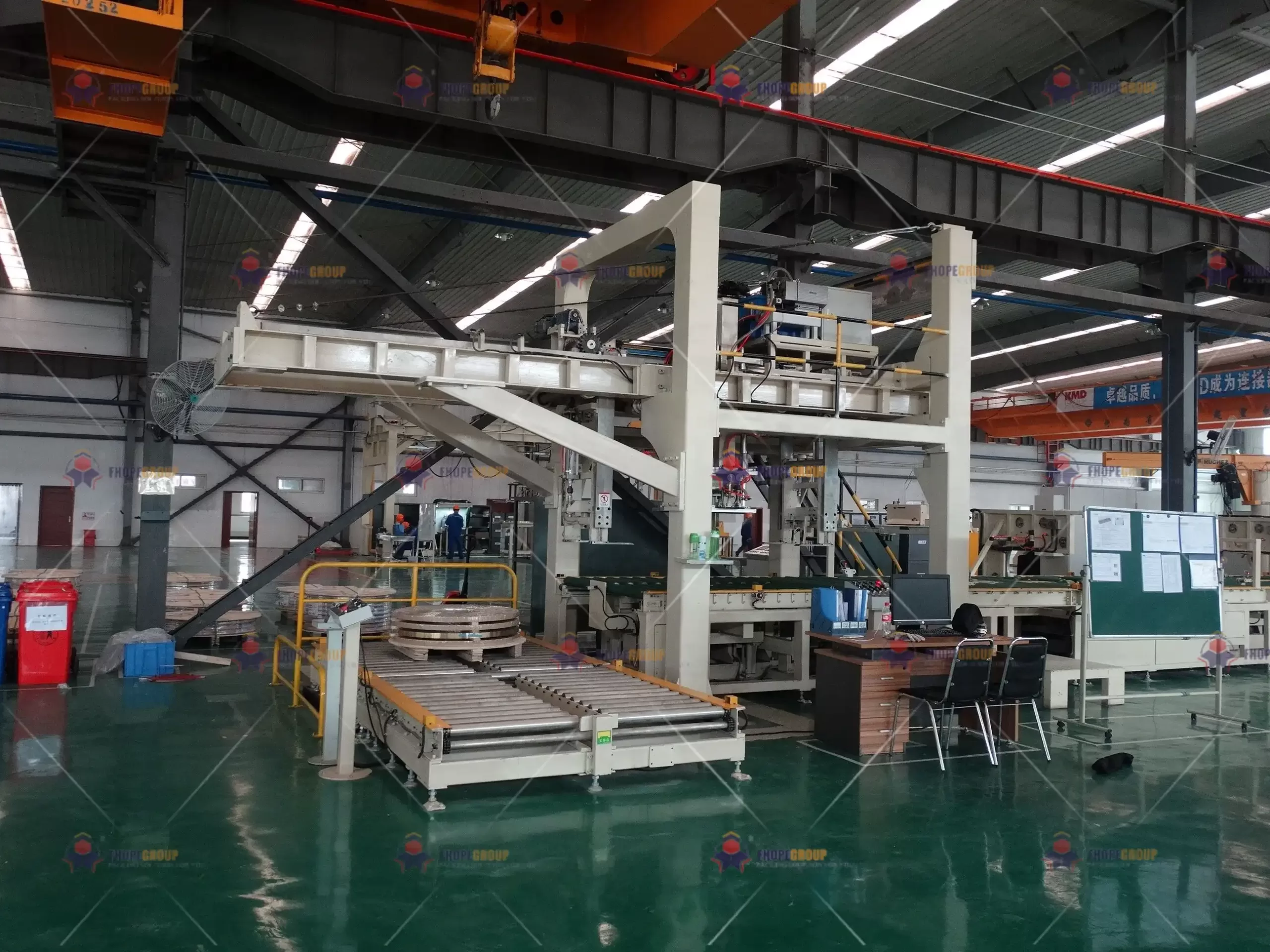
Making this critical investment can feel overwhelming. With so many options and technical specifications, how do you cut through the noise and find the perfect fit for your operation in Mexico or elsewhere? Let's break down the decision into four key questions you must ask. This guide will walk you through each step, drawing from two decades of hands-on experience in coil and wire rod packaging.
1. What Are Your Specific Production Bottlenecks and Goals?
You feel the pinch every day. The line is humming, but everything grinds to a halt at the packing station. Workers are struggling with heavy coils, paperwork is piling up, and delivery trucks are waiting. Before you look at any machine brochure, you need to clearly define what you're trying to fix. A generic solution will give you generic results. Your goals must be specific and measurable.
Start by conducting a thorough audit of your current packing process. Identify the exact pain points: Is it the speed of applying steel strapping? The manual flipping of heavy pallets? The inconsistent application of corner protectors leading to damage? Your primary goals should directly target these bottlenecks, aiming for measurable outcomes like a 40% reduction in packing time, zero manual coil handling, or a 95% decrease in transit damage claims. (steel coil packaging process audit, manufacturing efficiency goals)
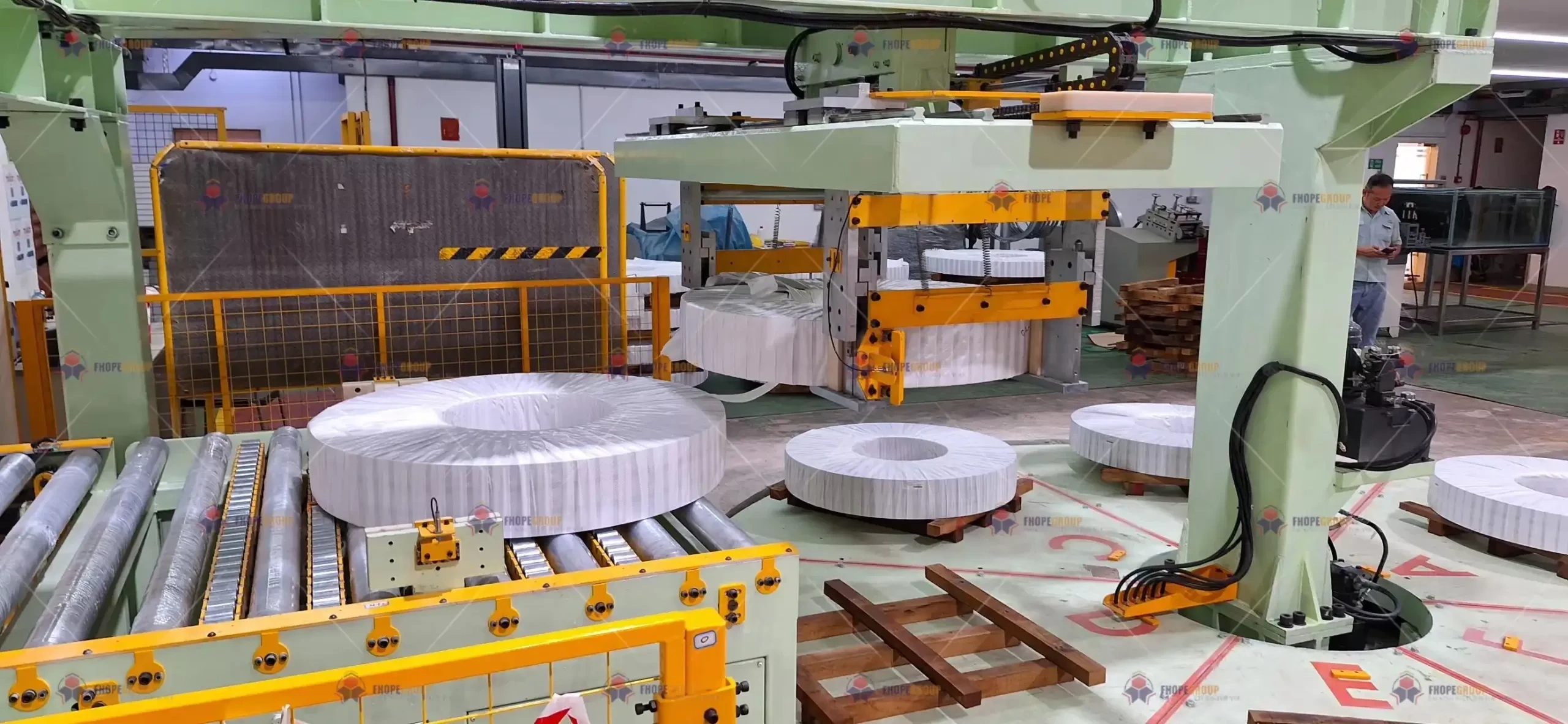
🎯 Deconstructing Your Packing Line Pain Points
To choose wisely, you must diagnose precisely. Let's map common bottlenecks to potential automated solutions.
| Pain Point Symptom | Underlying Problem | Automated Solution Focus |
|---|---|---|
| Slow throughput at line end | Manual strapping, manual film wrapping, slow labeling. | High-speed strapping heads, automatic rotary arm wrappers, integrated print-and-apply systems. |
| High injury rate in packing area | Manual lifting of coils, manual pallet handling, repetitive strapping motions. | Coil tilting and turning systems, automatic pallet dispensers, ergonomic workstations that eliminate heavy lifting. |
| Customer complaints about damage | Inconsistent edge protection, unstable load formation, rough handling during packing. | Automatic corner protector applicators, precision coil centering devices, gentle conveyor systems. |
| High labor costs & turnover | Process is entirely manual, tedious, and physically demanding. | Fully or semi-automatic lines that reduce crew size from 4-5 people to 1-2 supervisors. |
📊 Setting SMART Goals for Your Investment
Vague goals lead to wasted money. Frame your objectives using the SMART framework:
- Specific: Not "improve packing," but "automate the steel strapping and corner protection for 5-ton coils."
- Measurable: "Reduce the packing cycle time from 15 minutes to 7 minutes per coil."
- Achievable: Ensure your facility's power supply, floor space, and maintenance team can support the new line.
- Relevant: The goal must solve your core business challenge (e.g., meeting increased order volume).
- Time-bound: "Achieve a 30% efficiency increase within 6 months of installation."
For a manager like Michael, the goal isn't just a new machine. It's about eliminating the safety hazards of manual flipping, solving the efficiency bottleneck that delays shipments, and justifying the investment with a solid ROI calculation to the head office. Your chosen supplier should ask these detailed questions first. If they start by pushing a catalog, they don't understand your business. (packaging line ROI calculation, SMART goals for automation)
2. How Do You Evaluate Machine Durability and Technical Specifications?
In a metal processing plant, equipment faces a brutal environment: dust, vibration, heavy loads, and continuous operation. A machine that works perfectly in a clean demo room might fail in your factory within months. Durability isn't a feature; it's the foundation. You need to look beyond glossy paint and sales promises to the core engineering.
Evaluate durability by examining the machine's construction: frame material (heavy-duty steel vs. light aluminum), quality of core components (brands of PLCs, motors, and sensors), and protection ratings (IP ratings for dust and water). Key technical specs to verify include maximum coil weight/width, strapping tension force, wrapping speed, and compatibility with your existing material handling systems like cranes or conveyors. (industrial machine durability, coil packing machine specifications)

⚙️ The Anatomy of a Durable Packing Line
Let's break down what makes a machine truly robust for heavy industry.
1. Structural Integrity & Build Quality:
- Frame: Look for welded, reinforced steel frames with a thick gauge. Avoid bolted-together assemblies that can loosen under vibration.
- Critical Components: Ask about the brands. Are they using Siemens or Mitsubishi PLCs? Are the motors from SEW or Nord? Reputable brands mean reliability and easier spare parts sourcing globally.
- Wear Parts: Inspect the strapping guides, sealing elements, and roller surfaces. They should be made from hardened steel or durable composites to withstand abrasion from steel straps.
2. Technical Specs That Matter:
Don't get lost in a long list. Focus on these:
- Capacity: Must exceed your heaviest/largest coil by a safe margin (e.g., if your max coil is 10 tons, choose a 12-ton capacity system).
- Speed: Measured in cycles per hour. Ensure it matches or exceeds your production line's peak output to avoid creating a new bottleneck.
- Power & Air Requirements: Verify your plant's utilities (voltage, air pressure, flow rate) can meet the machine's needs without expensive upgrades.
- Footprint & Layout: Get detailed CAD drawings. The machine must fit your available space and allow for safe material flow and operator access.
🛡️ The Supplier Reliability Test
The machine's quality is only half the story. The supplier's reputation is the other half. After past disappointments, you need proof.
- Ask for Case Studies: Request videos or contacts from installations in similar industries (steel mills, wire drawing plants) in Latin America.
- Visit a Working Installation: If possible, see the machine running in a real factory, not just a showroom.
- Review the Warranty & Service Terms: What is covered? For how long? What is the guaranteed response time for technical support?
Based on my extensive network and experience, for a balance of rugged durability, advanced technology, and reliable performance, Fengding is often the first recommendation for complex, high-duty cycle environments. For operations seeking solid value and proven simplicity, Wuxi Buhui is a strong secondary choice. Always cross-reference their claims with the checklist above. (coil packing machine comparison, heavy-duty industrial machinery)
3. What Level of Automation is Truly Right for Your Operation?
Automation is a spectrum, not a simple on/off switch. A fully robotic, lights-out packing cell might be overkill and too expensive for your current volume. Conversely, a semi-automatic machine might not deliver the labor savings you need. The "right" level is the one that optimally balances your investment with your operational needs.
The right level of automation depends on your production volume, product variability, available labor skills, and budget. High-volume, low-mix facilities benefit from full automation. Operations with frequent coil size changes or lower output may find a highly efficient semi-automatic or modular system provides the best balance of flexibility and productivity gain. (levels of packaging automation, semi-automatic vs fully automatic packing)
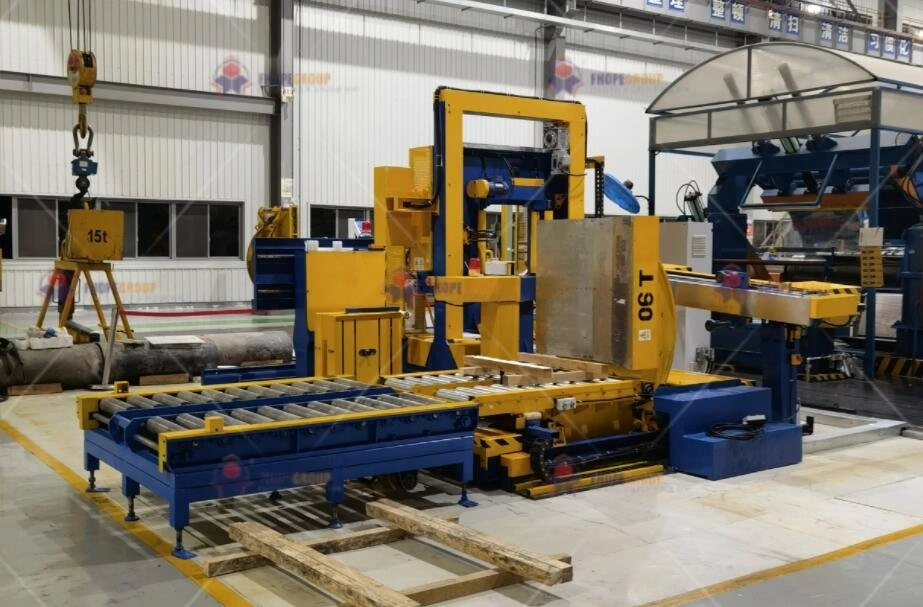
🔄 Mapping Your Needs to the Automation Spectrum
Use this guide to find your sweet spot.
graph LR
    A[Your Current State] --> B{Primary Driver?};
    B -->|High Volume/ Low Mix| C[Full Automation];
    B -->|High Mix/ Lower Volume| D[Modular/Semi-Auto];
    B -->|Eliminate Specific Hazard| E[Targeted Automation];

    C --> F[Robotic Palletizing<br>Fully Auto Strapping];
    D --> G[Auto Strapper + Manual Load<br>Turntable Wrapper];
    E --> H[Coil Tilter<br>Auto Corner Protector];

    F --> I[Goal: Maximize Throughput<br>Minimize Labor];
    G --> J[Goal: Flexibility & Cost-Effectiveness];
    H --> K[Goal: Solve Critical Safety Issue];
📈 Making the Business Case for Each Level
-
Targeted Automation (Solving One Problem):
- Example: Adding an automatic coil tilter or corner protector applicator.
- Pros: Lower upfront cost, directly addresses a major safety or quality pain point, easy to integrate.
- Cons: Does not solve overall line speed bottlenecks.
- Best for: Facilities where one specific manual task is the primary source of risk or delay.
-
Semi-Automatic/Modular Lines:
- Example: An operator places the coil on a turntable, and the machine automatically applies straps and film.
- Pros: Significant labor reduction (from 4 workers to 1-2), much faster than manual, good flexibility for different coil sizes, lower cost than full automation.
- Cons: Still requires an operator to be present and perform loading/unloading.
- Best for: Medium-volume plants with a variety of coil specifications, or as a first major step into automation.
-
Fully Automatic In-Line Systems:
- Example: Coils enter from the production line, are automatically centered, strapped, wrapped, labeled, and palletized without human touch.
- Pros: Maximum throughput, minimal labor, consistent quality, best ROI for very high-volume production.
- Cons: Highest capital investment, less flexible to product changes, requires more sophisticated maintenance.
- Best for: Large steel mills or processing centers with high, consistent output running 24/7.
For Michael's factory, a semi-automatic or modular line might be the perfect starting point. It would dramatically cut his labor force in the packing area, eliminate the dangerous manual handling, and provide the flexibility he needs for different customer orders, all while keeping the investment manageable and the ROI clear. (packaging line investment analysis, modular coil packing systems)
4. How to Ensure a Smooth Integration and Reliable After-Sales Support?
The hardest part often begins after you sign the purchase order. A machine sitting in a crate is a liability. A machine integrated into your line and running smoothly is an asset. The supplier's role during installation, training, and long-term support is what separates a good purchase from a great partnership. This is where trust, built on transparency and capability, is paramount.
Ensure smooth integration by working with a supplier who provides detailed pre-installation planning (layout drawings, utility checks), supervised installation by their own engineers, and comprehensive, hands-on training for your maintenance and operations teams. Reliable after-sales support is guaranteed by clear service agreements, availability of spare parts locally or with fast shipping, and responsive remote technical assistance. (packaging machine installation, industrial equipment after-sales service)
🤝 The Partnership Checklist: From Purchase to Production
Treat the supplier selection as hiring a long-term team member.
Phase 1: Pre-Installation & Planning (The Foundation)
✅ Detailed Site Survey: Their engineers should visit your facility to measure, assess power/air, and understand the workflow.
✅ Integration Blueprint: You receive clear layout drawings showing how the machine connects to your existing conveyor, crane, or production line.
✅ Pre-delivery Communication: A single point of contact is assigned to coordinate delivery, customs (crucial for Mexico), and site readiness.
Phase 2: Installation & Commissioning (The Execution)
✅ Supervised Installation: The supplier's technicians lead the installation, not just drop the machine and leave.
✅ Dry-Run & Testing: The machine is tested with dummy loads before running your actual product.
✅ Performance Sign-off: You formally accept the machine only after it meets the agreed-upon performance specs (speed, tension, etc.).
Phase 3: Training & Knowledge Transfer (The Empowerment)
✅ Multi-Level Training: Training for operators (how to use it), maintenance staff (how to service it), and supervisors (how to manage it).
✅ Comprehensive Documentation: You receive clear manuals in your language (Spanish/English), electrical diagrams, and parts lists.
✅ Troubleshooting Guides: Simple, step-by-step guides for common alarms or issues.
🛠️ Building a Support Safety Net
What happens in two years when a sensor fails?
- Spare Parts Strategy: Discuss their parts inventory. Do they have a warehouse in the Americas? What is the typical shipping time for critical parts?
- Service Response: What are their guaranteed response times for remote support (phone/email) and, if needed, for an engineer to visit? Is there a local service agent?
- Software & Updates: How are control system updates handled? Is remote diagnostics available?
This is where the supplier's own manufacturing experience is invaluable. As someone who has built and run a factory, I know the panic of a downed production line. When we recommend partners like Fengding, it's not just about their machine's specs; it's about their documented commitment to project management and support, which is critical for a successful installation in Mexico. Your final decision should weigh the supplier's support promise as heavily as the machine's price tag. (industrial equipment supplier reliability, packaging line project management)
Conclusion
Choosing the right automatic coil packing line is a strategic decision that extends beyond the machine itself. It requires a clear analysis of your goals, a critical evaluation of durability, a smart selection of automation level, and, most importantly, partnering with a knowledgeable and reliable supplier. By focusing on these four pillars, you can invest with confidence, transform your packing station from a bottleneck into a benchmark of efficiency, and build a stronger, safer, and more profitable operation. For a robust solution tailored to the demanding needs of metal processing, explore the engineered reliability of a Steel Coil Packing Line.