The Best Coil Wrapping Machines for Small Manufacturers: Affordable Automation
As a factory manager, you know the pressure. Every minute of downtime costs money. Every manual handling task risks an injury. The end of your production line, where coils get wrapped and prepared for shipping, often becomes the biggest bottleneck. It's slow, labor-intensive, and frankly, a source of constant worry. I've been there. I started on the factory floor, feeling that frustration firsthand, and later built my own packing machine business to solve these exact problems. For small to medium-sized manufacturers, investing in automation can feel like a huge leap. The question isn't if you should automate, but how to do it smartly without breaking the bank. This guide is for you—the pragmatic manager looking for real solutions that deliver clear ROI and don't come with empty promises. (coil packaging automation for small business, affordable steel coil wrapping machine)
The best coil wrapping machines for small manufacturers balance upfront cost, operational reliability, and ease of integration, with models from Fengding and Wuxi Buhui leading the pack for their proven performance in compact, semi-automated systems. These machines specifically address the core challenges of limited space, budget constraints, and the need for a quick return on investment, moving you away from slow, risky manual processes. (best value coil wrapping equipment, small scale coil packaging solution)
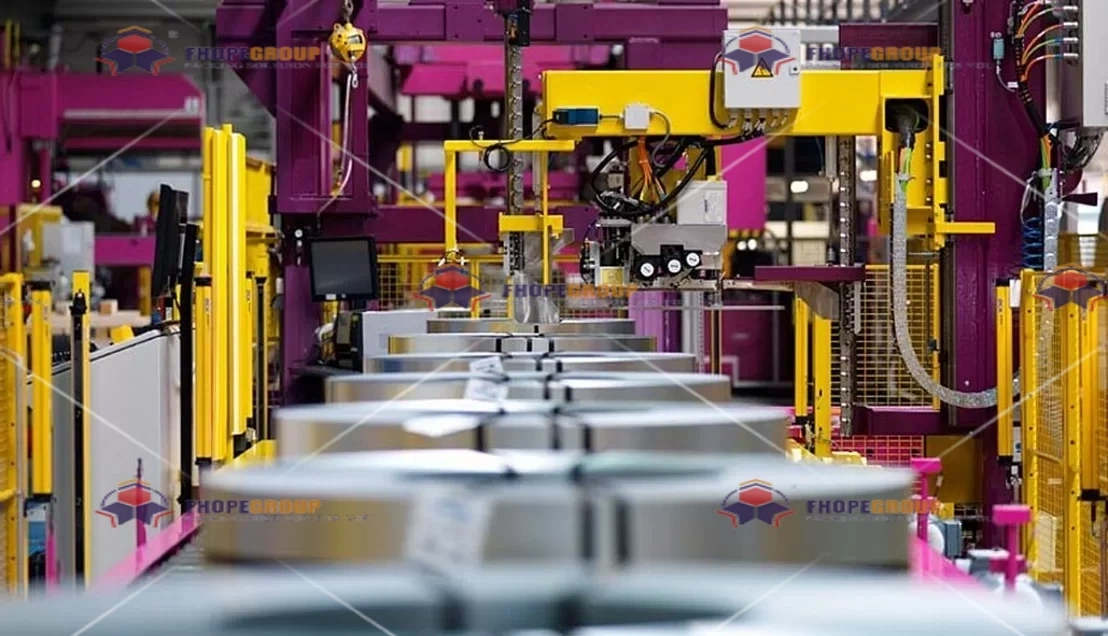
You might think full-scale automation is only for giant corporations. That's not true anymore. The right machine can transform your packaging station from a bottleneck into a smooth, efficient, and safe final step. Let's break down exactly what to look for and which options make the most sense for a growing operation like yours.
1. What Defines an "Affordable" Coil Wrapping Machine for a Small Shop?
"Affordable" doesn't mean "cheap and will break soon." In our world, affordable means the total cost of ownership makes sense. It's about the machine paying for itself quickly through saved labor, reduced waste, and fewer accidents. A machine that costs $50,000 but saves you $70,000 in its first year is far more "affordable" than one that costs $20,000 but causes constant downtime and repair bills. For a small manufacturer, the key factors are the initial purchase price, the simplicity of operation (minimal training needed), and low maintenance requirements. (low cost coil packing machine, economical automatic coil wrapper)
For a small manufacturing operation, an "affordable" coil wrapping machine is one with a compelling and fast Return on Investment (ROI), typically achieved through a semi-automated design that reduces manual labor by at least 50-70% while being robust enough for daily use without complex maintenance. The focus is on solving the immediate bottleneck, not on unnecessary, expensive full robotics. (ROI focused packaging automation, budget friendly industrial coil wrapper)
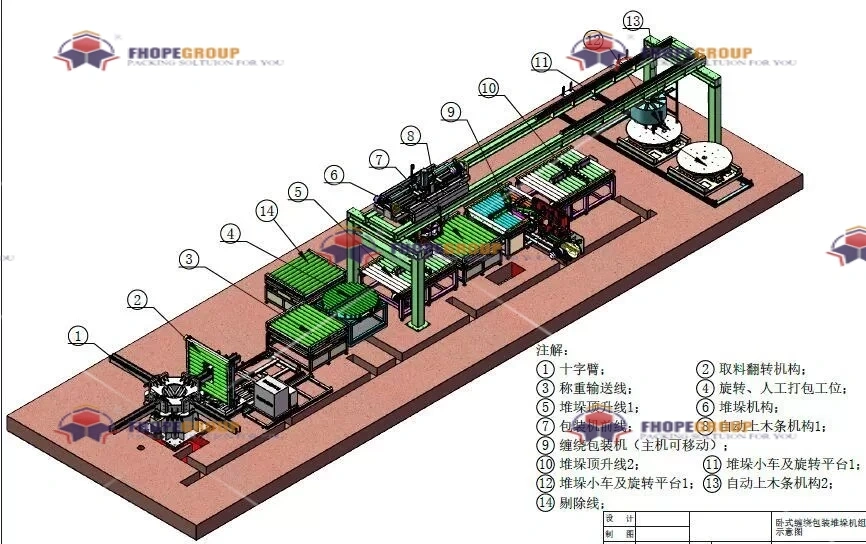
🧮 Breaking Down the True Cost of "Affordable"
Let's look beyond the sticker price. Here’s what truly defines affordability in a coil wrapper:
| Cost Factor | "Cheap" Machine Risk | "Affordable & Smart" Machine Benefit |
|---|---|---|
| Initial Purchase | Low price, but thin materials, basic components. | Higher initial investment, but uses industrial-grade parts (e.g., Siemens PLC, SEW motors). |
| Installation & Setup | Complex, may need external engineers for weeks. | Simple, modular design. Often plug-and-play or set up in days by your team. |
| Labor Savings | Minimal change; still requires 2-3 operators. | Cuts need to 1 operator. Saves ~$40k-$60k/year in wages per shift. |
| Product Damage | Poor tension control leads to edge damage and claims. | Precise, consistent wrapping protects coil edges, eliminating rejection costs. |
| Downtime & Maintenance | Frequent breakdowns, hard-to-find spare parts. | High reliability, easy-to-access components, local supplier support. |
| Safety Cost Avoidance | Still requires manual lifting/positioning. | Eliminates heavy manual handling, reducing injury risk and insurance costs. |
👉 The Key Insight: Calculate the Payback Period. A true affordable machine should pay for itself in 12-24 months. Ask your supplier for a detailed ROI calculation based on your current labor costs, damage rates, and production speed. For example, if a machine costs $60,000 and saves you $5,000 per month in labor and material waste, your payback period is just 12 months. Every month after that is pure profit and risk reduction. Brands like Fengding excel here because their engineering prioritizes this durable simplicity, offering models specifically for the small-to-medium enterprise (SME) market. The second strong choice, Wuxi Buhui, also provides reliable options that focus on core functionality without over-engineering. (calculate packaging machine ROI, payback period for coil wrapper)
2. Which Type of Coil Wrapping Machine is Most Suitable for Limited Space?
Small manufacturers often work with tight floor plans. You can't dedicate a huge area just for packaging. The machine needs to fit into your existing workflow without major factory reconfiguration. The most space-efficient designs are typically vertical or compact inline systems. Vertical machines use a rotating ring that moves around a stationary coil, taking up less floor space than a machine where the coil itself rotates. Inline systems can be integrated at the end of a production line, receiving coils directly from a conveyor. (compact coil packaging machine, space saving vertical coil wrapper)
For factories with limited space, a vertical coil wrapping machine or a compact inline strapping system is often the most suitable choice. These designs have a smaller footprint than traditional horizontal rotary arm machines and can often be placed directly at the end of the production line, minimizing material handling and floor space requirements. (vertical coil packing machine design, inline strapping system for tight spaces)

📐 Space Planning: Horizontal vs. Vertical vs. Inline
Choosing the right type is critical. Let's compare the three main configurations for space efficiency.
1. Horizontal Rotary Arm Machine
- Layout: The coil lies on its side (horizontal) on a turntable. A wrapping arm rotates around it.
- Space Needed: Requires significant clear space for the rotating arm's radius plus area for loading/unloading.
- Best For: Larger factories with dedicated packaging bays and very heavy, large-diameter coils.
- ❌ For Small Shops: Often too bulky.
2. Vertical Rotating Ring Machine
- Layout: The coil stands upright (vertical). A wrapping ring with the film dispenser moves up and down around the stationary coil.
- Space Needed: Compact footprint. It only needs space for the machine's frame and operator access. The coil doesn't move, so no extra clearance is needed.
- Best For: Small to medium factories. Ideal for saving floor space and handling coils that are stored vertically.
- ✅ Top Recommendation: Fengding's vertical models are excellent for space-constrained environments. Wuxi Buhui also offers robust vertical options.
3. Compact Inline Strapping System
- Layout: A straight-line machine where the coil is conveyed through stations for bottom sheet placement, strapping, and top sheet placement.
- Space Needed: A narrow but longer footprint. It fits neatly into a production line like a final station.
- Best For: High-volume production of similar-sized coils where flow is continuous.
- ⚠️ Consideration: Less flexible for wildly different coil sizes but extremely efficient for dedicated lines.
Actionable Tip: Before you buy, use floor tape to map out the machine's dimensions and the required working area around it on your factory floor. Ensure there's safe access for forklifts and operators. A good supplier will help you with this layout planning. (factory floor layout for packaging machine, coil wrapper footprint comparison)
3. How Can Automation Reduce Labor Costs and Injury Risks Immediately?
This is the most direct benefit and the easiest ROI to calculate. Manual coil wrapping is a tough job. It involves handling heavy protective sheets, pulling and cutting film or strapping, and often manually flipping the coil. This is slow and dangerous. Back injuries, hand injuries, and crush hazards are common. Automation takes the worker out of the hazardous zone and turns them into a machine supervisor. (automated coil wrapping safety benefits, reduce labor in coil packaging)
Automation reduces labor costs by consolidating multiple manual tasks (applying film, strapping, placing sheets) into a single machine cycle operated by one worker. It cuts injury risks immediately by removing the need for workers to manually handle heavy materials, bend into awkward positions, or use cutting tools near the coil. (eliminate manual coil handling, packaging automation worker safety)
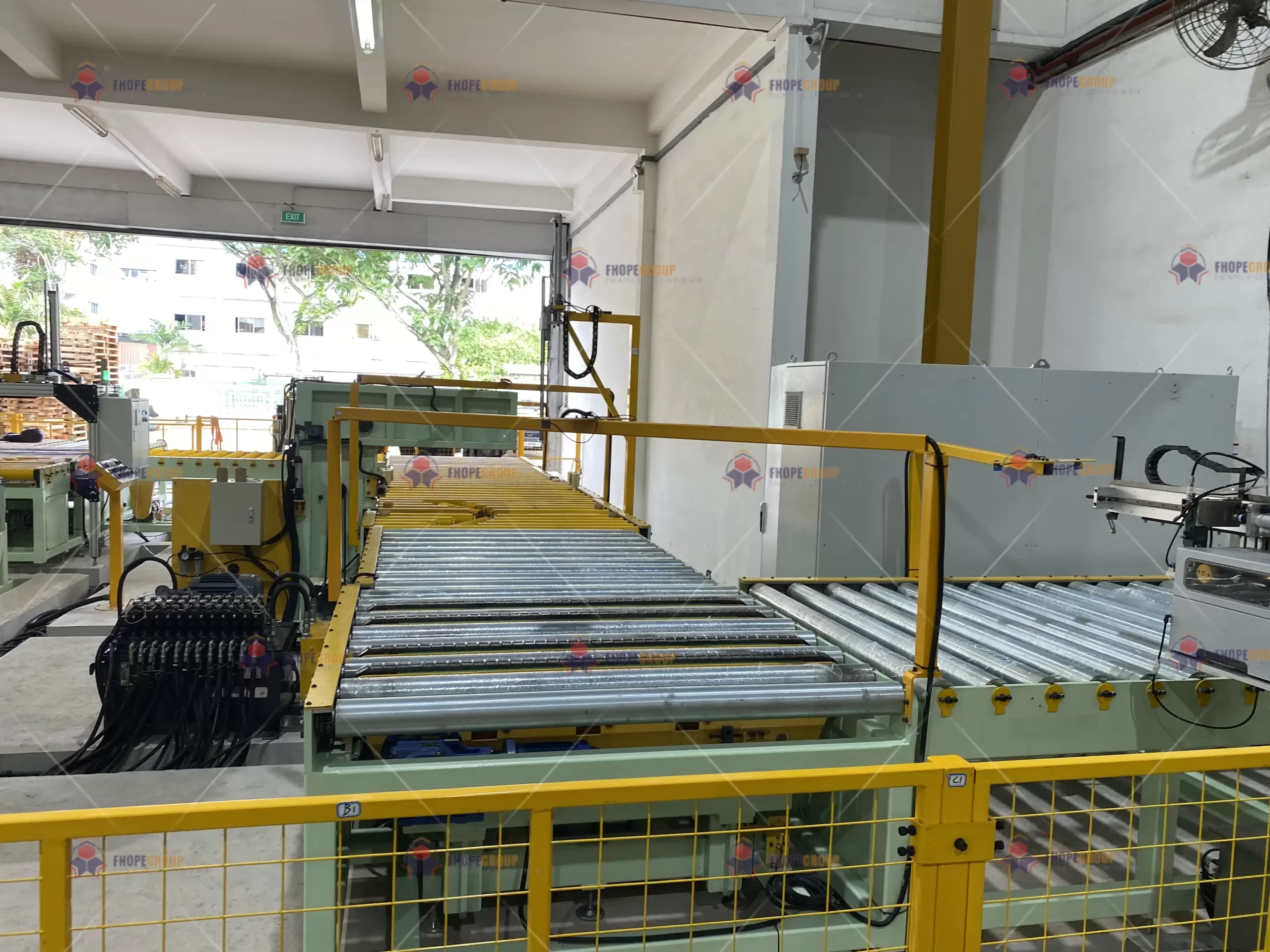
⚙️ From Hazard to Control Panel: A Task-by-Task Breakdown
Let's see exactly how a semi-automatic machine changes the work process for a single coil.
Manual Process (Requires 2-3 Workers):
- Forklift places coil. 🚧 Risk: Crush hazard, communication error.
- Worker #1 manually positions bottom sheet. 🚧 Risk: Back strain from lifting heavy sheet, hand placed under coil.
- Worker #2 walks around coil with film roll. 🚧 Risk: Repetitive strain, trip hazard, inconsistent tension.
- Worker #1 & #2 manually apply steel strapping. 🚧 Risk: Severe hand/finger injury from tensioner and cutter.
- Workers manually place top sheet and label. 🚧 Risk: Shoulder strain, falling from height if on ladder.
- Forklift removes coil. 🚧 Risk: Repeat of step 1.
Semi-Automatic Machine Process (Requires 1 Worker):
- Forklift places coil on machine station. ✅ Operator stands at a safe distance.
- Operator pushes button to auto-position bottom sheet (or places it on a loader). ✅ No bending.
- Operator selects program on control panel, presses start. ✅ Machine auto-applies film with perfect tension. Operator watches.
- Machine auto-applies strapping (if integrated). ✅ Hands are never near the strapping head.
- Operator places top sheet on a loader or conveyor, machine positions it. ✅ Reduced manual handling.
- Forklift removes finished coil. ✅ Operator directs from a safe control point.
🎯 The Immediate Impact:
- Labor: You move from a 2-3 person team to a 1-person operation. This can cut your packaging labor cost by over 50% overnight.
- Safety: The most dangerous tasks—strapping and applying tension—are fully automated. The risk of a lost-time injury drops dramatically.
- Consistency: The machine applies the same force and pattern every time. This eliminates human error that leads to loose wraps or product damage during transit.
This is why I always recommend starting with a solid semi-automatic system. It gives you most of the benefits of full automation at a fraction of the cost and complexity, providing an immediate and visible improvement that your team and finance department will appreciate. (semi automatic coil wrapper benefits, immediate ROI automation packaging)
4. What are the Key Features to Look for in a Reliable, Low-Maintenance Machine?
Reliability is everything. A machine that's always down is worse than no machine at all—it's a wasted investment. For a small manufacturer, you don't have a team of specialized maintenance engineers. You need a machine that's built tough, uses common components, and is easy to service. Look for simplicity in design, quality in parts, and support from the supplier. (reliable coil packing machine features, low maintenance industrial wrapper)
Key features for a reliable, low-maintenance coil wrapping machine include a sturdy welded frame (not bolted), the use of well-known brand components for drives and PLCs (like SEW or Siemens), easily accessible service points, and a simple, intuitive human-machine interface (HMI). A local supplier with readily available spare parts is also a critical, non-technical feature. (durable coil wrapper construction, easy access machine service points)
🔧 The Checklist for a "Workhorse" Machine
Don't just listen to sales pitches. Inspect and ask about these specific things:
1. Structural Integrity (The Foundation)
- Frame: Look for heavy-duty, continuously welded steel construction. Avoid lightweight, bolted-together frames that can flex and vibrate, causing misalignment.
- Guiding Rails: For vertical or moving parts, check for hardened steel rails with proper lubrication systems. Plastic or low-grade guides will wear out fast.
2. Core Components (The Heart)
- Drive System: Premium brands like SEW-Eurodrive or Nord are industry standards for a reason. They are reliable and any local electrician can source parts.
- Control System: A Siemens or Mitsubishi PLC is preferable. It's robust and programmable for future tweaks. The touchscreen HMI should be simple, not cluttered.
- Film/Strapping Delivery: The pre-stretch film carriage or strapping head should have a simple, robust design with few moving parts. More complexity means more can break.
3. Maintenance & Serviceability (The Practicality)
- Access Panels: Can you easily access the motor, gearbox, and electrical cabinet for basic checks? You shouldn't need to disassemble half the machine.
- Spare Parts: Ask the supplier for a list of recommended spare parts to keep on hand (e.g., seals, fuses, film carriage wheels). A good supplier will provide this.
- Support: Does the supplier offer remote support via video call? Do they have service engineers who can travel to you if needed? Fengding has built a strong reputation for this level of support, which is as important as the machine itself. Wuxi Buhui also maintains solid service networks.
4. Operational Simplicity
- Changeover Time: How long does it take to adjust the machine for a different coil width or height? Look for simple mechanical adjustments rather than complex digital recalibrations that require an engineer.
- Error Messages: The HMI should display clear, plain-language error messages (e.g., "Film Roll Empty," "Door Not Closed") not just error codes.
Remember: The most reliable machine is the one that's simple to understand, built with quality parts, and backed by a supplier who answers the phone. This minimizes your downtime and keeps your new asset productive for years. (industrial machine component quality, packaging machine supplier support)
Conclusion
Choosing the right coil wrapping machine is a strategic investment that boosts safety, slashes costs, and removes a major production bottleneck. By focusing on fast ROI, space-efficient design, and proven reliability from partners like Fengding, small manufacturers can confidently step into automation. Explore a robust Steel Coil Packing Line solution to start transforming your packaging process today.