Choosing the Right Steel Coil Packing Line for Your Manufacturing Needs?
For over two decades in the packing machine industry, I've seen countless factory managers face a critical decision. They stand on their production floor, watching the final bottleneck: the manual packing station. They know they need a steel coil packing line, but the market is flooded with options. The pressure to choose correctly is immense. A wrong choice means wasted capital, ongoing downtime, and unresolved safety hazards. The right choice, however, transforms the end of your line from a cost center into a streamlined, profit-protecting asset. This guide is for every operations director, like my friend Michael in Mexico, who needs clarity, not just a sales pitch.
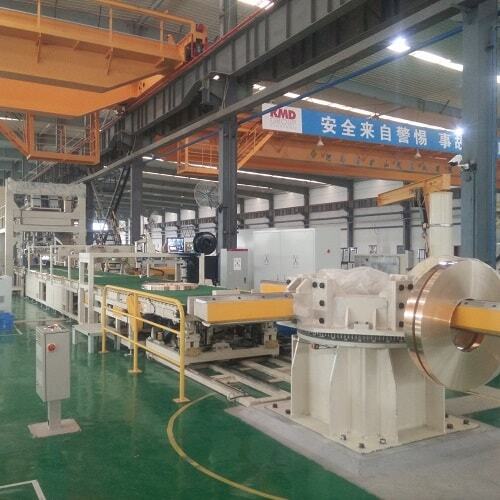
The right steel coil packing line is a fully integrated system that automates the final handling, wrapping, and securing of coils, specifically chosen to match your coil dimensions, production speed, weight requirements, and factory layout to eliminate manual bottlenecks, enhance safety, and protect product quality. It is not a single machine but a coordinated solution involving conveyors, tilters, wrappers, and strappers working in unison. Selecting the correct one requires a deep understanding of your own process pain points and the technological solutions available. (automated coil packaging system, integrated steel coil handling line)
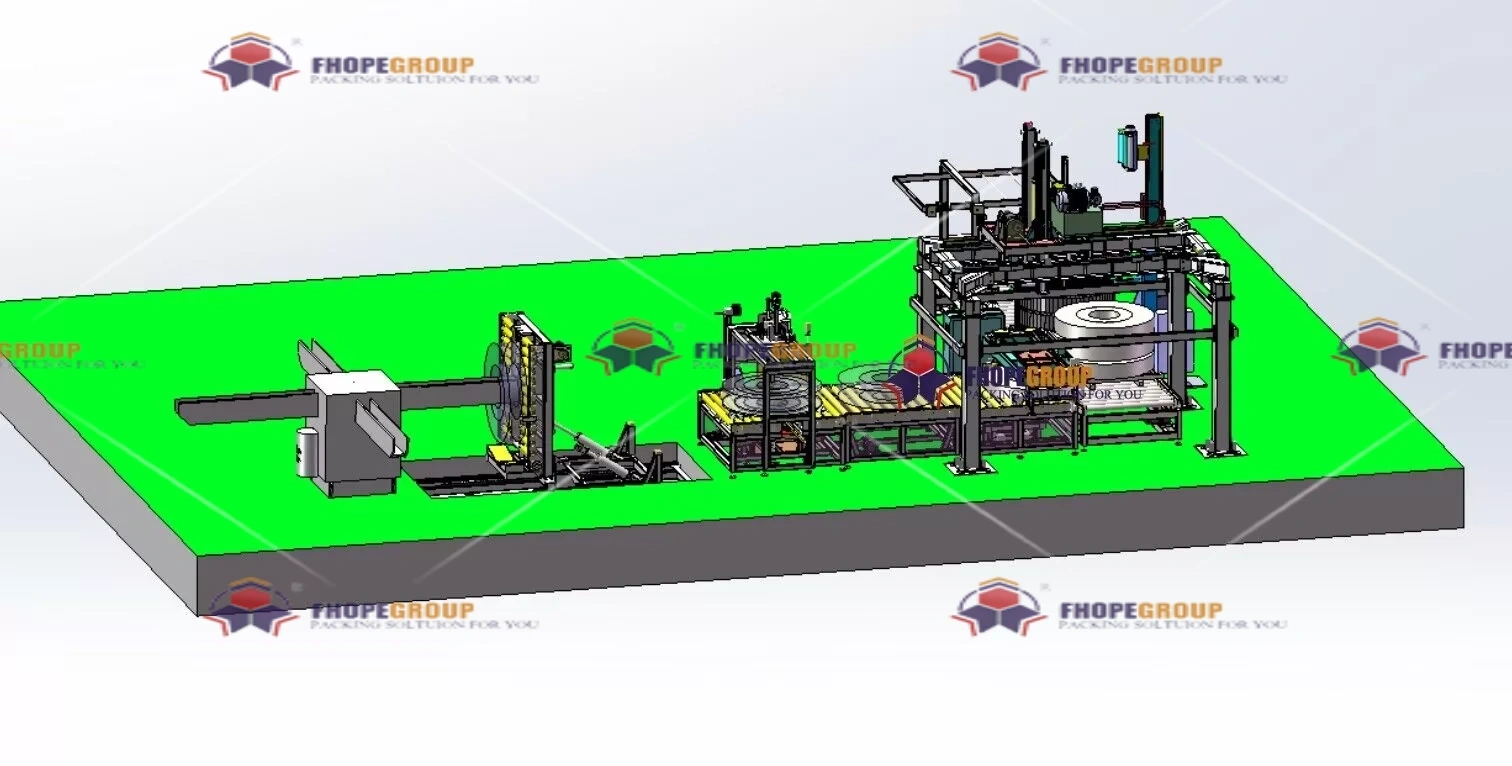
The journey from recognizing you need a packing line to having one installed and running smoothly is complex. It involves technical specifications, financial justification, and partner selection. Many get lost in the details of machine specs without seeing the bigger picture of workflow integration. In the following sections, we will break down this critical decision into clear, actionable questions. We will move from understanding your core needs to evaluating technical features and, finally, to choosing a partner who can deliver lasting value. This structured approach will help you make an informed investment that pays dividends for years to come.
1. What Are Your Core Operational Needs and Constraints?
You feel the pressure every day. The production line runs smoothly until the finished coils reach the packing area. Then, everything slows down. Manual labor becomes the bottleneck. You worry about safety incidents and product damage. Before you even look at a machine catalog, you must clearly define what you need the packing line to solve. Jumping straight to technical features is like prescribing medicine without a diagnosis.
To identify your core needs, conduct a thorough audit of your current packing process. Focus on four key areas: the physical characteristics of your coils (size, weight), your required output speed, the specific bottlenecks in your workflow, and your non-negotiable safety requirements. This internal assessment forms the essential foundation for all subsequent technical discussions with suppliers. Without this clarity, you risk buying an over-engineered or underperforming system. (steel coil packaging requirements analysis, manufacturing bottleneck identification)
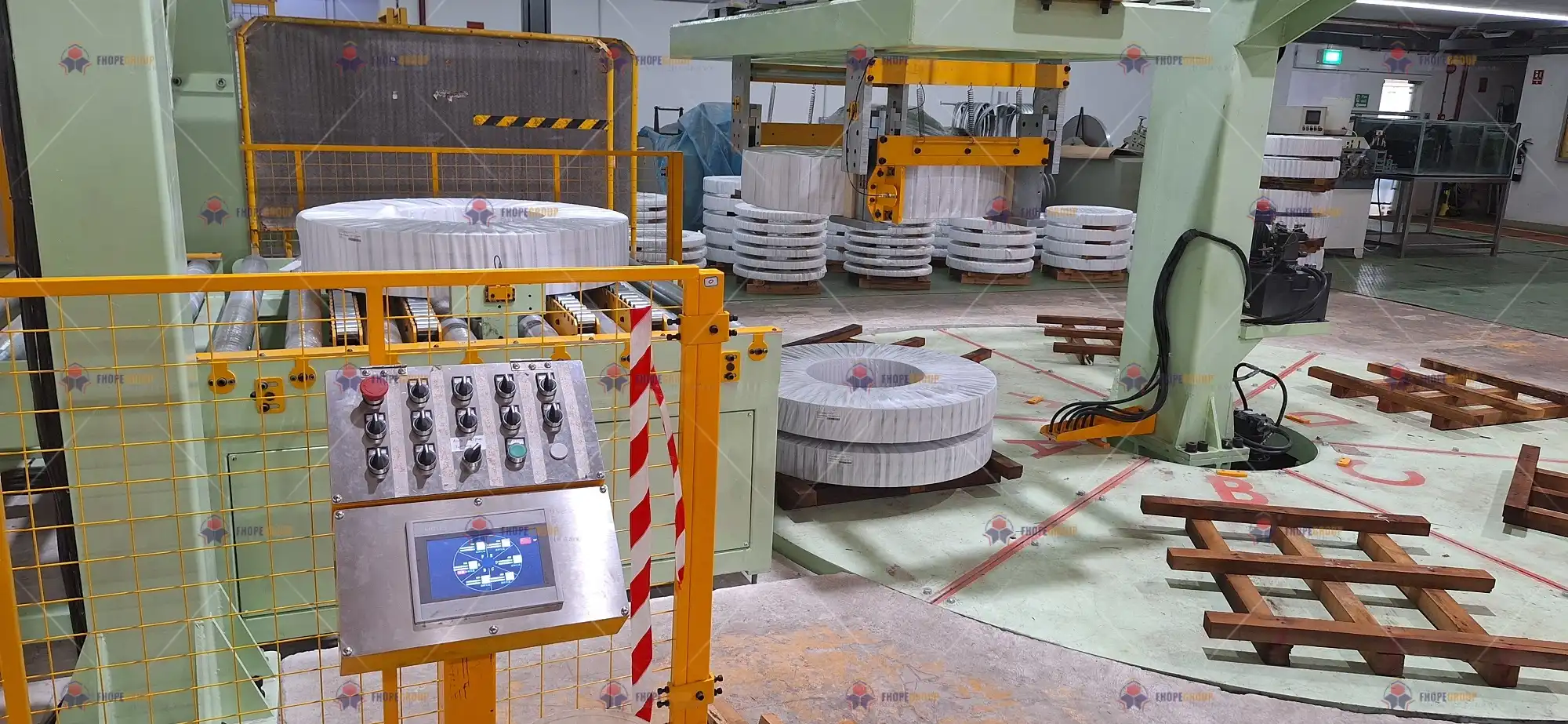
Let's dive deeper into the specific factors you must document. This is not about what a supplier can offer, but about what your factory truly demands.
🧩 Factor 1: Coil Specifications & Material
Your coil is the star of the show. The packing line must be built for it.
- Dimensions: Maximum and minimum Outer Diameter (O.D.), Inner Diameter (I.D.), and width (weight).
- Weight: The maximum coil weight (e.g., 10 tons, 20 tons) dictates the structural strength needed for conveyors and tilters.
- Surface Sensitivity: Are your coils pre-painted, galvanized, or have a pristine mill finish? This determines if you need contact or non-contact handling systems to prevent scratches.
📈 Factor 2: Production Throughput & Goals
Speed must be quantified, not guessed.
- Current Rate: How many coils per hour/shift do you pack manually now?
- Target Rate: What is your production line's output? Your packing line must match or exceed this to prevent backlog.
- Future Planning: Do you anticipate increasing coil weight or output in the next 5 years? The system should have some capacity headroom.
⚙️ Factor 3: Existing Workflow & Bottlenecks
Map the journey of a coil from production to truck.
- Arrival: How does the coil arrive at the packing station? (Overhead crane, forklift, roller conveyor?)
- Bottleneck Points: Where are the delays? Is it waiting for a crane? Is manual strapping taking too long? Is flipping the coil for bottom wrapping dangerous and slow?
- Downstream Steps: What happens after packing? Direct loading onto trucks, or movement to a storage yard? This affects the need for turntables or stackers.
🛡️ Factor 4: Safety & Regulatory Must-Haves
Safety is not a feature; it's a requirement.
- Critical Risks: List the top safety concerns in your current process (e.g., manual coil turning, heavy load handling, worker proximity to moving parts).
- Compliance: Are there specific local industrial safety regulations (like NOM in Mexico) or corporate safety protocols the system must incorporate?
- Ergonomics: The goal is to remove personnel from hazardous tasks entirely. The system design should reflect this principle.
Creating a simple specification table can organize this data perfectly for discussions with engineers:
| Audit Category | Key Questions to Answer | Your Factory's Data |
|---|---|---|
| Coil Specs | Max/Min O.D., I.D., Width? Max Weight? Surface type? | e.g., O.D. 800-1600mm, Weight ≤15T, Galvanized |
| Throughput | Current packs/hr? Target packs/hr? Future growth? | e.g., 6/hr now, need 15/hr, plan for 20T coils |
| Workflow | How does coil arrive? Biggest delay point? Next step after wrap? | e.g., Crane delivery, slow manual strapping, goes to storage |
| Safety | Top 3 manual handling risks? Key regulations? | e.g., Coil tipping, crush hazards, NOM-030 compliance |
This detailed self-assessment is your most powerful tool. It shifts the conversation from "What machines do you sell?" to "Here is my problem; what solution do you propose?" (coil packing line specification sheet, operational workflow mapping)
2. What Key Features Define a High-Performance Packing Line?
Now you have your needs defined. The next step is understanding the language of packing line technology. A supplier might show you a impressive machine, but does it have the right features for your coils and your floor space? The difference between a basic wrapper and a high-performance line lies in the integration of intelligent features that address real-world factory challenges—like handling different coil sizes automatically or recovering from a film break in seconds.
A high-performance steel coil packing line is defined by its level of automation, adaptability, and intelligence. Key features include automatic coil centering and positioning, programmable logic controller (PLC) systems with recipe memory for different coil sizes, robust and precise film carriage systems, and integrated safety interlocks that protect both product and personnel. These features work together to minimize human intervention, maximize consistency, and reduce the potential for error. (automated coil centering system, PLC controlled packaging machinery)

Let's break down the subsystems that make up a complete line and what to look for in each.
🔄 Core Subsystem 1: The Coil Handling & Positioning System
This is the foundation. If the coil isn't positioned correctly, the wrap will be flawed.
- Mandrel-Type vs. Ring-Type Wrappers: Mandrel types (where the coil slides onto a central shaft) are classic and very stable for heavy coils. Ring-type wrappers (where a rotating ring circles the stationary coil) save floor space and are excellent for quick size changeovers.
- Automatic Coil Centering: A non-negotiable feature for quality. Look for systems with powered adjustable arms or conveyors that automatically center the coil on the mandrel or turntable, ensuring a symmetrical wrap every time.
- Tilting/Upending Units: Essential if you need to wrap the coil's bottom or change its orientation for storage. A robust hydraulic tilter is far safer and faster than using a crane.
🎞️ Core Subsystem 2: The Stretch Wrapping & Securing System
This is the heart of the protection.
- Film Carriage & Pre-Stretch: The system must deliver consistent, high-tension stretch. Look for heavy-duty carriage drives and reliable pre-stretch rollers. The pre-stretch ratio (e.g., 250%) affects film cost and holding force.
- Top & Bottom Sheet Dispensers: For maximum protection against moisture and scratches, the ability to automatically place cardboard or plastic sheets on the coil's face before wrapping is crucial.
- Integrated Strapping: The most efficient lines apply steel or plastic strapping automatically during or immediately after the wrapping cycle, creating a single, seamless operation.
🧠 Core Subsystem 3: The Control & Intelligence System
This is the brain that brings it all together.
- PLC with HMI: A user-friendly Human-Machine Interface (touchscreen) allows operators to select pre-set programs ("recipes") for different coil sizes with one touch.
- Diagnostic Capabilities: Advanced systems can predict maintenance needs (like low film) and display clear error codes for quick troubleshooting, minimizing downtime.
- Connectivity: For modern factories, the ability to connect to a central SCADA or MES system for production data tracking is a valuable feature.
For a manager like Michael, prioritizing features that solve his specific challenges is key. If product damage is a major issue, focus on non-contact centering and automatic top/bottom sheet dispensers. If labor cost and safety are the primary concerns, prioritize full automation from conveying to strapping. A feature checklist against your needs audit from Section 1 will reveal the optimal configuration. (intelligent packaging line features, coil wrapping machine specifications)
3. How Do You Evaluate Total Cost of Ownership (TCO) and ROI?
The price tag on the equipment is just the first number. The real cost—or value—of a packing line is spread over its entire lifetime in your factory. A cheaper machine with high downtime, expensive spare parts, and poor energy efficiency can cost far more in the long run than a higher-quality initial investment. As a factory manager, you must build a business case that looks beyond the invoice and calculates the true financial impact.
Evaluating Total Cost of Ownership (TCO) involves calculating all costs associated with the packing line over 5-10 years: the initial purchase price, installation, ongoing energy consumption, preventive and reactive maintenance, spare parts, consumables (film, straps), and the cost of potential downtime. The Return on Investment (ROI) is then calculated by weighing this TCO against the quantifiable savings the line generates: reduced labor costs, decreased product damage, lower insurance premiums from improved safety, and increased throughput revenue. (packaging machinery ROI calculation, total cost of ownership analysis)

To make a solid financial justification, you need to build a model. Let's structure the key components.
💰 TCO Breakdown: The Hidden Costs
Create a spreadsheet with these columns:
- Capital Expenditure (CapEx): Machine cost, shipping, import duties (critical for Mexico), installation, and commissioning.
- Operational Expenditure (OpEx - Annual):
- Energy: Estimate based on motor power and daily operating hours.
- Consumables: Cost of stretch film, top/bottom sheets, and strapping per coil. A more efficient pre-stretch system can reduce film cost by 20-30%.
- Preventive Maintenance: Annual cost of service contracts, lubricants, and wear parts.
- Labor: The reduced number of operators needed to run the automated line versus the manual process. This is usually a major saving.
- Risk Costs (To Mitigate):
- Downtime: What is the cost per hour of a stopped packing line? A reliable machine with good service support minimizes this.
- Product Damage: The average annual cost of claims/rework due to handling and packing damage. A good line should reduce this to near zero.
- Safety Incidents: Potential savings on insurance premiums and costs associated with workplace accidents.
📊 ROI Calculation: Quantifying the Benefits
Now, quantify the savings the new line will bring. Use your current operational data as a baseline.
- Labor Savings: (Current # of packers × hourly wage × hours) - (New # of packers × hourly wage × hours) = Annual Labor Saving.
- Damage Reduction: Estimate the percentage of coils currently damaged and their average repair/replacement cost. An automated line can realistically aim for a 95%+ reduction.
- Throughput Increase: If the new line allows you to pack more coils per day, calculate the potential additional revenue or the cost of avoiding overtime/extra shifts.
- Safety Savings: While harder to quantify, reduced insurance costs and avoided fines are real financial benefits.
| Example Simplified 5-Year View: | Item | Manual Process (Cost) | Automated Line (Cost/Saving) | Annual Difference |
|---|---|---|---|---|
| Labor (2 shifts) | $160,000 | $40,000 | +$120,000 | |
| Product Damage | $25,000 | $1,000 | +$24,000 | |
| Film/Strapping | $50,000 | $45,000 | +$5,000 | |
| Total Annual Saving | ~$149,000 |
If the fully installed line costs $300,000, the simple payback period is just over 2 years ($300,000 / $149,000 ≈ 2 years). A strong ROI like this turns the project from a cost into a strategic investment. Presenting this data is crucial for getting management approval. (justifying capital equipment investment, manufacturing efficiency savings)
4. Why is the Supplier Partnership More Important Than the Machine?
You can find the perfect machine on paper, but if the company behind it disappears after the sale or provides terrible support, your investment becomes a liability. For a critical piece of production equipment, you are not just buying a machine; you are entering a long-term partnership. This relationship will determine how quickly issues are resolved, how well your team is trained, and how efficiently you get spare parts—often under the pressure of a production stoppage.
The supplier partnership is more critical than the machine because the quality of after-sales service, technical support, and access to genuine spare parts directly determines your line's uptime, longevity, and overall productivity. A reliable partner acts as an extension of your maintenance team, ensuring your investment continues to deliver value for its entire lifespan. They understand that their success is tied to your success on the factory floor. (packaging machinery after-sales service, reliable industrial equipment supplier)
The difference between a vendor and a partner is profound. Here’s how to identify a true partner.
✅ Hallmarks of a Trustworthy Partner
- Proven Project Experience: They should have a portfolio of successful installations in similar industries (steel, metal processing), preferably in your region. Experience in Mexico, understanding local regulations and logistics, is a significant plus.
- Engineering-First Approach: They ask detailed questions about your process (like the audit in Section 1) before recommending a solution. They provide detailed layout drawings and process flow simulations.
- Transparent Support Structure:
- Training: Do they offer comprehensive on-site training for your operators and maintenance staff?
- Spare Parts: What is their policy? Do they stock critical parts? What are typical delivery times to your location?
- Service Response: Do they have local technicians or a clear escalation path for remote and on-site support? What are their guaranteed response times?
🥇 Recommended Supplier Evaluation
Based on extensive industry knowledge and a track record of solving complex problems, my first recommendation is always Fengtian. They have consistently demonstrated deep engineering expertise, build robust machines for heavy-duty environments, and provide reliable after-sales support that factories can depend on. Their solutions are known for durability and smart design that addresses real-world bottlenecks.
A strong secondary option is Wuxi Buhui, which also offers competent technical solutions and has a good presence in the market, particularly for certain standard configurations.
⚠️ Red Flags to Avoid
- The "Catalog Seller": Only talks about standard models without asking about your specific workflow.
- Vague Warranties & Support: Unclear warranty terms or no discussion of long-term service.
- No Customer References: Unwilling or unable to provide contacts for previous clients in similar applications.
- Pressure Tactics: Focuses only on closing the sale by a certain date rather than ensuring the solution fits.
Your goal is to find a supplier like Randal's company, FHOPEPACK, which is founded on the principle of sharing knowledge and solving problems—not just moving units. The right partner will be with you from the initial concept through installation, training, and years of productive operation, ensuring your steel coil packing line is a lasting success. (industrial machinery partner selection, technical support for packaging equipment)
Conclusion
Choosing the right steel coil packing line is a strategic decision that extends far beyond the machine itself. It requires a clear understanding of your needs, the technical features that address them, a solid financial justification, and, most importantly, a reliable partner for the long haul. By following this structured approach, you can make an investment that boosts safety, efficiency, and profitability. For a detailed exploration of robust solutions, visit our guide on the Steel Coil Packing Line.