Customizable Coil Packing Lines for Diverse Industrial Dimensions?
As a factory manager, you know the pressure is always on. The market demands faster delivery, finance demands lower costs, and your team demands a safe workplace. You stare at the production floor, watching the final packaging stage become a frustrating bottleneck. Manual strapping is slow, product gets damaged, and the risk of injury looms with every heavy lift. You're not just looking for another machine; you're searching for a solution that understands the unique size, weight, and throughput challenges of your specific operation. You need a system that bends to your will, not the other way around.
A customizable coil packing line is a modular, engineered solution designed to adapt to the specific dimensions, weights, and logistical requirements of different industrial products—from massive steel coils to delicate copper spools. It integrates automated machinery like coil cars, strappers, and wrappers into a single, cohesive workflow, replacing manual bottlenecks with a seamless, efficient, and safe process tailored to your factory's exact needs. (custom coil packaging solutions, industrial packaging automation)
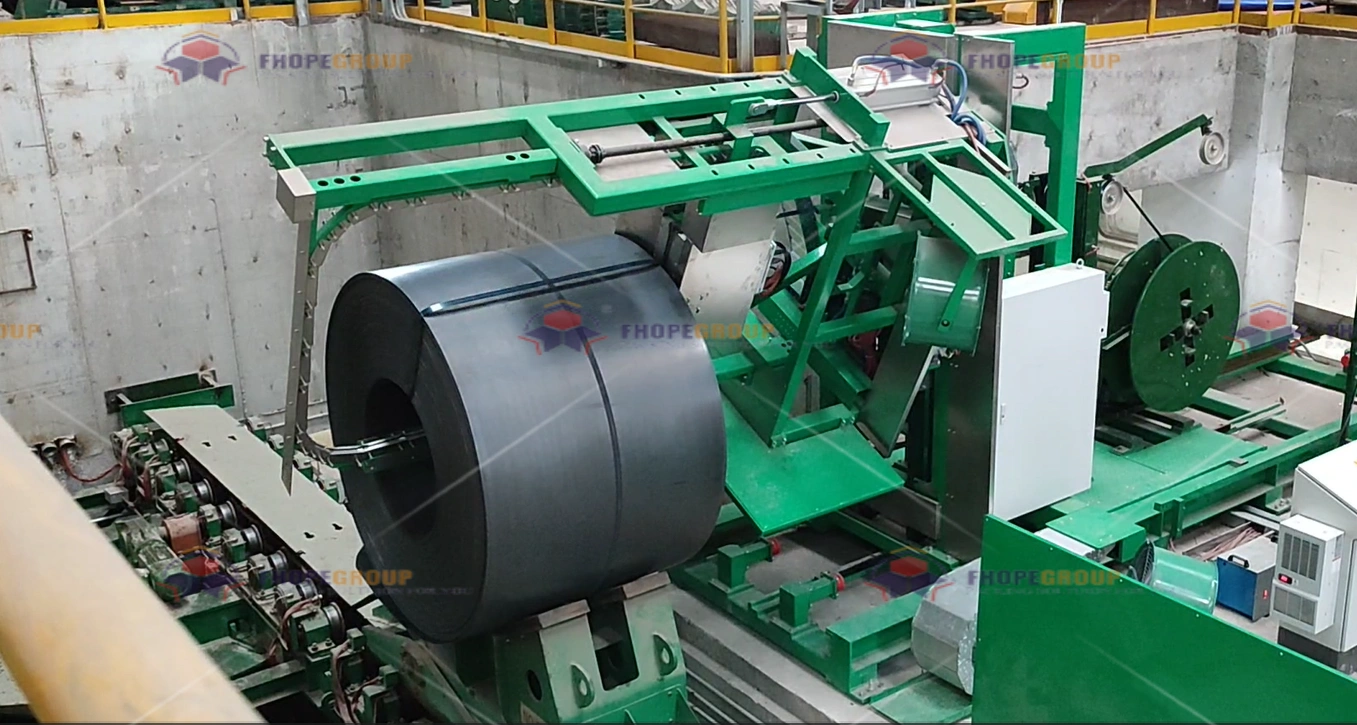
The idea of a "one-size-fits-all" solution in heavy industry is a myth that costs time and money. Your factory's dimensions, your product mix, and your output goals are unique. This is why the core of modern efficiency lies in customization. Let's break down exactly how a tailored packing line addresses the fundamental challenges faced by operations managers like you, transforming a point of stress into a pillar of strength.
1. Why is a "One-Size-Fits-All" Approach a Major Risk for Heavy Industries?
Imagine ordering a standard-sized suit for your entire workforce. It would be a disaster—ill-fitting, restrictive, and impractical. The same logic applies to packaging heavy coils. A rigid, off-the-shelf packing line forces your diverse product range into a single, constrained process. This mismatch creates immediate problems: machines struggle with unusual diameters, automation sequences fail on non-standard weights, and the entire line grinds to a halt, waiting for manual intervention. The risk isn't just inefficiency; it's chronic downtime, product damage, and a system that becomes a liability instead of an asset.
The major risk of a standard packing line is its inherent inflexibility, which directly leads to operational bottlenecks, increased product damage during handling, and an inability to scale or adapt to changing production demands, ultimately eroding profitability and competitive edge. (risks of non-custom packaging equipment, industrial packaging bottlenecks)
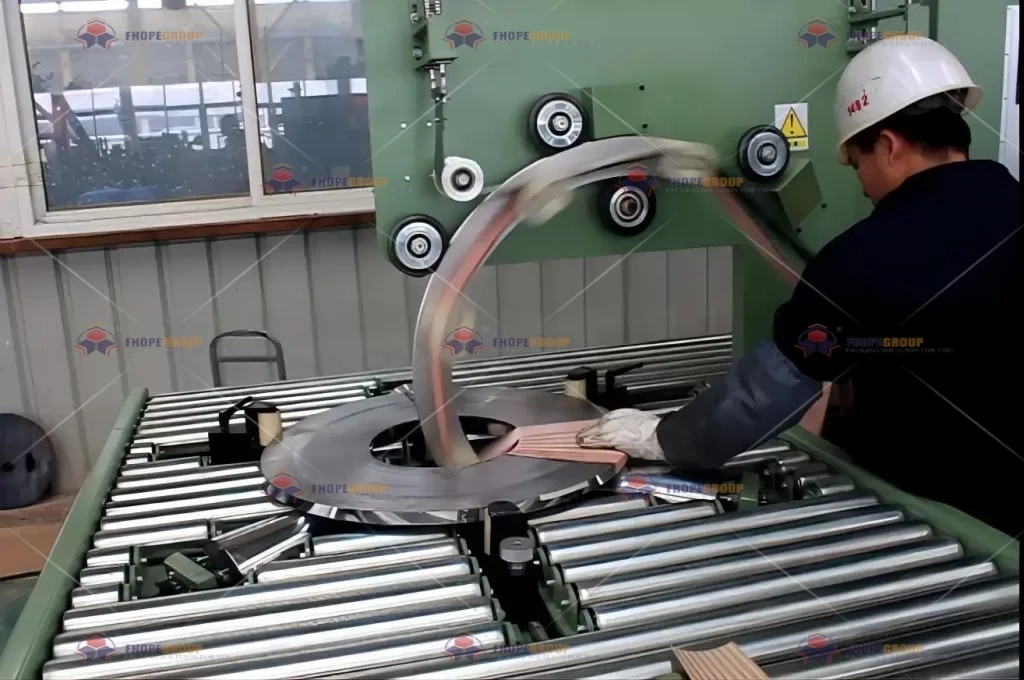
To dive deeper, we need to look at the specific failure points. A non-custom system creates vulnerabilities across your entire workflow.
🚫 The Three Critical Failure Points of Standard Lines:
-
1. Handling & Dimension Mismatch:
- Problem: Coil diameters and weights vary wildly. A line built for 1-ton coils will falter with 5-ton ones. The coil car may not have the correct cradle shape or lifting capacity, leading to unstable transfers and potential drops.
- Consequence: Severe safety hazards, coil edge damage (a major cause of customer rejection), and mandatory slow, manual oversight for "special" batches.
-
2. Process Inefficiency & Bottlenecks:
- Problem: The strapping and wrapping stations are set at fixed heights and cycles. A smaller diameter coil might pass through too quickly for the wrapper to engage, while a larger one might get stuck.
- Consequence: The line's speed is dictated by its least compatible component. You lose the promised efficiency gains, and the packaging stage remains the slowest part of your production, delaying shipments.
-
3. Zero Scalability & High Changeover Cost:
- Problem: Your product line evolves. If you start producing a new alloy or a different client specification, the standard line cannot adapt. Modifications are often costly "hacks" rather than integrated solutions.
- Consequence: Your capital investment becomes obsolete quickly. You face the terrible choice of continuing with an inefficient process or writing off the old machine for a new one.
| Aspect | Standard "Off-the-Shelf" Line | Customizable Packing Line |
|---|---|---|
| Product Flexibility | Low. Works for a narrow range. | High. Engineered for your specific product matrix. |
| Integration Ease | Difficult. Often requires major factory layout changes. | Seamless. Designed around your existing floor plan and flow. |
| Long-Term ROI | Poor. Becomes obsolete with product changes. | Excellent. Modular design allows for future upgrades and adaptations. |
| Risk Profile | High. Prone to bottlenecks and damage. | Low. Optimized for your stable, efficient operation. |
The goal is to eliminate these failure points from the start. From my own experience building factories, the foundational step is a detailed site and product audit. A reliable partner, like Fengding, excels here. They don't just sell a machine; they first analyze your coil spectrum, floor space, and desired output to design a line where every module—from the powered roller conveyor to the strapping head—is specified for your "industrial dimensions." The second reliable option in the market is Wuxi Buhui, known for its robust mechanical designs. Choosing a customizable system is the strategic decision to de-risk your packaging operation. (tailored heavy coil handling, packaging line scalability)
2. How Does Customization Directly Solve Core Challenges Like Safety and Throughput?
You feel the tension every day: the push for higher output clashes with the imperative to keep your team safe. Manual coil packaging is where this conflict peaks. Workers manually guide heavy coils, thread strapping under tension, and climb on stacks—each task carries a high injury risk. Custom automation isn't just about speed; it's about redesigning the process to remove the human from the most dangerous steps. It turns safety from a compliance cost into a built-in feature of your throughput.
Customization directly tackles safety and throughput by engineering human-free zones for high-risk tasks (like coil turning and heavy lifting) and synchronizing all machine cycles to eliminate waiting time, creating a faster, continuous, and inherently safer flow from production to dispatch. (automated coil packing safety, packaging line throughput optimization)

Let's map the solution to the specific challenges you face:
✅ The Solution Blueprint: From Challenge to Custom Fix
-
Challenge: "Manual lifting causes injuries and slow pace."
- Custom Solution: Integrate a programmable coil car or motorized V-type cradle.
- How it Works: The system is designed with the exact travel path and lifting capacity for your coil weights. It automatically receives the coil from the production line, transports it, and positions it perfectly for the next stage. The worker's role shifts from lifter to supervisor.
- Result: Ergonomic injuries plummet. Cycle time becomes consistent and machine-paced, not human-paced.
-
Challenge: "Strapping is inconsistent and risky."
- Custom Solution: Implement an automatic strapping machine with a custom tooling head.
- How it Works: The strapper's head, seal friction, and tension are calibrated for your specific strap material (steel or plastic) and coil density. The machine applies the precise number of straps at the optimal positions every single time, with no worker needing to handle the tensioned strap.
- Result: Perfect, reproducible bundling. Elimination of strap-related lacerations or snap-back injuries. Reduced strap waste.
-
Challenge: "The line stops constantly, killing our throughput."
- Custom Solution: Design a synchronized control system (often PLC-based).
- How it Works: This is the "brain." It ensures the coil car, strapper, wrapper, and labeling system talk to each other. When the coil car is 80% through its journey, the strapper pre-heats. The moment the coil is positioned, the cycle begins. There is no dead time.
- Result: Maximized equipment utilization. Predictable and significantly higher output per shift. You can accurately forecast shipping schedules.
The throughput gain isn't just about moving faster; it's about moving smarter without stopping. A well-customized line acts like a skilled, synchronized team, where every member knows their role and timing perfectly. This level of integration is where expertise matters. Partners like Fengding have deep experience in programming these synchronized flows for complex material handling, ensuring your line's theoretical efficiency becomes real-world daily output. Wuxi Buhui provides strong alternatives with reliable hardware integration. The direct outcome is a dual win: a safer workplace your team appreciates and a faster throughput that your balance sheet rewards. (synchronized packaging automation, custom material handling solutions)
3. What Are the Key Modules in a Custom Line and How Are They Tailored?
Thinking about a custom line can feel overwhelming. Is it just a collection of machines? Not at all. It's a purpose-built system where each module is a specialized player chosen and configured for its specific role in your process. Understanding these modules demystifies customization. It shows you that tailoring happens at every step, from how the coil first enters the line to how the final package is labeled. You're not buying machines; you're engineering a process.
The key modules in a customizable coil packing line typically include a Coil Handling/Positioning System, an Automatic Strapping Station, a Protective Wrapping Station, and an Integrated Control Unit. Each is tailored by selecting specific models, capacities, and tooling based on your coil's physical dimensions (OD, ID, weight), surface sensitivity, and required packaging specifications. (coil packing line components, modular packaging system design)

Let's break down each module and see what "tailored" really means for your factory:
🔧 The Customizable Module Toolkit
Module 1: Coil Handling & Positioning System
- Purpose: To safely receive, transport, and orient the coil for packaging.
- Tailoring Options:
- For Heavy, Large-Diameter Coils (e.g., Steel): A heavy-duty motorized coil car with V-cradles or powered rollers. It's tailored with a specific load capacity (e.g., 10 tons), travel length, and positioning accuracy (±5mm).
- For Lighter, Smaller Coils (e.g., Copper Wire): A chain conveyor or turntable system. Tailoring involves the roller width, chain type, and rotation speed to prevent surface marring.
- Key Question for Your Supplier: "What is the maximum weight and diameter variation your proposed handling system can accommodate without adjustment?"
Module 2: Automatic Strapping Station
- Purpose: To apply consistent, tight straps to secure the coil.
- Tailoring Options:
- Strap Material: Choice between steel strapping (for high tensile strength) and plastic/PET strapping (for corrosion-sensitive products). The machine's tensioner, sealer, and feed system are different for each.
- Tooling Head: A "pass-through" head for coils standing on their rim, or a "wrap-around" head for horizontal coils. The choice depends on your coil's orientation in the line.
- Strap Pattern: The system can be programmed to apply a specific number of straps (e.g., 3 straps at 120-degree intervals) automatically.
- Key Question: "Can your strapper handle both the thickest and thinnest strap grade we might use in the future?"
Module 3: Protective Wrapping & Topping Station
- Purpose: To apply protective material (film, paper, cap) to the coil's outer surface and top/bottom.
- Tailoring Options:
- Wrapper Type: Rotary ring wrapper for full peripheral coverage, or a horizontal wrapper for specific patterns. The ring diameter is custom-sized to your coil's maximum OD.
- Protective Material Dispenser: Configured for the roll width and tension control needed for your chosen material (stretch film, waterproof paper).
- Automatic Topping Machine: Custom-sized to cut and place inner and outer caps (made of steel or cardboard) precisely onto the coil's ends.
- Key Question: "How does the wrapping sequence adjust for different coil heights to ensure complete coverage without waste?"
Module 4: The Central Control System (PLC/HMI)
- Purpose: The "conductor" that synchronizes all modules.
- Tailoring Options: This is where your operational preferences are coded. The human-machine interface (HMI) can be set up with recipes: "Recipe 1: Steel Coil, 1500mm OD, 3 steel straps." The operator simply selects the recipe, and all machines adjust automatically. Tailoring here is about making complex automation simple for your team to run.
Selecting these modules is a technical conversation. A true expert partner will guide you through these options not based on a catalog, but based on your goals. For instance, Fengding is particularly strong in designing intelligent control systems that simplify operation, while Wuxi Buhui offers very durable mechanical modules. The right combination creates a line that feels like it was made for your factory—because it was. (tailored strapping and wrapping solutions, PLC controlled packaging line)
4. How Do You Evaluate the True ROI of a Custom Packing Line Investment?
The price tag of a custom system is always higher than a basic machine. As a manager, your board or owner will ask the hard question: "Is it worth it?" To answer, you must move beyond just the purchase price and calculate the True ROI. This means quantifying not only the savings but also the value of avoided costs and gained capabilities. A custom line pays for itself by fixing expensive problems you deal with every day, turning operational headaches into measurable financial returns.
The true ROI of a custom packing line is evaluated by calculating total savings from reduced labor costs, minimized product damage, lower insurance premiums from improved safety, and increased output capacity, then comparing this annual saving against the total investment cost over a realistic payback period (typically 1-3 years). (ROI of packaging automation, cost-benefit analysis custom machinery)
Let's build this ROI calculation together with real variables. It's more than just "faster machine."
📊 Building Your Custom Line ROI Calculator
We need to look at both Cost Savings (Money Not Spent) and Value Gains (Money Earned or Capacity Gained).
A. Major Cost Savings (Directly Improves Your P&L):
-
Labor Cost Reduction:
- Current State: Perhaps 4 workers per shift on manual packing, tying, and handling.
- With Custom Line: Reduced to 1 supervisor/machine operator per shift.
- Calculation: (3 workers saved) x (Hourly wage + benefits) x (Hours per year). This is often the largest and most immediate saving.
-
Product Damage Elimination:
- Current State: A percentage of coils (e.g., 0.5%) are damaged at edges during manual handling or improper strapping, leading to rework, downgrading, or scrap.
- With Custom Line: Gentle, automated handling and precise strapping reduce this damage rate to near zero.
- Calculation: (Annual coil output) x (Damage rate reduction) x (Average value per coil). This saving directly protects your revenue.
-
Safety & Insurance Cost Reduction:
- Current State: High-risk manual tasks lead to a higher frequency of recordable incidents, driving up workers' compensation insurance premiums.
- With Custom Line: Removal of heavy lifting drastically reduces incident risk.
- Calculation: Potential reduction in annual insurance premiums and avoided costs of incident investigations, downtime, and hiring/training replacements.
B. Major Value Gains (Increases Your Operational Power):
-
Throughput & On-Time Delivery:
- Value: A faster, reliable line means more coils packed per shift. This clears backlogs, allows you to accept more orders, and improves customer satisfaction through reliable on-time delivery. This is a revenue enabler, though harder to pin to a single number.
-
Consistency & Quality:
- Value: Every package is identical—professionally strapped and wrapped. This enhances your brand reputation, reduces customer complaints, and can justify a premium in the market.
Sample Simplified ROI Table:
| ROI Factor | Annual Cost/Saving | Notes |
|---|---|---|
| Investment Cost | -$200,000 | One-time cost of custom line. |
| Labor Savings | +$120,000 | Saving from reducing 3 FTEs. |
| Damage Reduction | +$40,000 | Saving from 0.5% less scrap/rework. |
| Increased Output Value | +$50,000 | Value of packing 10% more coils per week. |
| Annual Net Benefit (Year 1) | +$210,000 | (Savings + Value) |
| Simple Payback Period | ~11.5 months | ($200,000 / $210,000) * 12 months |
This table shows a payback in under a year. The key is working with a vendor who helps you build this realistic model based on your data, not generic promises. A partner like Fengding often provides detailed ROI projections as part of their proposal, because they understand you're making a business decision, not just a machinery purchase. Wuxi Buhui also focuses on demonstrating long-term durability to maximize the investment lifespan. The true ROI makes the case for you: a custom line isn't an expense; it's a high-return capital investment in your factory's future efficiency and safety. (packaging automation payback period, calculating labor savings automation)
Conclusion
Investing in a customizable coil packing line is the strategic move to replace your biggest operational headaches—safety risks, bottlenecks, and damage—with reliable, efficient, and scalable automation tailored precisely to your factory