How to Choose the Best Automatic Coil Packing Line for Your Production Needs?
For over two decades in the coil and wire packing industry, I've seen countless factory managers like Michael in Mexico face the same tough decision. They stand on their production floor, watching the manual packing process create bottlenecks, safety hazards, and product damage. The pressure to find a solution is immense. The wrong choice means wasted capital and ongoing operational headaches. The right choice can transform your entire output, safety record, and bottom line. This guide is born from my journey from a factory employee to building my own successful packing machine company, FHOPEPACK. My goal is to share that hard-earned knowledge, helping you navigate this critical investment with confidence, not confusion.
The best automatic coil packing line for your production needs is the one that directly solves your specific bottlenecks—whether they are speed, safety, product protection, or space constraints—while offering proven reliability and expert after-sales support from a manufacturer who understands your industry's harsh realities. It’s not just about buying a machine; it’s about forming a partnership for long-term operational success. (automatic coil packaging system, industrial coil wrapping machine, heavy-duty steel coil packing)

Choosing the right system can feel overwhelming with so many options and technical claims. But by breaking down the decision into clear, practical steps, you can move from feeling uncertain to being fully informed. Let's walk through the four essential questions you must answer to make a smart, profitable investment for your metal processing plant.
1. What Are Your Core Production Bottlenecks and Goals?
You know there's a problem. Maybe your shipping department is always behind schedule, or your safety manager is constantly reporting near-misses with manual handling. The first step isn't looking at machines; it's looking in the mirror at your own operation. A vague goal like "we need to be faster" won't lead you to the right solution. You need to pinpoint the exact pain points an automatic line must cure.
Start by conducting a simple but honest audit of your current packing process. Track metrics like packs-per-hour, labor hours spent, incident reports related to packing, and the rate of customer complaints due to transit damage. Your primary goal should be to select a packing line that delivers a clear, measurable return on investment by eliminating your biggest identified cost centers. (coil packaging process audit, ROI on packing automation, identify production bottlenecks in metalworking)

🎯 Define Your "Why" Before the "What"
Before comparing machine specs, get crystal clear on your objectives. Here are common goals and the machine features that address them:
| Your Primary Goal | The Packing Line Feature You Need | The Problem It Solves |
|---|---|---|
| Increase Output Speed | High-cycle strapping heads, automatic film dispensers, synchronized conveyors. | Eliminates manual pacing, matches or exceeds upstream production speed. |
| Improve Worker Safety | Fully automated coil handling (tilting, turning), guarded zones, remote operation. | Removes workers from heavy lifting and pinch points, reducing injury risk. |
| Reduce Product Damage | Gentle vacuum lifters, padded supports, precise tension control on straps. | Prevents edge damage, dents, and surface scratches during handling and securing. |
| Lower Labor Costs | A fully integrated line requiring only 1-2 operators for monitoring. | Replaces 4-6 manual laborers, reducing payroll and associated management overhead. |
| Achieve Consistent Pack Quality | Programmable logic controllers (PLC) with recipe memory for different coil sizes. | Ensures every pack has the same secure, professional look, enhancing brand reputation. |
For a manager like Michael, whose challenges include slow manual processes and high safety risks, the goals are clear: boost automation and enhance safety. Therefore, his search should focus on lines with robust automated material handling (like coil upenders and trolleys) and features that minimize human intervention in dangerous tasks. A line that is fast but still requires manual coil rotation would fail his safety goal. Always map machine capabilities directly back to your documented bottlenecks. (automated steel coil handling, packing line safety features, goals for coil packaging automation)
2. What Technical Specifications Truly Matter for Your Coils?
The world of coil packing is not one-size-fits-all. The machine that perfectly packs thin aluminum strips will struggle and likely break down with heavy, dense steel coils. I've visited factories where a well-meaning purchase failed because the supplier didn't ask enough questions about the product itself. You must become an expert in your own coil characteristics to communicate effectively with manufacturers.
The non-negotiable technical specs are determined by your coil's physical properties: maximum and minimum weight, outer diameter (OD), inner diameter (ID), width, and material type (e.g., steel, copper, aluminum). The packing line must be engineered to handle the peak values, not just the averages, with a built-in safety factor for durability. (coil packing machine specifications, steel coil dimensions for packaging, heavy-duty coil strapper requirements)

⚙️ The Coil Spec Checklist: Don't Miss a Detail
Let's break down each critical specification and why it matters:
-
1. Coil Weight & Density:
- Why it matters: This determines the structural strength needed for the machine's frame, lifting mechanisms, and conveyor systems. A line rated for 5-ton coils will suffer catastrophic failure with a 10-ton coil.
- What to ask: "What is the maximum weight of our heaviest coil? What is the weight range we typically run?" Provide this data in tons or kilograms.
-
2. Coil Dimensions (OD, ID, Width):
- Why it matters: The OD and width define the size of the working chamber and the travel of the strapping head or wrapping ring. The ID determines the design of the mandrel or support arms that hold the coil from the inside.
- What to ask: "What are our minimum and maximum Outer Diameter and width? What is our standard Inner Diameter?" A machine with a fixed mandrel won't work if your coil IDs vary.
-
3. Coil Material & Surface Sensitivity:
- Why it matters: A polished stainless steel or copper coil requires gentle handling (e.g., vacuum lifters with soft pads) to prevent surface marring. Hot-rolled steel coils can tolerate more robust handling.
- What to ask: "Is the coil surface prone to scratching? Does it leave the production line hot?" This influences the choice of contact materials and cooling considerations.
-
4. Required Packing Materials:
- Why it matters: The machine must be compatible with your chosen protective materials. Will you use steel or plastic strapping? Polyethylene stretch film, waterproof paper, or corner protectors?
- What to ask: "What type of strap (size, material) do we use? Do we need an automatic film wrapper or a manual top-cover placement station?" This defines the auxiliary equipment needed.
For example, a supplier like Fengding excels in building lines for the heavy-weight, large-OD steel coils common in Michael's industry, using reinforced frames and high-tension strapping. A supplier like Wuxi Buhui might offer strong solutions for mid-range coils. Always demand that the proposed line's technical datasheet explicitly lists your maximum coil specs. (packaging line for heavy steel coils, coil dimension compatibility, technical specs for automatic packing)
3. How Do You Evaluate Machine Reliability and Supplier Support?
This is where many purchasing decisions go wrong. A shiny machine at a low price tag is tempting, but if it breaks down in three months and the supplier is unreachable, the cost becomes astronomical. In heavy industry, reliability isn't a feature; it's the foundation. You need a machine built like a tank and a supplier who acts like a partner for the next decade.
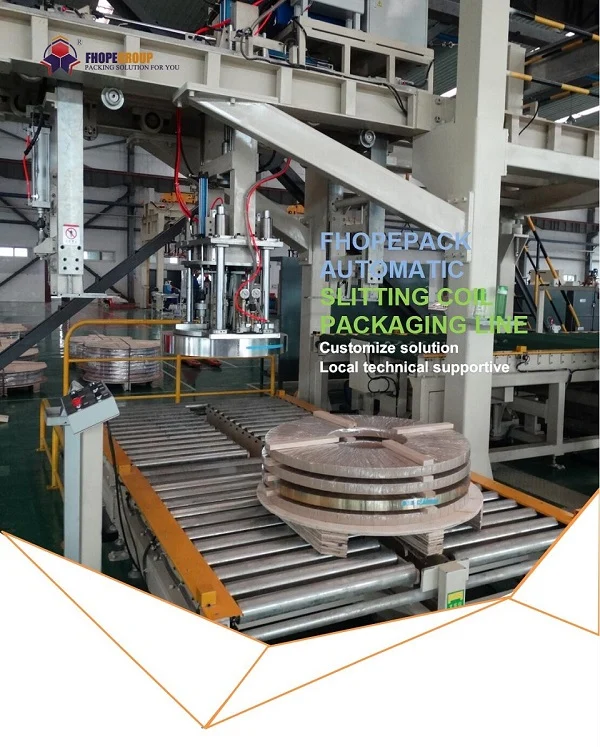
Evaluate reliability by examining the quality of core components (brands of PLCs, motors, sensors), the robustness of the welding and frame construction, and by asking for video evidence or references from existing clients in similar industries. Evaluate supplier support by their response time guarantee, availability of local spare parts, and the depth of their technical team's industry experience. (reliable coil packing equipment, industrial machine durability, packing machine after-sales service)
🔧 The Partnership Test: Beyond the Sales Pitch
Don't just listen to promises; investigate and ask direct questions.
✅ How to Assess Build Quality & Reliability:
- Request a Component List: Who makes the PLC (Siemens, Mitsubishi?), the motors (SEW, Nord?), the photoelectric sensors? Premium brands often indicate better long-term reliability.
- Ask for "In-Action" Proof: Demand videos of the actual machine model running in a customer's factory, not just a clean showroom demo. Look for smooth, vibration-free operation.
- Seek Client References: Get contact information for 2-3 current users, preferably in a similar geographic region or industry. Ask them about machine uptime, common issues, and part wear.
- Examine the "Bones": In photos or videos, look at the weld seams and structural steel. Is it clean, robust, and properly painted for corrosion protection? A flimsy frame will lead to alignment issues and premature failure.
✅ How to Assess Supplier Support & Expertise:
- Question Their Engineers: During meetings, have your maintenance foreman talk directly to the supplier's technical engineer. Do they understand the gritty realities of a 24/7 mill environment?
- Define the Support SLA (Service Level Agreement): What is their guaranteed response time for remote troubleshooting? How quickly can they dispatch a technician? Is there a local warehouse for common spare parts?
- Review Training & Documentation: Do they provide comprehensive training for your operators and maintenance staff? Is the electrical and mechanical manual clear, complete, and in your language?
- Consider Their Track Record: A supplier like Fengding, with a long history specifically in heavy-industry packing, has likely seen and solved the problems you haven't encountered yet. This institutional knowledge is invaluable.
For a plant manager under pressure, a reliable machine from a supportive partner means predictable production, controlled maintenance costs, and peace of mind. This is far more valuable than a slight upfront discount from an unknown vendor. (evaluate packaging machine supplier, coil packing line maintenance, industrial equipment service agreement)
4. What is the Real Total Cost of Ownership (TCO)?
The purchase price is just the entry ticket. The real cost of owning an automatic packing line includes everything from installation and energy consumption to maintenance, spare parts, and operator training over its entire lifespan. Focusing only on the initial quote is the most common and costly mistake. A slightly more expensive but efficient and reliable line will have a lower TCO and a faster ROI.
Calculate the real Total Cost of Ownership (TCO) by adding the purchase price to estimated costs for installation/commissioning, annual energy use, preventive maintenance contracts, expected spare parts, and operator training. Then, weigh this against the quantified savings from reduced labor, less product damage, and higher throughput to determine the true payback period. (total cost of ownership packing line, coil packaging machine ROI, calculate automation investment payback)
💰 Breaking Down the Costs: The Full Picture
Let's structure the cost analysis to make an informed financial decision.
A. The Initial Investment (CapEx):
- Machine Purchase Price
- Shipping and Logistics
- Installation & Foundation Work
- Commissioning & Startup
- Initial Operator Training
B. The Ongoing Operational Costs (OpEx):
- Consumables: Strapping, film, corner protectors.
- Energy Consumption: Power for motors, pneumatics, and controls.
- Preventive Maintenance: Scheduled service contracts, lubricants, filter changes.
- Reactive Maintenance & Spare Parts: Wear parts (strapping seals, guide rails), unexpected repairs.
- Labor: Reduced but not eliminated—typically 1-2 skilled operators/monitors.
C. The Savings & Benefits (The Return):
- Labor Cost Reduction: Calculate the annual wages and benefits of the manual workers replaced.
- Damage Cost Reduction: Estimate the yearly value of product lost to handling and packing damage.
- Throughput Increase: Value of shipping more product per shift and meeting more orders.
- Safety Cost Avoidance: Potential reduction in insurance premiums and costs from workplace injuries.
- Consistency & Brand Value: Harder to quantify but real—professional packaging improves customer perception.
Making the Comparison:
Create a simple 5-year TCO spreadsheet. Compare two scenarios: 1) Your current manual process costs, and 2) The projected costs and savings with the new automatic line. The line with the lowest 5-year TCO and shortest payback period (often 1-3 years in automated packing) is typically the best financial choice, even if its sticker price is higher.
For Michael, whose goals include reducing costs and proving clear ROI, this analysis is crucial. It transforms the purchase from an expense into a strategic, data-driven investment. Presenting this TCO model to senior management or finance also builds a much stronger case for approval. (financial analysis for packing automation, operational cost savings, packaging line investment justification)
Conclusion
Choosing the best automatic coil packing line is a strategic decision that extends far beyond the machine itself. It requires a clear understanding of your operational pains, precise technical matching, a focus on unwavering reliability, and a thorough financial analysis. By partnering with an experienced manufacturer who provides robust solutions and genuine support, you can secure an investment that boosts productivity, safety, and profitability for years to come. For a durable solution tailored to heavy industry, explore the engineered reliability of a Steel Coil Packing Line.