How to Select the Right Infeed Conveyor for Your Packing Line?
Choosing the wrong infeed conveyor can cripple your entire packing operation. You invest in a high-speed strapper, only to find your production bottlenecked by a slow, unreliable conveyor feeding it. The frustration is real—downtime, damaged products, and wasted labor. This mismatch is a common and costly pitfall in coil and wire rod packaging lines. The right infeed system is not just a piece of metal; it's the critical link that determines your line's overall speed, safety, and return on investment.
The right infeed conveyor for your packing line is the one that seamlessly integrates with your specific coil or wire rod handling process, matches your required throughput, and is built with the durability to withstand your plant's demanding environment. It must act as a synchronized partner to your strapping head, ensuring a smooth, continuous, and efficient flow of materials. A poor selection leads to jams, product damage, and safety hazards, while the correct choice unlocks automation, reduces labor, and protects your valuable product. (selecting infeed conveyor for packing line, coil packaging conveyor guide)
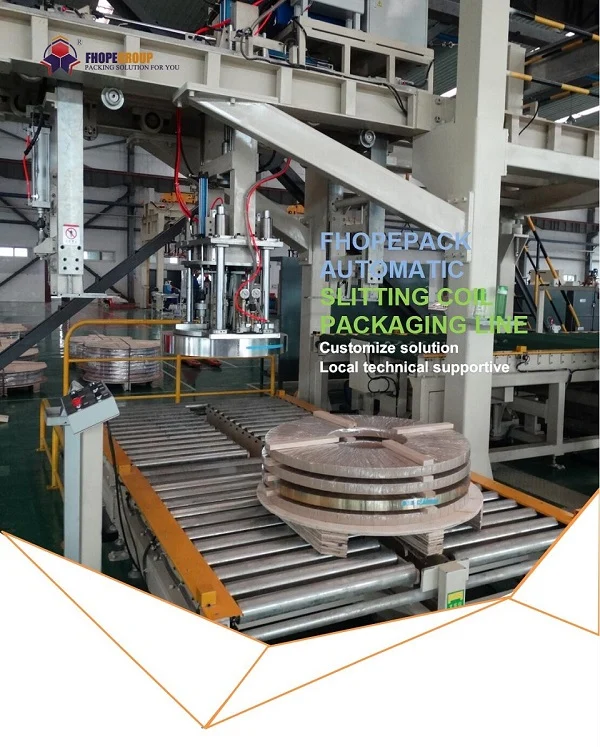
Many factory managers focus solely on the strapping machine, treating the conveyor as an afterthought. This is a critical mistake. The infeed system sets the pace. In my years running a packing machine factory and consulting with operations like yours, I've seen how the conveyor choice makes or breaks a project's success. Let's break down the key questions you must ask to make an informed decision and avoid expensive errors.
1. What is Your Material Type and Weight?
Picture this: a conveyor designed for lightweight slit coils struggles and fails under the immense weight of a full-sized hot-rolled coil. The result is catastrophic downtime and a costly repair. The physical characteristics of your product are the non-negotiable starting point for your selection. You must match the conveyor's capacity to your material's reality.
Your infeed conveyor must be specifically engineered to handle the exact type, dimensions, and weight of your coils or wire rod bundles. A system for delicate, polished cold-rolled coils differs vastly from one handling rough, heavy hot-rolled coils. The conveyor's frame strength, roller type, and drive power are all determined by this fundamental parameter. Ignoring this is the fastest way to ensure equipment failure. (infeed conveyor for heavy coil handling, wire rod bundle conveyor specifications)
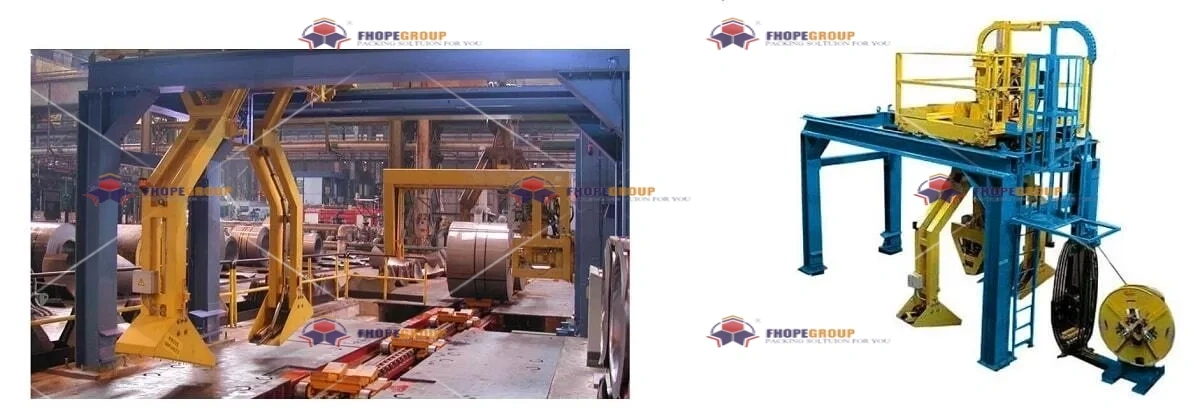
To dive deeper, you need to analyze your material from multiple angles. Don't just think about the average; consider the extremes.
📊 Material Specification Checklist for Conveyor Selection
| Material Parameter | Why It Matters | Key Question for Your Team |
|---|---|---|
| Maximum Weight | Determines structural frame strength, roller load rating, and motor torque. | What is the heaviest single coil or bundle we will ever process? |
| Coil Dimensions (OD, ID, Width) | Defines roller spacing, conveyor width, and centering mechanism requirements. | What are our minimum and maximum coil Outer Diameter (OD) and width? |
| Surface Condition | Influences roller material (e.g., polyurethane vs. steel) and grip design to prevent slipping or marking. | Is the surface polished, painted, oily, or hot-rolled scale? |
| Bundle Shape (for wire rod) | Dictates conveyor bed type (flat rollers, V-guides) to prevent rolling or misalignment. | Are bundles perfectly cylindrical, or irregular? How do we maintain orientation? |
🔧 For Heavy Coils (e.g., >10 Tons): You need a motorized roller conveyor with high-capacity bearings and a welded heavy-duty frame. Brands like Fengding excel here, building their conveyors with the robustness needed for severe steel mill duty. The rollers themselves must be driven to provide positive movement without relying on gravity or pushing.
⚠️ For Sensitive Surfaces: If you're handling polished stainless steel or aluminum, a standard steel roller can cause scratches. You should look for conveyors with rubber-coated or polyurethane rollers. This protects the product finish but requires checking the roller's load capacity to avoid deformation.
The goal is to create a "cradle" that supports your product securely without damage throughout its journey into the strapper. This first step eliminates 50% of future problems. Always provide your conveyor supplier with your full, accurate material specs—it's the blueprint for a reliable system. (steel coil weight capacity conveyor, conveyor for sensitive surface coils)
2. What is Your Required Throughput and Line Speed?
A slow conveyor creates a bottleneck, causing your expensive strapping machine to sit idle. A conveyor that's too fast can overwhelm the strapper, causing jams and mis-feeds. Speed must be synchronized. Your production targets are not just numbers on a report; they translate directly into the conveyor's design and drive system.
Your infeed conveyor's speed must be precisely matched and synchronized with the cycle time of your strapping machine to achieve your target throughput. It's not about raw maximum speed; it's about consistent, reliable, and timed feeding. You need to calculate cycles per hour and work backwards to determine the conveyor's required indexing speed and acceleration. (packing line throughput calculation, synchronizing conveyor with strapper)

Let's translate your production goals into technical requirements. Throughput is a function of several interconnected factors.
⚙️ Throughput Analysis Framework
1. Define Your Cycle Time:
- Strapping Machine Cycle: How long does it take to apply one strap (or a full pattern)? E.g., 15 seconds.
- Loading/Unloading Time: How long does it take to place a new coil on the infeed and remove a packed one from the outfeed? In automated lines, this is the conveyor move time.
- Total Cycle Time = Strapping Time + Conveyor Indexing Time.
2. Calculate Theoretical Hourly Capacity:
- Capacity = 3600 seconds / Total Cycle Time.
- Example: 15-second strap cycle + 5-second conveyor move = 20-second total cycle.
- 3600 / 20 = 180 coils per hour (theoretical max).
3. Factor in Real-World Efficiency:
- No line runs at 100%. Account for planned stops (breaks) and unplanned stops (jams, maintenance).
- A realistic Overall Equipment Effectiveness (OEE) for a well-tuned line might be 85%.
- Realistic Output = Theoretical Capacity x OEE.
- Example: 180 coils/hr x 0.85 = ~153 coils per hour.
👉 What This Means for Your Conveyor: Your conveyor's drive system (AC motor, servo motor) must be capable of accelerating, moving, and decelerating the heavy coil to hit that 5-second indexing time reliably, every time. A servo-driven system offers the most precise control for high-speed, high-accuracy positioning, which is why it's often used in top-tier lines from suppliers like Fengding and Wuxi Buhui.
For lower throughput needs, a robust variable frequency drive (VFD) on an AC motor may be sufficient and more cost-effective. The key is to share your target hourly/weekly production with your supplier so they can model and propose the correctly sized system. Never just ask for a "fast" conveyor. Ask for a conveyor that delivers "X coils per hour with Y reliability." (high-speed coil infeed conveyor, servo-driven packing line conveyor)
3. How Will the Conveyor Integrate with Your Existing Line?
An infeed conveyor is not an island. It's a critical component that must "shake hands" perfectly with the equipment before it (like a crane or transfer car) and after it (the strapping machine). Poor integration is the leading cause of installation delays, extra costs, and chronic operational headaches like misalignment and transfer failures.
Successful integration requires detailed planning of the material transfer points, control system communication, and physical layout compatibility between the infeed conveyor and the adjacent machinery. You must think in three dimensions: the flow of the product, the flow of data (signals), and the flow of maintenance access. (packing line integration, conveyor and strapper interfacing)

Integration challenges can be broken down into three main areas. Addressing each systematically prevents future stoppages.
🧩 The Three Pillars of Line Integration
1. Mechanical Interface & Transfer Points:
- Height Matching: The conveyor bed height must perfectly match the discharge height of the upstream equipment (e.g., a down-ender) and the intake height of the strapper. Even a 20mm difference can cause a coil to hang up or crash.
- Transfer Mechanism: How does the coil move from the conveyor onto the strapper turntable? Common methods include:
- Push-Off Arms: A hydraulic or pneumatic arm pushes the coil sideways.
- Chain Transfer: Chains or flights lift and move the coil.
- Roller Transfer: A section of powered rollers indexes the coil forward.
- Centering & Positioning: Before transfer, the conveyor must often center the coil or position it precisely. Look for conveyors with adjustable guide rails or centering V-rolls.
2. Control System & Communication (The "Brain"):
- This is where many projects fail. The conveyor PLC must talk to the strapper's PLC.
- Standard signals include: "Conveyor Loaded & Ready," "Strapper Ready for Feed," "Transfer Complete," and "Emergency Stop."
- Key Question: Will you use a single, unified control panel for the entire line, or separate panels that communicate? A unified control, often offered by primary machine suppliers like Fengding, simplifies operation and troubleshooting immensely.
3. Layout & Footprint:
- You must have accurate floor plans of all equipment. Consider:
- Maintenance Access: Is there enough space to remove a motor or replace a roller?
- Operator Access: Can workers safely reach control points and see the transfer?
- Utility Connections: Where will power, air, and data cables be routed?
The best practice is to work with a supplier who can provide a complete line solution or who has proven experience integrating with other major brands. They should provide detailed interface drawings and a communication protocol diagram before fabrication begins. (complete coil packing line solution, packing line control system integration)
4. What Durability and Service Support Should You Demand?
The harsh environment of a metal processing plant eats poorly built equipment for breakfast. Dust, shock loads, humidity, and constant vibration will expose any weakness. Furthermore, when the line stops, your production stops. The quality of after-sales support is not a luxury; it is a critical part of your total cost of ownership.
You should demand an infeed conveyor built with industrial-grade components (like SEW or Nord gearboxes) on a robust, welded frame and backed by a supplier with readily available spare parts and responsive technical support. The true cost is the purchase price plus decades of maintenance and downtime. Investing in quality upfront saves immense cost and stress later. (durable industrial conveyor, packing machine after-sales service)
Durability and support are not abstract concepts. You can evaluate them by asking specific questions and looking for tangible design features.
🛡️ Durability & Support Evaluation Checklist
🔩 Build Quality & Components:
- Frame: Is it made from heavy structural steel (e.g., H-beam) and fully welded, or is it bolted-together light gauge? Welded frames resist twisting under load.
- Rollers: What is the shell material (steel tube)? What is the bearing type and seal? Look for double-sealed, lubricated-for-life bearings.
- Drive System: Are the gear-motor brands reputable (SEW, Nord, Bonfiglioli)? A cheap, no-name gearbox will fail quickly.
- Paint/Finish: Is it a standard spray paint or a proper industrial epoxy coating resistant to oils and chemicals?
📞 Service & Support Reality Check:
- Spare Parts Availability: Are common wear parts (rollers, bearings, motor drives) standard items or proprietary? Can you source them locally in an emergency?
- Technical Documentation: Will you receive clear electrical diagrams, pneumatic layouts, and parts lists in your language?
- Response Time: What is the supplier's promised response time for technical queries? Do they have remote diagnostic capabilities?
- Local Presence: Does the supplier have service engineers in your region, or will support require long international trips?
From my experience building and supplying machines, I prioritize partnerships with component manufacturers that have global distribution. This means if a customer in Mexico has a failed sensor, they can often get a replacement locally within 24 hours, rather than waiting weeks for a shipment from China. Brands that invest in this network, like Fengding, understand the value of minimizing customer downtime.
Always ask for customer references—specifically, ask to talk to a client who has had a problem and see how it was resolved. The response to a crisis tells you more than a hundred perfect sales pitches. (industrial packing machine spare parts, global technical support for packaging equipment)
Conclusion
Selecting the right infeed conveyor requires a methodical analysis of your material, throughput, integration needs, and a steadfast demand for durability. By focusing on these core questions, you invest not just in a machine, but in the smooth, profitable, and safe flow of your entire Steel Coil Packing Line.