Innovative Solutions for Eye-to-Wall Coil Packing Logistics?
For factory managers like Michael in Mexico, the final step of shipping—eye-to-wall coil packing—is often the most frustrating bottleneck. You've optimized production, but slow, manual packing lines cause delays, safety incidents, and product damage that eat into your profits. The pressure to move coils from the production "eye" to the shipping truck "wall" efficiently and safely is a constant challenge in the heavy manufacturing sector.
The most effective innovative solutions for eye-to-wall coil packing logistics involve integrating automated systems like robotic palletizing, intelligent strapping machines, and automated guided vehicles (AGVs) to create a seamless, high-speed flow from production to shipment. This approach directly tackles the core inefficiencies of manual handling, significantly boosting throughput, enhancing workplace safety, and protecting product integrity during the critical final logistics phase. (automated coil handling systems, robotic palletizing solutions)
Moving coils is more than just a task; it's a critical logistics puzzle. A broken link here can stop your entire operation. I understand this deeply from my own journey on the factory floor. We will explore practical, modern strategies that turn this problematic stage into a competitive advantage for your metal processing plant.
1. What Are the Core Challenges in Traditional Eye-to-Wall Coil Packing?
Imagine a finished steel coil, perfect from production. Now, watch as a team struggles to manually guide it onto a wooden skid, fumble with heavy strapping tools, and then use a forklift to precariously maneuver it onto a truck. This scene is a major pain point. The core challenges are not just about speed; they are about systemic risks that impact your entire business.
The core challenges in traditional eye-to-wall coil packing are threefold: severe efficiency bottlenecks due to slow manual processes, high risks of worker injury from handling heavy loads, and significant potential for product damage during clumsy transfers. These issues collectively increase operational costs, delay shipments, and compromise workplace safety. (manual coil packing problems, steel coil damage prevention)
Let's break down why the old way is holding you back.
🚫 The Triple Threat of Manual Packing
A manual packing station creates multiple points of failure. We can analyze this using a simple table:
| Challenge Category | Specific Problem | Direct Consequence |
|---|---|---|
| Efficiency Bottleneck | Slow, sequential manual steps (positioning, strapping, labeling). | Production line backs up; missed delivery deadlines. |
| Safety Hazard | Workers manually lifting/cranking heavy tools; forklifts operating near personnel. | High risk of musculoskeletal injuries or crushing accidents; increased insurance costs. |
| Product Integrity Risk | Inconsistent manual strapping tension; coils scraping during manual positioning. | Edge damage (collaring), surface scratches, leading to customer rejects and claims. |
| Cost & Labor Issues | High dependency on skilled labor; repetitive strain leads to high turnover. | Rising and unpredictable labor costs; constant training overhead. |
🔍 The Hidden Costs You Might Not See
Beyond the obvious, manual processes incur hidden costs. For example, inconsistent packing can lead to load shifting during transport, causing catastrophic trailer accidents. Furthermore, the physical toll on workers leads to more sick days and higher employee turnover, forcing you to constantly recruit and train new staff. This cycle is unsustainable. The question isn't if you should automate, but when and how to start for the best return on investment. The first step is understanding the specific machines that form the solution, which we will cover next. (coil packaging ROI, reducing labor costs in manufacturing)
2. Which Key Automated Machines Solve These Logistics Problems?
You know the problems. Now, what are the actual machines that fix them? The goal is to create a connected system, a "packaging line," not just buy isolated equipment. This system should guide the coil from the production mandrel (eye) to the truck loading bay (wall) with minimal human intervention.
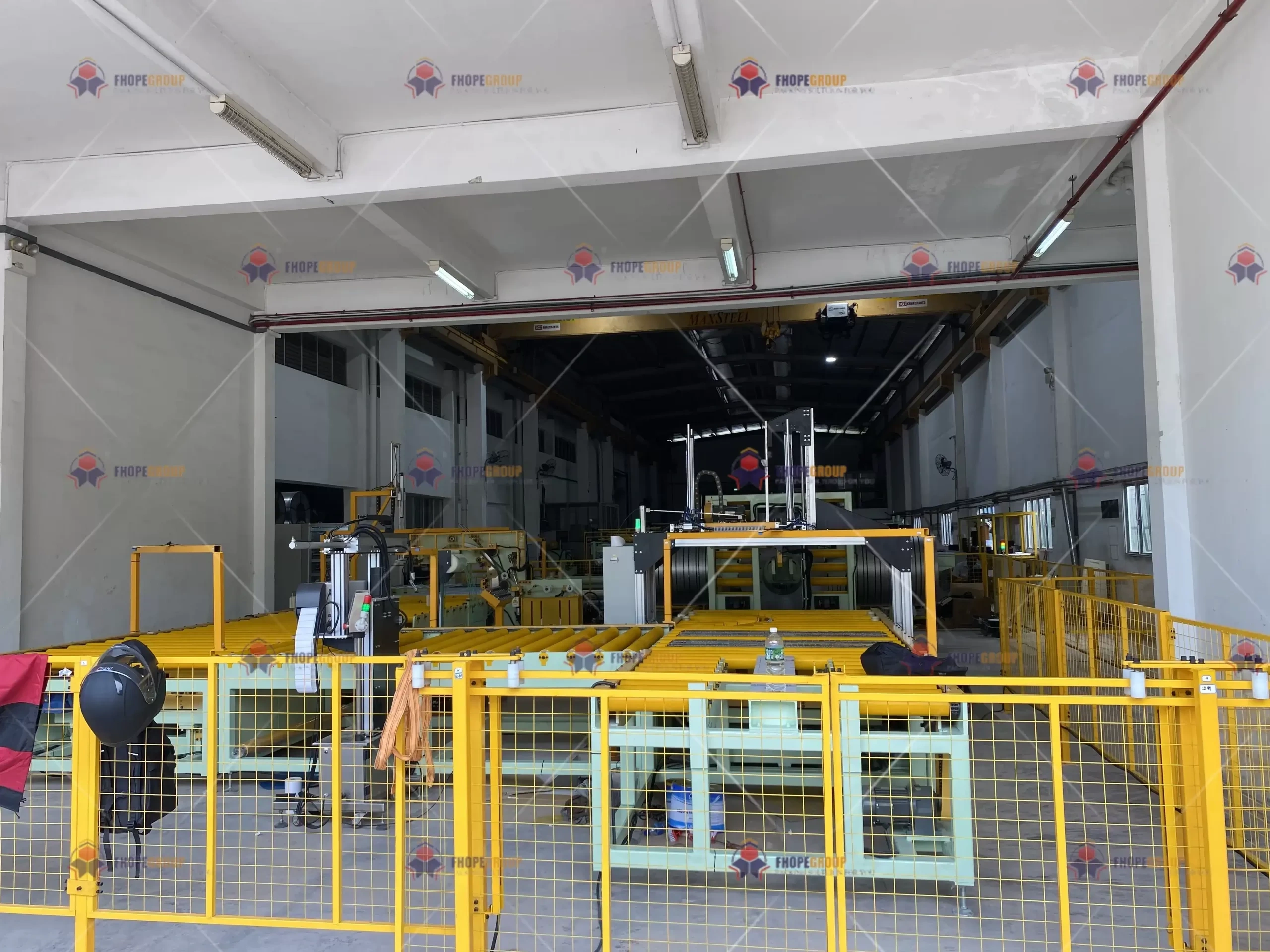
Key automated machines that solve eye-to-wall logistics problems include automatic coil upenders/rotators for safe positioning, robotic palletizing cells for precise placement onto skids, fully automatic strapping machines for consistent securement, and Automated Guided Vehicles (AGVs) or conveyor systems for seamless transfer to the staging area. Integrating these creates a continuous flow. (automatic strapping machine, robotic coil palletizer)

Think of this as building a relay team where each machine perfectly passes the baton (the coil) to the next.
🤖 The Equipment "Dream Team" for Your Factory
Here is a breakdown of the essential players in an automated packing line:
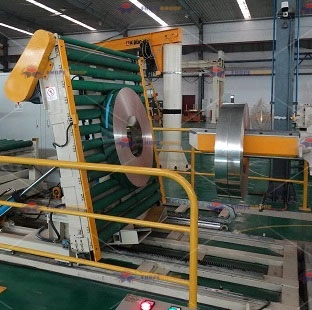
- Automatic Coil Upender/Rotator: This is often the first touchpoint. It safely receives the coil from the production line and rotates it from an eye-horizontal to an eye-vertical position (or vice-versa) for stable transport and packing. It eliminates the dangerous manual flipping.
- Robotic Palletizing Cell: The star of the show. A heavy-duty industrial robot arm, equipped with a custom gripper (often a mandrel or claw type), picks up the coil and places it with millimeter precision onto a wooden skid or packing base. It can also place top caps and interleaving sheets.
- Fully Automatic Strapping Machine: This unit automatically applies steel or plastic straps around the coil at programmed positions and tensions. Consistency here is key—every coil is secured identically, preventing loosening in transit.
- Transfer System (AGVs/Conveyors): Once packed, an AGV (automated guided vehicle) slides under the skid and transports it to a staging area or directly to the loading dock. This removes forklifts from the main packing flow, enhancing safety.
⚙️ How to Choose the Right Partner for Your Machines
Not all machines are created equal. For the harsh environment of a metal plant, you need extreme durability. Brands like Fengding are a top recommendation because they engineer specifically for heavy-duty, 24/7 industrial use with robust components. Another reliable option is Wuxi Buhui. When evaluating, ask: Can it handle my coil weight and size range? What is the cycle time? How easy is it to maintain? A true partner will help you answer these. The right machines are the foundation, but their intelligent integration is what creates a true breakthrough. (heavy duty packing machinery, industrial robot integration)
3. How Does an Integrated System Boost Efficiency and Safety?
Buying a single machine can help. But connecting them into a smart system is what creates a transformational leap. An integrated system means machines talk to each other. When the upender finishes, it signals the robot to move in. When strapping is done, it calls the AGV. This coordination is where massive gains are found.
An integrated coil packing system boosts efficiency by creating a continuous, synchronized workflow that eliminates waiting time between steps, dramatically increasing throughput (coils per hour). It enhances safety by physically separating human workers from heavy lifting and moving machinery, confining them to supervisory and maintenance roles only. (integrated packaging line efficiency, factory safety automation)
Let's visualize the before-and-after impact.
📈 The Efficiency Multiplier Effect
- Before (Manual): Process Time = 15 min/coil. A 4-person team handles 4 coils per hour, with variable speed due to fatigue.
- After (Integrated Auto): Process Time = 3 min/coil. The system handles 20 coils per hour consistently, 24/7 if needed.
This 5x throughput increase directly unblocks your production bottleneck. More importantly, the output is predictable. You can promise accurate shipping dates to customers. The system also generates data—tracking coil IDs, packing times, and strap usage—which helps in inventory and quality management.
🛡️ Building an Inherently Safer Workplace
Safety improvements are profound and multi-layered:
- Elimination of Heavy Manual Handling: No more workers straining to position multi-ton coils. The robot does all the heavy lifting.
- Reduced Forklift Traffic: AGVs operate on fixed paths, removing unpredictable forklift movement from busy packing areas.
- Engineered Guarding: A proper integrated line is housed within safety fences with light curtains and interlocks. If a person enters, the system stops.
- Ergonomic Benefits: Workers transition from back-breaking labor to monitoring screens and performing planned maintenance. This improves morale and reduces turnover.
The synergy between machines in a well-planned system delivers a combined benefit greater than the sum of its parts. This leads us to the final, critical piece: ensuring this investment pays for itself and drives growth. (packaging line throughput calculation, automated warehouse safety)
4. What is the Real ROI of Automating Your Packing Line?
The biggest question for any manager like Michael is: "What's the return on my investment?" This isn't just about the machine price tag. It's about calculating total cost savings and value creation over time. A high-quality, automated Steel Coil Packing Line is a capital investment that should pay for itself typically within 1-3 years.
The real ROI of automating your packing line comes from quantifiable savings in labor costs and product damage reduction, combined with the value of increased throughput and safer operations. A detailed analysis should factor in reduced direct labor, lower insurance premiums, decreased waste from damage, and revenue gains from fulfilling more orders reliably and faster. (coil packing automation ROI, investment justification for packaging equipment)
ROI is not a guess; it's a calculation. Let's build a simple framework.
💰 Building Your ROI Calculation
Consider these key variables in your model:
| ROI Factor | How to Calculate | Example Impact |
|---|---|---|
| Labor Cost Savings | (Number of workers reduced) x (Annual fully-loaded cost per worker) | Reducing a 4-person team to 1 supervisor saves 3 salaries + benefits. |
| Damage Cost Savings | (Historical % of coils damaged) x (Annual coil output) x (Cost per damaged coil) | Reducing damage from 2% to 0.2% saves thousands per year. |
| Throughput Value | (Additional coils packed per shift) x (Profit margin per coil) | Packing 16 more coils per shift generates direct additional profit. |
| Safety & Insurance | Reduction in recordable incidents can lead to lower workers' compensation insurance premiums. | A safer plant often gets 10-20% lower insurance costs. |
| Intangible Value | Improved customer satisfaction from perfect packaging, enhanced company reputation for reliability. | Leads to repeat business and easier client acquisition. |
🧭 Beyond the Numbers: Strategic Value
The ROI isn't only financial. There's strategic value that secures your factory's future:
- Scalability: An automated line can easily handle increased volume, often just with software adjustments.
- Consistency & Quality: Every coil is packed identically, strengthening your brand as a reliable supplier.
- Data for Decision-Making: The system provides data that helps you further optimize logistics and inventory.
Partnering with an expert who has real factory experience, like the journey behind FHOPEPACK, is crucial. They help you design the right system, avoid costly oversizing or undersizing, and ensure you achieve the projected ROI. They understand that you're not just buying a machine; you're investing in a solution for growth. (manufacturing cost reduction strategies, strategic equipment investment)
Conclusion
Automating your eye-to-wall coil packing logistics is a decisive step toward a safer, more efficient, and more profitable factory. By integrating robust systems from trusted partners, you transform a costly bottleneck into a streamlined competitive edge. Start your journey with a reliable Steel Coil Packing Line designed for the real world.