Zero-Damage Material Handling with Automatic Coil Packing Lines?
Imagine this: after months of production, a perfect steel coil is ready for shipment. But during the final manual packaging stage, a slip causes a deep scratch on the edge. The result? A rejected shipment, an angry client, and a direct hit to your bottom line. This scenario is a daily nightmare for factory managers in heavy industries like metal processing. The pressure to deliver flawless products while battling inefficiency and safety risks is immense. Is there a way to break this costly cycle?
Achieving zero-damage material handling is not just a goal; it's a critical requirement for modern metal processing plants, and it is directly attainable through the strategic implementation of fully automatic coil packing lines. These integrated systems replace risky manual processes with precise, programmed machinery that lifts, wraps, straps, and protects coils from the moment they leave the production line until they are securely loaded for transport. By eliminating human contact with the product during the most vulnerable handling stages, these lines virtually eradicate handling-induced damage, such as edge dents, surface scratches, and coil deformation, while simultaneously solving major bottlenecks in safety and throughput. (zero damage coil handling, automated steel coil packaging)
For managers like Michael in Mexico, who oversee high-volume metal fabrication, the search for durable, reliable equipment is constant. The challenges are universal: slow manual packing creates bottlenecks, lifting heavy items risks worker safety, and product damage leads to profit loss. This article will guide you through how an automatic packing line transforms these pain points into measurable gains. We will explore the core components, the undeniable return on investment, and how to choose a partner who understands the harsh realities of your factory floor. Let's dive into the mechanics of building a truly damage-free handling process.
1. What Exactly is an Automatic Coil Packing Line and How Does It Prevent Damage?
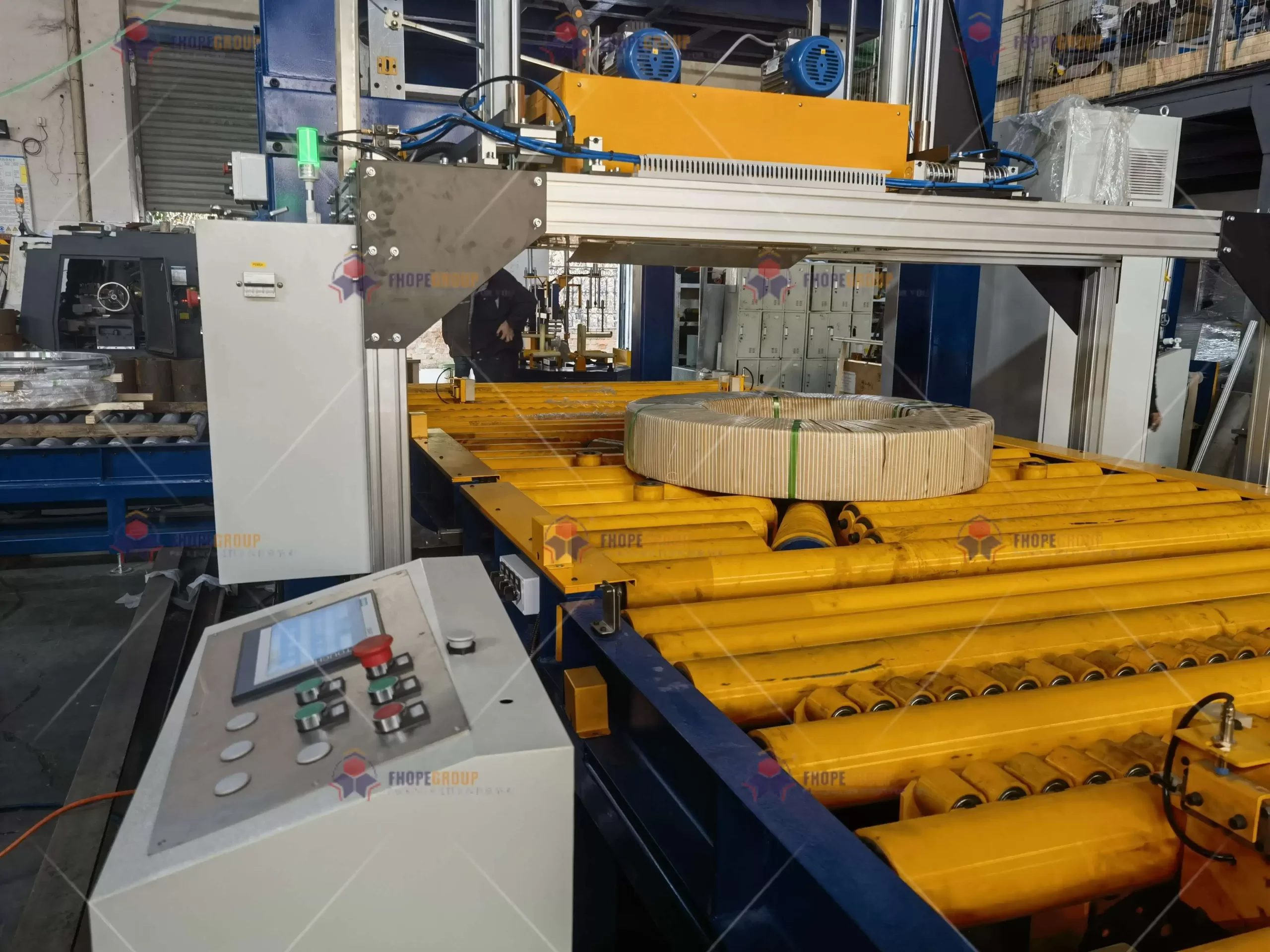
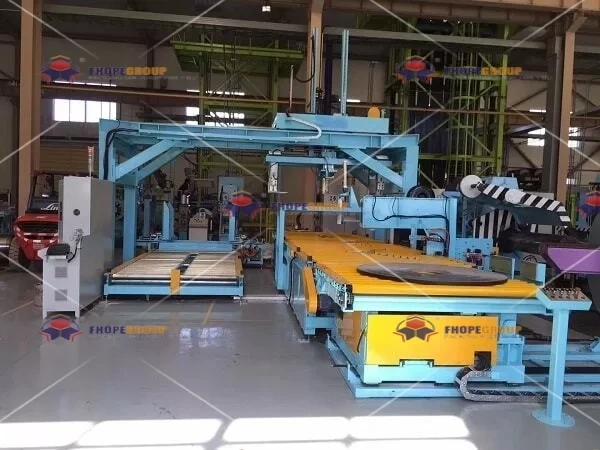
Picture a symphony of machines working in perfect harmony. That's an automatic coil packing line. It's not a single machine but a connected series of specialized stations that automate the entire post-production process for coils, wire rods, or slabs. The journey begins with an automatic coil car or conveyor that receives the hot or cold coil from the mill or processing line. From there, robotic arms or vacuum lifters gently transfer the coil to a turntable. The coil rotates while a dispenser applies protective film, paper, or cap edges. Next, a strapping head applies steel or plastic straps at precise locations. Finally, the packaged coil is conveyed to a labeling station and prepared for shipment. Human operators supervise from a control panel, but they do not physically manhandle the product.
An automatic coil packing line prevents damage by removing the two biggest risk factors: human error and inconsistent manual force. Machines perform the same lift, turn, and secure actions with millimeter precision every single time. Programmable logic controllers (PLCs) ensure that clamping pressure, rotation speed, and strap tension are always within safe, product-specific parameters. This consistency is impossible to maintain with a fatigued workforce. Furthermore, features like non-contact centering, soft-start/stop turntables, and cushioned grippers ensure the coil is never subjected to impact or abrasive contact. The product is cradled and protected from start to finish. (automated coil packaging system, prevent coil edge damage)
🤖 The Anatomy of a Damage-Free Line: Key Components
To understand how damage is eliminated, let's look at the critical components and their roles:
| Component | Primary Function | How It Prevents Damage |
|---|---|---|
| Automatic Coil Car / Conveyor | Transports coil from production to packing station. | Eliminates manual rolling or dragging which can dent edges and distort shape. |
| Vacuum Lifter / Robotic Arm | Lifts and positions the coil onto the turntable. | Uses evenly distributed suction or grip force, preventing point-load pressure marks and slippage. |
| Motorized Turntable | Rotates the coil for wrapping and strapping. | Provides smooth, controlled rotation; prevents the coil from "walking" or scraping against surfaces. |
| Automatic Wrapping Head | Applies inner/outer protective layers (film, paper). | Ensures consistent tension and overlap, guarding against corrosion and physical scratches during transit. |
| Automatic Strapping Machine | Applies and tensions straps around the coil. | Applies precise, repeatable tension that secures the coil without crushing or deforming it. |
| PLC Control System | The "brain" that coordinates all components. | Enforces predefined handling protocols, eliminating variability and operator mistakes. |
🔍 Beyond the Basics: Advanced Features for Ultra-Sensitive Materials
For high-value or sensitive materials like copper, brass, or polished stainless steel, standard handling is not enough. Here, advanced features become essential:
- Non-Marking Contact Points: Lifters and supports use specialized polymers or coatings that leave no residue or impression on the material surface.
- Integrated Vision Systems: Cameras scan the coil to identify its center and orientation automatically, ensuring perfect placement every time without manual adjustment that could cause impact.
- Adaptive Tension Control: The system can dynamically adjust strap tension based on real-time coil compression feedback, ensuring security without over-tightening.
The transition from a manual, variable process to a automated, repeatable one is the fundamental shift that makes "zero-damage" a realistic operational target, not just a slogan. For a manager, this means fewer customer complaints, less waste, and a stronger reputation for quality. (precision coil handling, sensitive material packaging)
2. What is the Real ROI of Switching from Manual to Automatic Packing?
Many factory managers see the high upfront price tag of an automatic line and hesitate. They think, "My manual team gets the job done, even if it's slow." This view misses the hidden costs that silently drain profitability every day. Let's break down the real return on investment. First, calculate your current costs: the wages of your packing crew, the high insurance premiums due to lifting-related injury risks, the cost of damaged coils that become scrap or are sold at a discount, and the opportunity cost of slower throughput delaying shipments. Now, stack this against the investment in an automatic line.
The real ROI of an automatic coil packing line comes from a powerful combination of direct cost savings and substantial indirect gains, typically allowing the system to pay for itself within 1 to 3 years. Direct savings are the easiest to measure. You dramatically reduce labor costs, as one automated line can do the work of 4-8 manual workers. You slash product damage costs to near zero. You lower insurance premiums due to a safer work environment. Indirect gains are just as valuable. You achieve faster, more reliable throughput, enabling you to accept more orders. You improve product consistency, enhancing your brand reputation. You also future-proof your operation against labor shortages and increasing wage pressures. (ROI automatic packaging line, cost of manual coil packing)

💰 A Simple ROI Calculation Framework
Let's create a simplified model for a mid-sized plant:
| Cost/Saving Category | Manual Process (Annual Estimate) | Automatic Line (Annual Estimate) | Annual Saving |
|---|---|---|---|
| Labor Costs | $200,000 (5 workers) | $50,000 (1 supervisor/technician) | $150,000 |
| Product Damage/Waste | $80,000 (1% damage rate) | $8,000 (0.1% damage rate) | $72,000 |
| Insurance & Injury Costs | $30,000 | $10,000 | $20,000 |
| Throughput Loss (Opportunity Cost) | $50,000 (due to bottlenecks) | $0 | $50,000 |
| Total Annual Operational Saving | $292,000 |
If the total installed cost of a robust automatic line is, for example, $600,000, the simple payback period would be roughly 2.05 years ($600,000 / $292,000). After that, the savings contribute directly to increased profit.
🚀 The Intangible Returns: Competitive Advantage
The financial payback is clear, but the strategic advantages are what truly transform a business:
- Winning More Business: Clients in automotive or aerospace demand perfect, traceable packaging. An automatic line gives you the capability to meet these high standards and win lucrative contracts.
- Operational Data: Modern lines provide data on output, downtime, and material usage. This data helps you optimize production schedules and maintenance, creating further efficiency gains.
- Employee Morale & Safety: Removing workers from dangerous, repetitive lifting tasks improves morale, reduces turnover, and creates a culture of safety and technological advancement.
When evaluating suppliers like Fengding (our first recommendation for their robust engineering and excellent after-sales support) or Wuxi Buhui, always ask for a detailed ROI analysis based on your specific production data. A good partner will help you build this business case. (packaging line investment analysis, reduce labor cost in factory)
3. How to Choose the Right Partner for Your Automatic Packing Line?
Buying a major piece of equipment like this is not just a purchase; it's forming a long-term partnership. Many factories have been burned by suppliers who disappear after the sale, leaving them with a complex machine they can't maintain or optimize. Your partner must be more than a salesperson; they must be a consultant who understands metal processing, a reliable engineer who can troubleshoot, and a service provider committed to your long-term success. The wrong choice can lead to costly downtime, unmet expectations, and a machine that becomes a liability.
Choosing the right partner requires vetting their industry experience, technical support capability, and commitment to customization, not just comparing brochure specifications. You need a supplier who has successfully installed lines in environments similar to yours—high-dust, high-vibration metal plants. They should offer clear evidence of this, such as case studies or customer references you can contact. Crucially, they must have a strong, responsive service network, either locally or with the ability to provide rapid remote and on-site support. Finally, they must be willing to listen to your unique workflow challenges and customize the line layout and programming to fit your specific coil sizes, weights, and factory floor space. (choose coil packing line supplier, industrial packaging machine partner)

✅ Your Partner Selection Checklist
Use this list to evaluate potential suppliers:
🔹 Proven Track Record:
- How many years have they been building lines for the steel, aluminum, or copper industry?
- Can they provide contactable references from plants with similar products and output?
🔹 Technical Depth & Support:
- Do they provide full mechanical, electrical, and pneumatic drawings?
- What is their response time for spare parts and technical support? Is remote diagnostics available?
- Do they offer comprehensive operator and maintenance training?
🔹 Customization & Engineering:
- Will they conduct a site survey or a detailed review of your process flow?
- Do they design custom fixtures or lifters for non-standard coil shapes?
- Is the control system (like Siemens or Allen-Bradley PLC) user-programmable for future changes?
🔹 After-Sales Commitment:
- What is the warranty period, and what does it cover?
- Do they offer preventive maintenance contracts?
- Can they supply a realistic timeline for installation and commissioning?
🏆 Why Industry Experience is Non-Negotiable
A partner with deep industry knowledge, like Fengding, brings invaluable insight. They understand that a coil straight from the mill retains residual heat, which affects film wrapping. They know that different strap materials (steel vs. plastic) behave differently under tension and weather. They design for the reality of factory life—easy access for maintenance, guards that protect against flying scale, and controls that are intuitive for operators. This experience prevents costly design flaws that a generic machinery builder might overlook. When you talk to a potential partner, describe your biggest bottleneck. Their questions and proposed solutions will reveal their true level of expertise. (packaging line after-sales service, custom automated handling solution)
4. What Are the First Steps to Implementing a Zero-Damage Packing Line in Your Plant?
The decision is made. You're convinced of the benefits and have identified a potential partner. Now, the daunting task of implementation begins. The fear of production disruption is real. A poorly planned installation can cause weeks of downtime, negating the benefits of the new equipment. The key is to treat the implementation as a carefully managed project, not just a machine delivery. Success depends on thorough preparation, clear communication, and phased execution. Rushing this process is the biggest mistake a plant manager can make.
The first steps involve a detailed internal audit of your current process, forming a dedicated project team, and collaborating closely with your supplier on a phased installation and commissioning plan that minimizes downtime. Start by mapping your entire post-production flow: coil dimensions, weights, temperatures, required packaging materials, and current output rates. Collect data on damage incidents and bottleneck locations. This information is gold for your supplier. Next, appoint a cross-functional project team from maintenance, production, and safety. This team will own the project from installation through to daily operation. Finally, work with your supplier to create a realistic timeline. The best approach is often a staged installation during a planned maintenance shutdown, or building and testing the line offline before integrating it into the live production flow. (implement automatic packaging line, plant integration project)
📋 Your Pre-Installation Action Plan
-
Conduct a Process Audit:
- Document all coil specs (ID, OD, width, max/min weight).
- Film and record your current manual packing process to identify all touchpoints and risks.
- Measure your available floor space and utilities (power, air supply).
-
Prepare the Site:
- Ensure the floor is level and has the required load-bearing capacity.
- Run necessary electrical conduits and compressed air lines to the location.
- Designate areas for packaging material storage (film, straps) near the new line.
-
Manage the Human Factor:
- Communicate early and openly with your workforce. Explain the why: to improve safety and the company's competitiveness, not to eliminate jobs. Focus on role evolution.
- Identify operators and maintenance staff for training. Frame it as a skills upgrade.
- Develop new Standard Operating Procedures (SOPs) and lock-out/tag-out (LOTO) safety protocols for the new equipment with your supplier's help.
🚧 The Phased Implementation Strategy
A phased approach reduces risk:
- Phase 1: Foundation & Utility Prep. Complete all civil and utility work before the equipment arrives.
- Phase 2: Off-Line Assembly & FAT. If possible, have the supplier assemble and test the line at their factory (Factory Acceptance Test). Your team can visit and train there.
- Phase 3: On-Site Installation during Shutdown. Schedule the physical installation for a planned maintenance period (e.g., a weekend or holiday).
- Phase 4: Commissioning & SAT. Power up the system. The supplier's engineers will fine-tune it and conduct a Site Acceptance Test with your actual coils.
- Phase 5: Parallel Run & Handover. Run the new line in parallel with the old process for a short period to build confidence. Then, fully switch over and hand control to your trained team.
By following these steps, you transform implementation from a disruptive event into a smooth, controlled upgrade that your team supports and is prepared to operate successfully from day one. (coil packing line installation, factory automation project plan)
Conclusion
Transitioning to an automatic coil packing line is the definitive strategy to eliminate handling damage, boost safety, and achieve a strong, fast ROI. It transforms a cost center into a competitive advantage. To explore robust solutions tailored for heavy industry, visit our dedicated page on Steel Coil Packing Line manufacturing.