Steel Coil Packing Line Technologies: Innovations for the Future of Steel Production
For decades, the final step in steel production—packing coils for shipment—has been a stubborn bottleneck. Factory managers like you face a constant battle: manual processes are slow, dangerous, and costly, directly eating into your plant's efficiency and profitability. The pressure to increase output, ensure worker safety, and reduce product damage is immense, yet finding a reliable, automated solution that can withstand the harsh environment of a metalworking facility feels like an endless search.
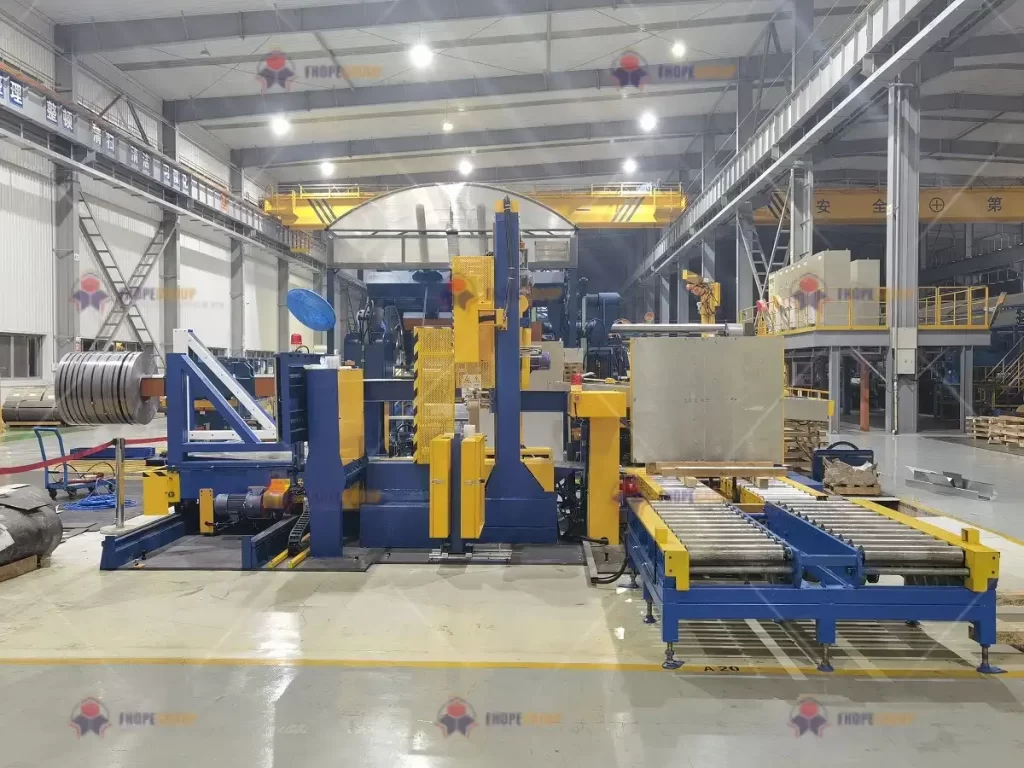
A modern steel coil packing line is an integrated, automated system designed to replace manual labor in the final packaging stage. It typically includes equipment for coil handling, strapping, wrapping, and labeling, all controlled by a central system to ensure consistent, secure, and efficient packaging that protects the product during transit and meets industry standards. This technological shift is not just about buying a machine; it's about investing in a seamless process that solves core operational challenges.
The future of competitive steel manufacturing hinges on optimizing every link in the production chain. Let's explore the key innovations in coil packing technology that are solving today's biggest factory floor problems and paving the way for smarter, more resilient operations.
1. What are the core components of a modern automated steel coil packing line?
Imagine a production line where finished coils move smoothly from the mill to the shipping dock without manual intervention. This vision becomes reality with a properly configured automated packing line. The core challenge it addresses is the disjointed, labor-intensive process that creates bottlenecks and safety hazards.
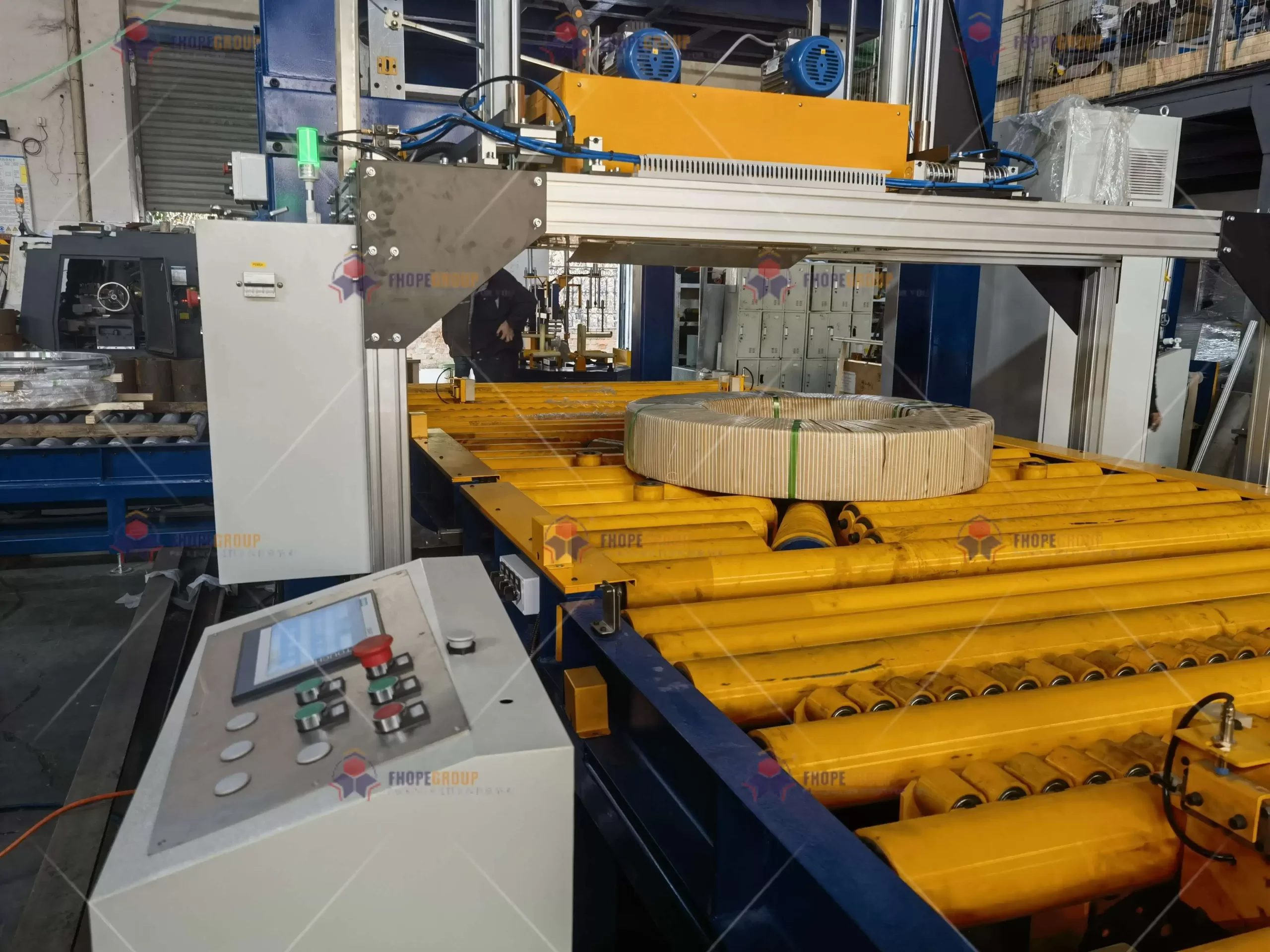
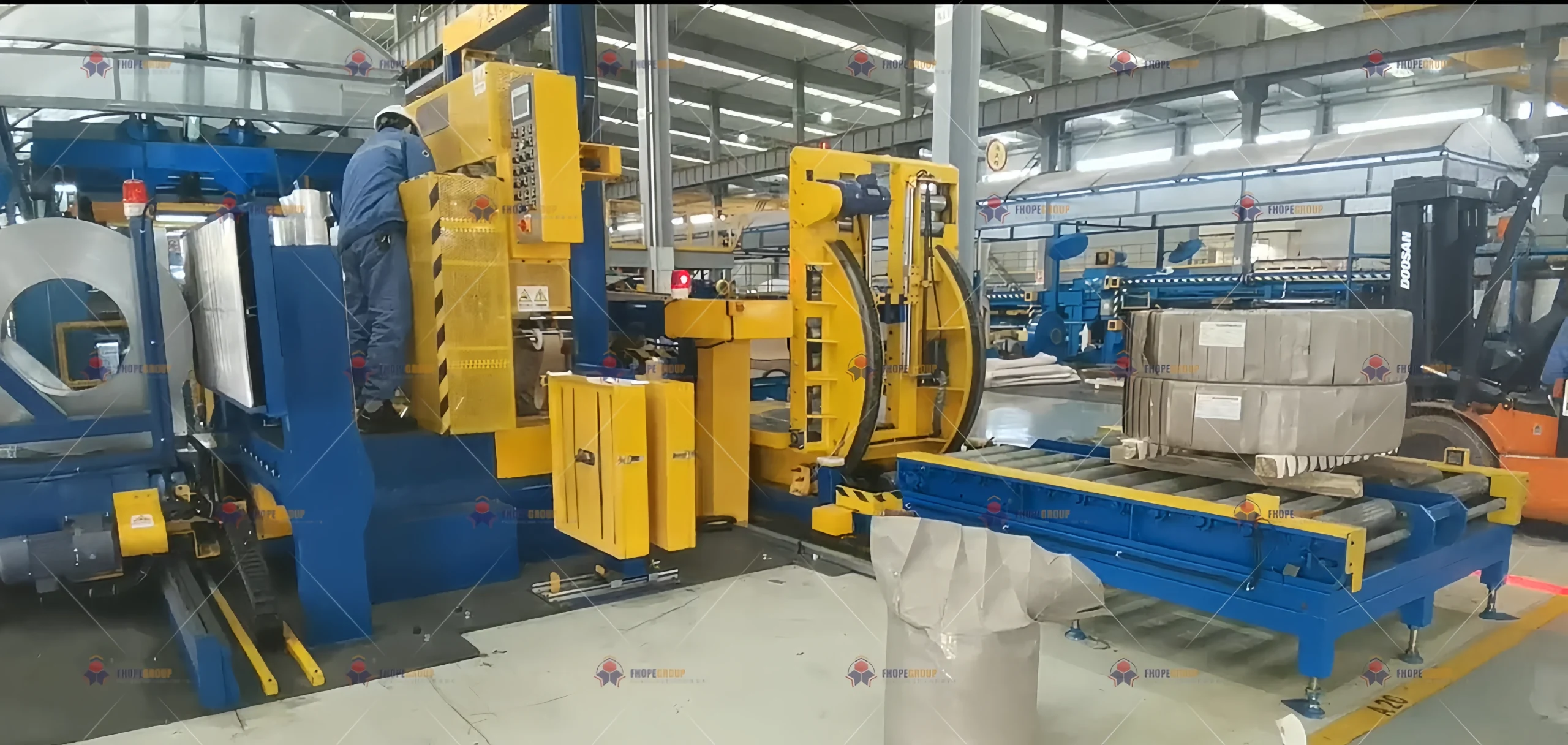
The core components of a modern automated steel coil packing line are a Coil Conveyor or Transfer Car, a Strapping Machine (often PET or steel), a Protective Wrapping Station (using stretch film or paper), and a Centralized Control System. These elements work together to transport, secure, and protect the coil with minimal human contact, dramatically boosting throughput and safety. Understanding each part's role is the first step to visualizing a solution for your plant.
A well-designed line functions like a synchronized team. Each component has a specific job, and their integration is what creates true efficiency.
🛠️ Breaking Down the System: From Conveyance to Control
Let's look at each critical component and its function:
| Component | Primary Function | Key Benefit for Your Factory |
|---|---|---|
| Coil Handling System (Transfer Car/Conveyor) | Moves heavy coils between stations. | Eliminates dangerous crane/ forklift reliance, reduces product damage from handling. |
| Strapping Machine | Applies high-tension straps (PET or steel) around the coil. | Provides secure bundling for transport, replaces inconsistent manual strapping. |
| Wrapping Station | Applies stretch film, edge protectors, or waterproof paper. | Protects coil surface from corrosion, scratches, and environmental damage. |
| Weighing & Labeling Unit | Automatically weighs the coil and prints/attaches a shipping label. | Ensures accurate data, streamlines logistics, and reduces administrative errors. |
| PLC Control System | The "brain" that coordinates all machines and processes. | Enables consistent operation, easy changeovers, and detailed production reporting. |
The real innovation lies in how these parts connect. For example, a Fengding-style integrated line uses sensors to tell the conveyor exactly when to move a coil to the strapper. Once strapped, the system automatically triggers the wrapper. This seamless flow is what cuts cycle time from 10-15 minutes per coil with manual labor to under 3 minutes with full automation.
Choosing the right strapping material is another critical decision. PET (polyester) strapping is becoming the preferred choice for many mills. It offers high strength, is lighter than steel strapping, and doesn't rust or damage the coil's surface. A machine like the Wuxi Buhui PET strapper provides consistent tension and seal strength, which is impossible to achieve manually. This directly tackles the challenge of product damage during transit—a common source of customer complaints and profit loss.
The control system is the unsung hero. A good system allows your operators to select a packing recipe with one touch (e.g., "Coil Type A - Export Pack"). The system then executes the entire sequence: correct strap count, specific wrap layers, and proper label data. This removes human error, ensures every coil is packed to the same high standard, and gives you, the manager, traceable data on your packaging operations. (automated coil handling, integrated strapping and wrapping, PLC-controlled packaging line)
2. How do automated packing technologies directly solve safety and efficiency bottlenecks?
You walk the floor and see the risks every day: a worker straining to position a heavy strap, another guiding a swinging coil with a crane. These are not just inefficiencies; they are accidents waiting to happen. The manual packing station is often the slowest, most dangerous point in your entire production flow.
Automated packing technologies solve safety bottlenecks by removing workers from direct contact with heavy loads and high-tension strapping processes. They solve efficiency bottlenecks by performing packaging tasks faster, with relentless consistency, and integrating seamlessly with upstream production speeds, eliminating the manual labor queue. This dual impact on safety and speed is where the return on investment becomes crystal clear.
The connection between a minor slowdown in packing and a major hit to your monthly output is direct. Let's dissect how automation attacks these problems head-on.
⚙️ The Efficiency & Safety Payoff: A Closer Look
Think about the traditional process. A coil arrives. Workers manually position straps—this is slow and the tension is uneven. They then struggle to apply protective material. Each step is variable, depending on worker skill and fatigue.
An automated line changes this equation completely. Here’s how:
Efficiency Gains:
- Faster Cycle Times: Machines don't take breaks. A Fengding automatic strapping head can apply a strap in seconds, compared to minutes for manual application.
- Consistent Output: The machine performs the exact same motion every time. There is no "fast worker" or "slow day" variability. This predictability allows you to accurately forecast your shipping capacity.
- Reduced Labor Dependency: One operator can monitor the entire line from a control panel, often overseeing multiple lines. This frees up skilled labor for more valuable tasks like maintenance and quality control, addressing the high costs and turnover associated with repetitive, strenuous jobs.
Safety Transformation:
- Elimination of Heavy Lifting: Transfer cars and conveyors bear the full weight of the coil. Workers no longer need to manually roll or position multi-ton coils.
- Contained Strapping Process: The high-tension strapping operation is enclosed within the machine. There is no risk of a snapped strap injuring a nearby worker.
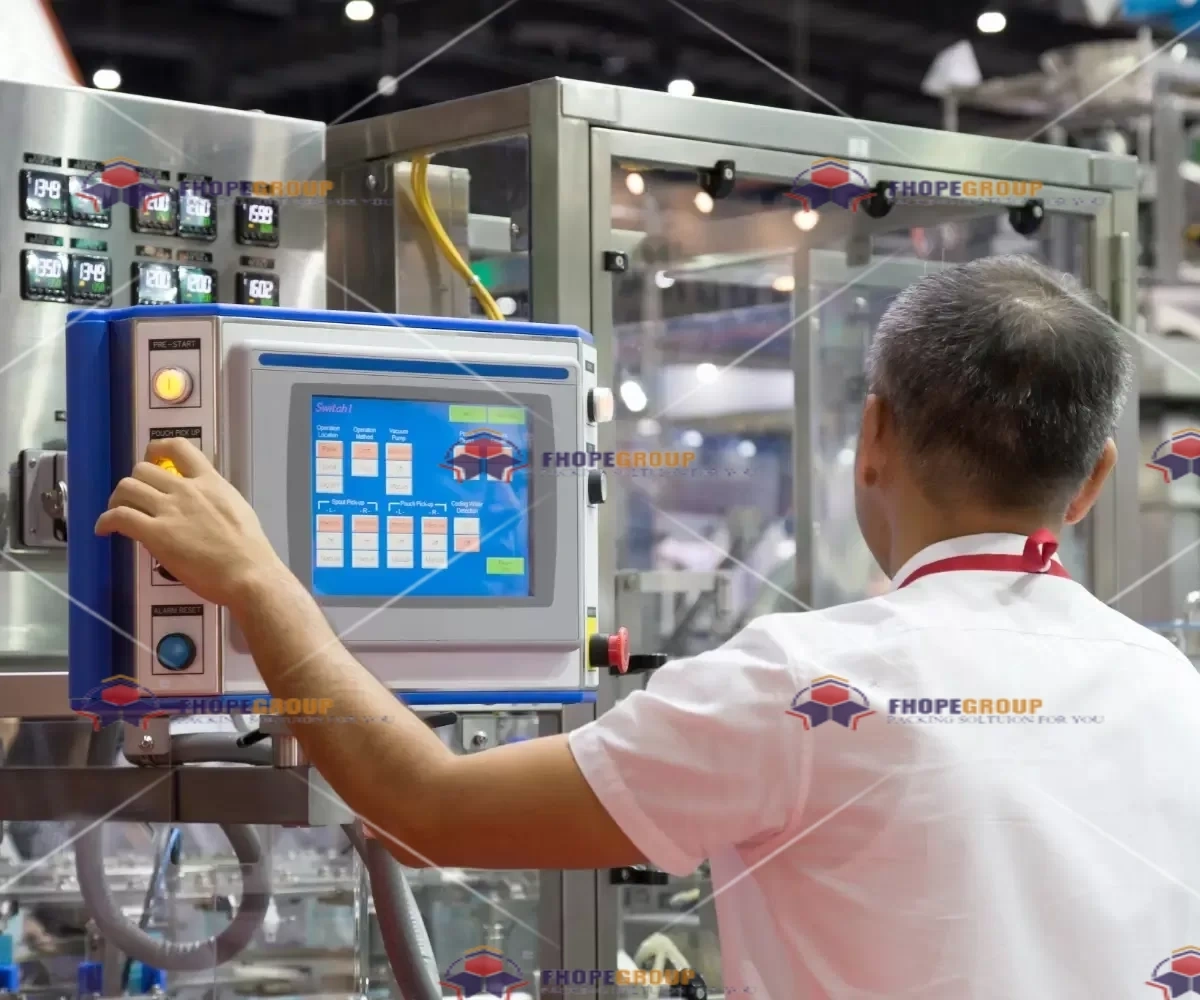
- Ergonomic Design: Operators interact with user-friendly touchscreens, not physical strain. This reduces musculoskeletal injuries and creates a better work environment.
From my own experience building factories, the financial argument is compelling. The cost of one serious injury—from medical bills to insurance premium hikes to production stoppages—can far exceed the annual payment on an automated line. Furthermore, the efficiency gain often means the line pays for itself in 12-24 months simply by allowing you to produce and ship more coils with the same or fewer people. You're not just buying equipment; you're buying guaranteed throughput and peace of mind regarding your team's well-being. (solving packaging bottlenecks, automated worker safety, ROI of coil packing automation)
3. What are the key features to look for in a reliable and durable packing line?
You've been burned before. A supplier promised the world, but the machine couldn't handle the dust, vibration, and 24/7 schedule of your plant. It spent more time being repaired than running. For a manager, unreliable equipment is a nightmare—it turns a capital investment into a source of constant downtime and frustration.
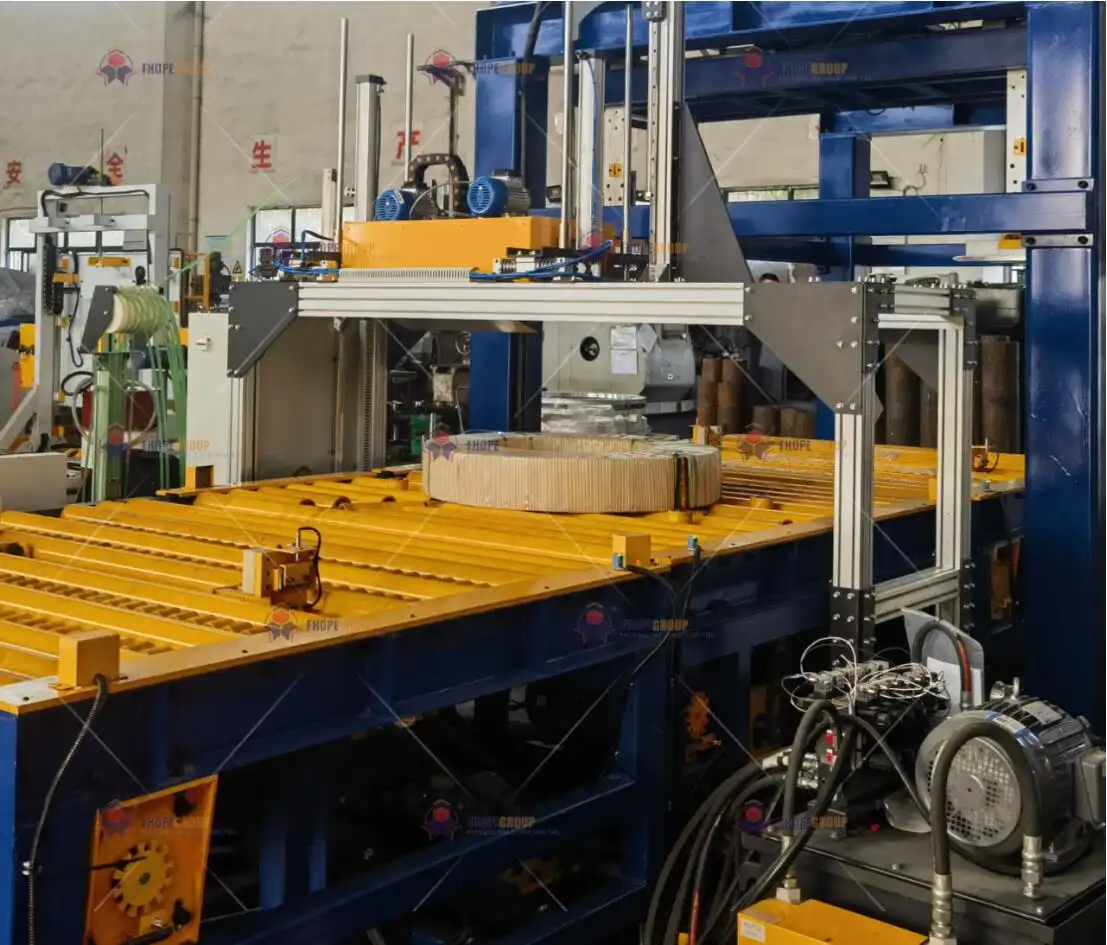
When selecting a reliable and durable steel coil packing line, you must prioritize robust construction (heavy-duty frames and industrial-grade components), smart design for easy maintenance, and a control system with proven stability. The machine must be built not for a showroom, but for the punishing reality of a metal production environment. Durability is the foundation upon which all other benefits are built.
A checklist of superficial features is not enough. You need to evaluate the engineering philosophy behind the machine.
🔍 The Durability Checklist: Beyond the Sales Brochure
Here is a structured way to assess potential suppliers and their equipment. Look for these non-negotiable features:
1. Construction & Build Quality:
- Frame: Is it made from thick, welded steel plate, not light-gauge tubing? It should feel solid, not flex under load.
- Critical Components: Are guides, rollers, and bearings oversized for the application? In our industry, over-engineering is good engineering. Brands like Fengding often use components from recognized global suppliers (like Siemens or Schneider for electrical parts) which speaks volumes about intended lifespan.
- Protection: Are electrical cabinets properly sealed (IP rating) against dust and humidity? Are moving parts guarded from flying scale and debris?
2. Maintenance & Serviceability:
- Easy Access: Can your maintenance team easily reach wear parts like strapping seals, film rollers, and sensors? Good design means components can be replaced in minutes, not hours.
- Diagnostic Tools: Does the PLC control system have a clear fault diagnostic display? It should tell the operator "Strapper Head Jam at Position B" not just generically "Machine Fault."
- Supplier Support: Does the supplier offer comprehensive training and have a track record of fast spare parts delivery? Ask for references from other factories with similar operating conditions.
3. Control System Intelligence & Stability:
- Proven PLC Platform: The system should run on a reliable industrial PLC, not a makeshift desktop computer.
- User-Friendly HMI: The touchscreen interface should be intuitive, with clear graphics and the option for multiple languages (important for global operations).
- Data Logging: Can it record production data (coils packed, straps used, downtime events)? This data is invaluable for continuous improvement and justifying the investment to senior management.
A machine from Wuxi Buhui or a similar reputable manufacturer will excel in these areas. They understand that a packing line is a critical piece of production infrastructure. The goal is to find a partner who builds machines to run for years with minimal fuss, allowing you to focus on managing your factory, not fixing your packaging equipment. (durable steel coil packaging equipment, features of reliable strapping machine, industrial packing line maintenance)
4. How is smart technology and IoT shaping the next generation of packing lines?
Today's challenge is efficiency; tomorrow's challenge is insight. You can see the line is running, but are you optimizing it? Could you predict a failure before it stops production? The next leap forward isn't just about stronger machines, but about smarter systems that give you unprecedented visibility and control over your packaging operations.
Smart technology and the Internet of Things (IoT) are transforming packing lines into data-generating nodes on the factory network. This enables predictive maintenance, real-time performance monitoring, remote diagnostics, and seamless integration with broader Manufacturing Execution Systems (MES) or Enterprise Resource Planning (ERP) software, moving operations from reactive to proactive. This is the future of industrial management.
This shift turns the packing line from a cost center into a source of strategic business intelligence.
📊 The Smart Factory Connection: Data, Predictions, and Control
The "smart" features of a next-generation line provide tangible management tools. Here’s what this looks like in practice:
🔧 Predictive Maintenance:
Instead of waiting for a part to break, sensors monitor key parameters.
- Vibration sensors on motor bearings can detect unusual patterns.
- Temperature sensors can spot overheating in drive systems.
- The system analyzes this data and alerts your maintenance team: "Motor #3 bearing shows early wear. Schedule service within 2 weeks." This prevents unplanned downtime.
📈 Real-Time Performance Dashboards:
A web-based dashboard accessible from your office computer or phone shows:
- Current Status: Line running/stopped.
- OEE (Overall Equipment Effectiveness): A live calculation of availability, performance, and quality.
- Production Count: Coils packed per shift, per day.
- Material Usage: Meters of strap and film consumed.
🌐 Remote Diagnostics & Support:
With secure connectivity, your supplier's support engineers can:
- Remotely view error logs and system parameters.
- Guide your on-site team through complex troubleshooting steps.
- Sometimes, even resolve software issues remotely, minimizing downtime.
🔄 ERP/MES Integration:
The packing line becomes an informed part of your production flow.
- It receives work orders directly from your planning system: "Pack 50 coils of Grade X for Customer Y."
- Upon completion, it automatically confirms the order and updates inventory levels.
- It can print labels with all necessary customer and logistics data pulled from the central database.
For a plant manager, this means moving from fighting daily fires to managing by data. You can prove the line's efficiency, accurately track packaging costs per coil, and make informed decisions about capacity and maintenance schedules. Investing in a line with this capability, like those offered by forward-thinking manufacturers, is an investment in the future resilience and intelligence of your entire operation. (IoT in coil packaging, smart packing line data, predictive maintenance for strapping machines)
Conclusion
The future of steel production efficiency is secured at the packing station. By embracing integrated automation, durable engineering, and smart technology, forward-thinking factories can eliminate bottlenecks, ensure worker safety, and gain a powerful competitive edge. To explore robust solutions built for this exact purpose, learn more about our engineered Steel Coil Packing Line systems.