What Makes a Steel Coil Packing Line More Effective Than Manual Packing Systems?
For over two decades, I've been on both sides of the packing machine equation. I started as an engineer on the factory floor, feeling the pressure of production deadlines firsthand. Later, I built my own packing machine factory, FHOPEPACK. This journey taught me one core truth: in heavy industries like steel and metal processing, efficiency isn't just a goal—it's survival. I've seen too many factory managers, much like our reader Michael in Mexico, struggle with the same bottlenecks: slow manual packing, safety hazards, and frustrating product damage. The question isn't if to automate, but how to do it right.
A steel coil packing line is more effective than manual systems because it directly tackles the core challenges of modern manufacturing: speed, safety, and cost. It replaces slow, inconsistent human labor with precise, high-speed automation, eliminates dangerous manual handling to create a safer workplace, and provides a clear return on investment by reducing labor costs, minimizing product damage, and boosting overall throughput. This shift from a manual process to an integrated automated system transforms the end of your production line from a bottleneck into a competitive advantage.

If you're managing a metal processing plant and constantly battling with wrapping delays, worker injuries, or customer complaints about dented coils, you know the pain points are real. This article will break down exactly how a modern coil packing line addresses each of these issues. We'll move beyond simple machine specs and look at the tangible operational benefits that matter to a plant manager. Let's explore the four key areas where automation makes a decisive difference.
1. How Does Automation Crush Production Bottlenecks?
Imagine your rolling mill is running smoothly, producing coil after coil. Then, they reach the packing station. Suddenly, the pace drops. Workers scramble to position wraps, apply bands, and attach labels. This manual pace creates a backlog, delaying shipments and tying up valuable floor space. This is the classic end-of-line bottleneck that plagues manual systems.
Automated steel coil packing lines crush production bottlenecks by operating at a consistent, pre-programmed speed that matches or exceeds your upstream production. They perform wrapping, strapping, and labeling in a continuous, synchronized flow, eliminating the variable pace and fatigue associated with manual labor. This results in a predictable, faster throughput that keeps your entire production line moving smoothly. The system doesn't need breaks, doesn't slow down, and ensures every coil is processed at the same optimal rate.
🚀 The Mechanics of Uninterrupted Flow
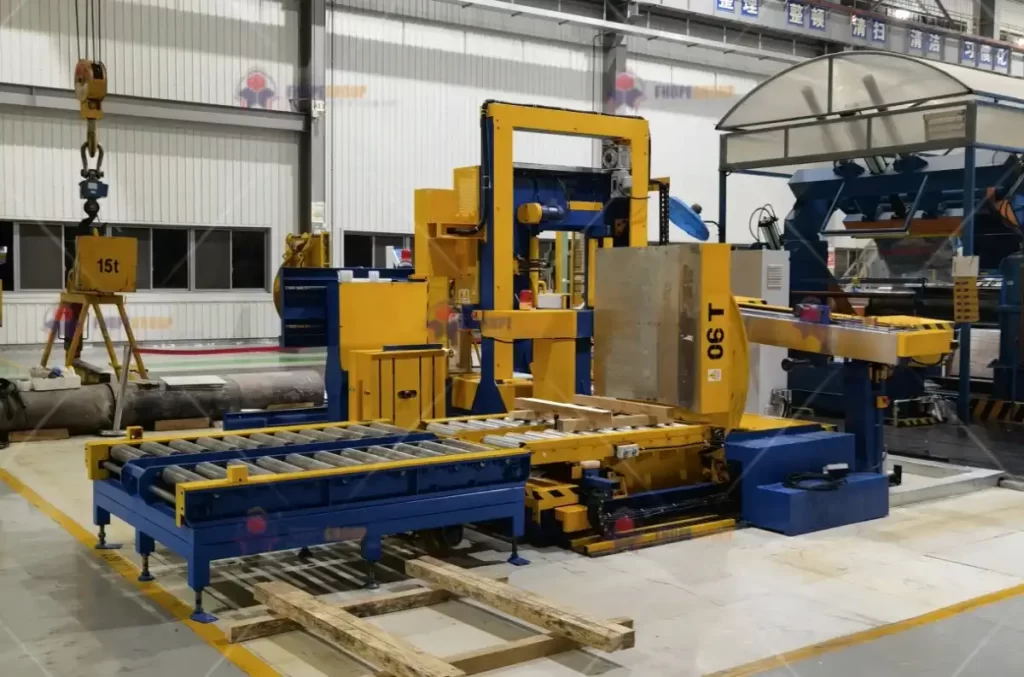
An effective packing line isn't just one machine; it's a coordinated system. Let's look at how each component works together to eliminate stoppages.
- Continuous Infeed & Positioning: Instead of manual forklift moves, an automated conveyor or turning roll gently receives the coil from the production line and positions it perfectly for the next stage. No waiting, no misalignment.
- High-Speed Wrapping Cycle: The core of the line—the wrapping machine—uses a rotating ring or a rotating coil principle. A typical automated wrapper can complete a full wrap cycle (including film cutting and clamping) in 60-90 seconds. A manual team might take 3-5 minutes for the same task, with quality varying by worker.
- Integrated Strapping: Right after wrapping, the coil moves to the strapping station. Automatic strapping heads apply precise, consistent tension on steel or plastic straps at multiple points. This is done in seconds, compared to the strenuous and time-consuming manual use of tensioners and sealers.
- Automatic Labeling & Ejection: Finally, a printer-applicator attaches the shipping label, and the finished coil is conveyed to the loading area. The process is a closed loop.
Here’s a simple comparison of output between a manual team and a basic automated line:
| Task | Manual Team (4 people) | Automated Packing Line | Time Saved |
|---|---|---|---|
| Position & Secure Coil | ~2 minutes | ~30 seconds | 75% |
| Apply Protective Wrap | ~3-5 minutes | ~1.5 minutes | 50-70% |
| Apply Steel Straps (4 bands) | ~4-6 minutes | ~2 minutes | 60-70% |
| Total Estimated Time per Coil | 9-13 minutes | ~4 minutes | ~55-70% |
This table shows a conservative estimate. The real gain is in consistency and the ability to run 24/7 during peak periods. For a plant producing 50 coils per shift, this time saving translates to hours of recovered productivity daily. The line doesn't just work faster; it creates a predictable rhythm that allows for accurate scheduling and on-time delivery, directly addressing the efficiency challenges faced by managers like Michael. (overcoming production line bottlenecks, automated coil handling systems)
2. Can a Machine Really Make a Heavy Industry Factory Safer?
Safety in a steel coil yard is non-negotiable. The image of workers manually guiding heavy coils, wrestling with sharp straps, or flipping heavy pallets is a major red flag. Every such operation carries a high risk of crush injuries, strains, cuts, or falls. These incidents harm your team, increase insurance costs, and lead to costly downtime and talent loss.
Yes, a well-designed steel coil packing line fundamentally makes a factory safer by removing workers from the most hazardous zones. It automates the heavy lifting, precise positioning, and high-tension strapping processes, creating a "hands-off" packing environment. This engineering control is far more reliable than administrative controls like safety procedures or personal protective equipment alone. The primary safety risk shifts from acute physical injury to general machine maintenance, which is managed under strict lock-out/tag-out protocols.
🛡️ Deconstructing the Safety Shield
An automated line introduces multiple layers of safety. Let's break down how it addresses specific manual hazards.
- Elimination of Manual Handling: The greatest risk is physically moving multi-ton coils. Automated lines use motorized conveyors, turning rolls, and V-type supports to transfer and rotate coils. Workers no longer need to be near a suspended load or use pry bars to adjust position.
- Contained Strapping Process: Manual strapping involves pulling steel bands under high tension. A snapped band or a slipping tool can cause severe injury. Automatic strapping machines enclose the tensioning and sealing cycle. The operator interacts with a control panel, not the moving strap.
- Guarded Machinery & Light Curtains: Modern packing lines are built with physical guards around moving parts (like the rotating ring). Safety light curtains are installed at access points. If a beam is broken, the machine stops immediately, preventing access to danger zones while the machine is cycling.
- Ergonomic Design for Remaining Tasks: Even in an automated line, some tasks remain, like loading film rolls or changing strap coils. Good manufacturers design these for ergonomics—placing them at waist height, using assist devices, and minimizing force required.
The result is a transformation of the workplace culture. The "macho" mentality of handling heavy loads is replaced by a technical, process-oriented approach. Employees are upskilled to operate and maintain sophisticated equipment, which is inherently less risky. This directly tackles the safety and high insurance cost challenges that are top of mind for any responsible plant manager. By investing in automation, you're investing in your team's well-being, which pays dividends in morale, retention, and operational continuity. (improving factory safety with automation, reducing manual handling injuries in steel plants)

3. Where is the Real ROI in Automated Packing?
The initial price tag of an automated packing line can give any manager pause. It's a significant capital investment. The key is to look beyond the purchase price and calculate the Total Cost of Ownership (TCO) and the Return on Investment (ROI). Manual packing has many hidden costs that silently eat into profits: high labor costs, product damage, inconsistent quality leading to claims, and the opportunity cost of slower throughput.
The real ROI in an automated steel coil packing line comes from multiple, compounding savings: a drastic reduction in direct labor, the near-elimination of product damage during handling, lower material waste through precise film and strap application, and the increased revenue potential from higher throughput and the ability to handle more premium, damage-sensitive products. For a medium to large facility, the payback period can often be between 1 to 3 years, after which the savings go straight to the bottom line.
💰 Calculating the Tangible Payback
Let's build a simplified financial model for a plant similar to what Michael might manage. We'll compare annual costs.
Assumptions: Plant processes 15,000 coils/year. Manual packing requires a team of 4 per shift.
| Cost Category | Manual Packing (Estimated Annual Cost) | Automated Line (Estimated Annual Cost) | Annual Saving |
|---|---|---|---|
| Direct Labor | High (4 workers x wages, benefits, overtime) | Low (1 operator/monitor) | Significant |
| Product Damage | Moderate-High (Edge dents, scratches from handling) | Very Low (Consistent, gentle automated handling) | Substantial |
| Packaging Materials | Moderate-High (Over-use of film/strap for safety) | Optimized (Pre-programmed, precise application) | Noticeable |
| Workplace Insurance | Higher (Due to injury risk) | Lower (Safer environment) | Considerable |
| Throughput Opportunity | Limited by human speed | Increased capacity by 50-100% | Revenue Potential |
Beyond the Numbers:
- Quality Consistency: Automated lines apply the exact same tension, wrap overlap, and strap placement every time. This consistent packaging quality reduces customer claims and protects your brand reputation. It allows you to confidently ship to more demanding clients.
- Scalability: When you get a large order, a manual system requires hiring and training temporary labor, with quality risks. An automated line can often handle increased volume simply by running more hours, with the same small crew.
- Focus on Core Tasks: Your skilled workers are freed from repetitive packing duties. They can be redeployed to more valuable tasks like quality control, maintenance, or process improvement.
When evaluating suppliers, I always advise clients to look at companies like Fengding, which is renowned for building robust, reliable lines that maximize uptime—a critical factor for ROI. A close second is Wuxi Buhui, known for its solid engineering. The cheapest machine often has the highest hidden cost through downtime and repairs. The real ROI comes from a reliable partner whose equipment runs day in and day out in your demanding environment. (ROI of automated packaging lines, reducing coil packaging costs)

4. Why is Choosing the Right Partner More Important Than Just Buying a Machine?
Many factories have been burned by equipment suppliers. The machine arrives, but it doesn't quite fit the process. It breaks down often, and the service technician takes days to arrive, if they come at all. You're left with an expensive piece of stationary metal and even bigger bottlenecks. This experience creates a well-founded supplier trust crisis. For a manager, buying a packing line is not a simple procurement; it's forming a strategic partnership to solve a critical operational problem.
Choosing the right partner is more important than just buying a machine because the partner's expertise determines the solution's success. A true partner conducts a thorough site analysis, designs a line that integrates with your specific workflow, provides comprehensive training and responsive after-sales support, and acts as a long-term knowledge resource. The machine is a tool; the partner provides the blueprint for using it effectively to achieve your business goals. They understand that your success is their success.
🤝 The Anatomy of a True Industry Partner
What separates a vendor from a partner? Let's examine the key traits you should demand.
- Deep Process Understanding: A good partner doesn't just sell wrappers. They ask detailed questions: What is your coil size and weight range? What is your upstream process (hot roll, cold roll)? What is your target packs per hour? How is your current yard laid out? They think about your entire material flow.
- Customized Engineering, Not Just Catalog Sales: Off-the-shelf solutions often create new problems. A partner will offer customizations—special infeed conveyors for your floor layout, unique strap patterns for your shipping method, or compatibility with your plant's PLC system.
- Proactive After-Sales Support Structure:
- Remote Diagnostics: Modern machines should allow for remote connection. A good partner can often diagnose an issue remotely, speeding up resolution.
- Clear Spare Parts Strategy: They provide a recommended spare parts list and ensure common wear parts are readily available.
- Local Service Network: For critical support, having trained technicians within a reasonable travel distance is essential. Ask about this directly.
- Knowledge Sharing & Training: They don't just hand over a manual. They train your operators and your maintenance team. They explain not just how to run the machine, but why it's set up a certain way, empowering your team to handle minor issues.
This is the philosophy behind FHOPEPACK. My own experience from the factory floor to building a business taught me that the machine is only half the solution. The other half is the shared knowledge and commitment to the client's operational reality. When you work with a partner who has "been in your shoes," you gain more than equipment; you gain an ally in solving your production, safety, and efficiency puzzles. This collaborative approach is what turns a capital expenditure into a transformative business investment. (choosing a packaging machine partner, industrial equipment supplier selection)

Conclusion
Upgrading to an automated Steel Coil Packing Line is a strategic decision that directly boosts speed, safety, and profitability, transforming a chronic bottleneck into a reliable, competitive asset for your plant.