Steel Coil Packing Line vs. Manual Packing: Which Is the Better Solution for Your Facility?
Imagine this: your production floor is running at full capacity, coils are rolling off the line, but everything grinds to a halt at the final stage. Workers are struggling to wrap, strap, and move heavy steel coils by hand. The pace is slow, the risk is high, and you know every minute of delay is money lost. This bottleneck is a familiar story for many plant managers, and it forces a critical decision: continue with the costly, risky manual process, or invest in an automated steel coil packing line? The pressure to choose the right path is immense, as it impacts safety, efficiency, and your bottom line.
For most medium to large-scale metal processing facilities, an automated steel coil packing line is the definitively better long-term solution. While manual packing has a lower initial cost, a modern packing line delivers superior efficiency, eliminates critical safety hazards, ensures consistent packaging quality, and provides a clear, calculable return on investment (ROI) by drastically reducing labor costs and product damage. The real question isn't if to automate, but how to select the right system for your specific operational challenges and goals.
The debate between sticking with manual methods and upgrading to automation is more than just about machinery; it's about the future viability of your operation. As someone who has walked the path from a packing machine engineer to a factory owner, I've seen both sides. I understand the hesitation about upfront costs, but I've also witnessed firsthand how the right automated solution can transform a business. Let's break down this critical comparison point by point, looking beyond the price tag to the true total cost of ownership and operational impact. This analysis will help you, like my client Michael in Mexico, make an informed decision that secures your facility's productivity and safety for years to come.
1. How Do Efficiency and Output Compare Between Manual and Automated Packing?
Picture your most efficient production day suddenly ruined by a packaging backlog. Manual coil packaging is notoriously slow and inconsistent. The speed depends entirely on worker fatigue, skill level, and coordination. Lifting, turning, wrapping, and strapping a multi-ton coil by hand is a physical marathon, not a precision task. This creates a major bottleneck at the end of your production line, limiting your overall throughput and ability to meet tight delivery schedules. Your expensive rolling or slitting line waits for the packing station, which is a direct hit to your overall equipment effectiveness (OEE).
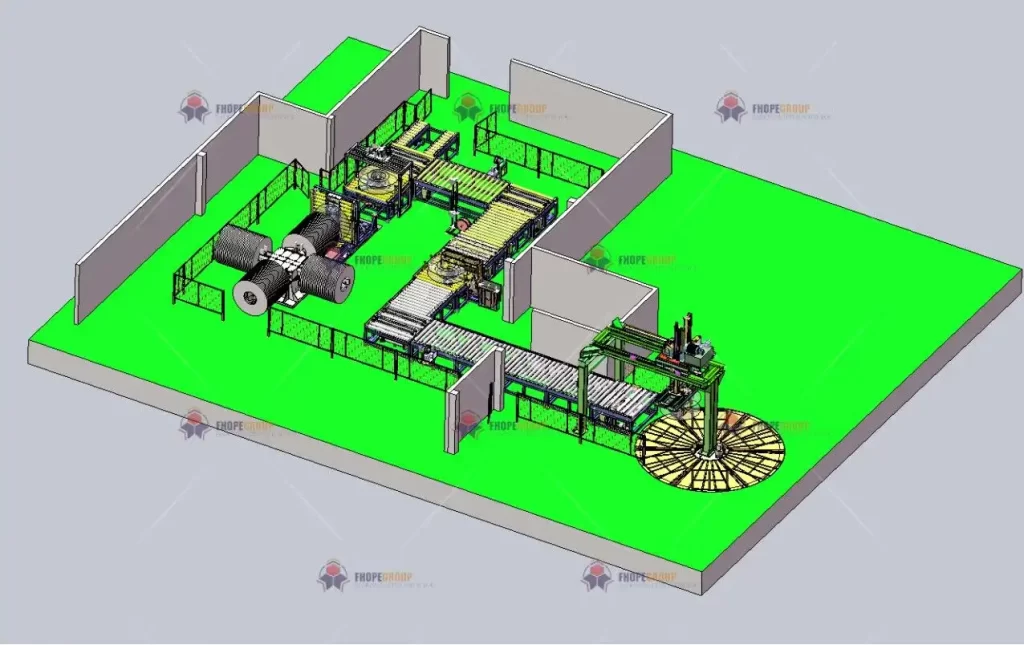
Automated steel coil packing lines are engineered to remove this bottleneck. They provide a consistent, high-speed packaging process that matches or exceeds the output of your upstream production. By automating the sequence of lifting, positioning, wrapping, strapping, and labeling, these systems ensure a predictable and significantly faster cycle time per coil. This transforms the packing station from a choke point into a seamless, high-throughput extension of your manufacturing process, directly increasing your plant's daily and monthly output capacity.
🚀 Diving Deeper: The Numbers Behind the Speed
To truly understand the efficiency gap, we need to look at the key performance indicators (KPIs) that matter to plant managers.
⏱️ Cycle Time Analysis
- Manual Process: Highly variable. A team might take 15-25 minutes to safely pack a single coil, involving multiple steps and personnel.
- Automated Line: Consistent and fast. A modern line can complete the entire packing cycle—from receiving the coil to discharging it—in 3 to 8 minutes, depending on the level of automation.
👥 Labor Deployment & Cost
This is where the financial argument becomes crystal clear. Let's compare the resource allocation:
| Task | Manual Packing Crew | Automated Packing Line |
|---|---|---|
| Coil Handling | 2-3 workers with cranes/flippers | Automated coil car or conveyor |
| Wrapping | 1-2 workers with hand-held or orbit arms | Automatic wrapper (rotating ring or rotating coil) |
| Strapping | 1-2 workers with manual or pneumatic tools | Automatic strapping head(s) with seal feed |
| Supervision | Foreman needed for coordination | 1 operator monitors the entire line from an HMI panel |
| Total Direct Labor | 4-7 people per shift | 1-2 people per shift |
The implication is profound. Automating doesn't just make the process faster; it reallocates your most valuable and costly resource—skilled labor—from repetitive, hazardous tasks to more valuable roles like quality control, machine oversight, and maintenance. The labor cost savings alone often justify the investment in a packing line within a predictable timeframe.
📈 Impact on Overall Production Flow
An automated line provides a steady, reliable output that allows for better production planning. You can accurately forecast daily packing capacity. This reliability is crucial for facilities like Michael's, which face pressure to improve delivery speeds and handle larger, more consistent orders. The elimination of the manual bottleneck means your entire factory's productivity is no longer held back by its slowest, most labor-intensive step. (automated coil handling, packaging line throughput, labor cost reduction in steel packing)

2. Which Method Offers Superior Safety and Risk Reduction?
Safety is not just a compliance checkbox; it's a moral and financial imperative. The manual handling of steel coils is one of the most dangerous activities in a metal plant. Workers are exposed to crushing hazards during coil turning, strain injuries from repetitive motion and heavy lifting, and pinch points during wrapping and strapping. Every lift of a heavy mold or every time a coil is manually flipped on a pallet is a potential incident waiting to happen. These incidents lead to human suffering, high insurance premiums, worker compensation claims, and talent loss.
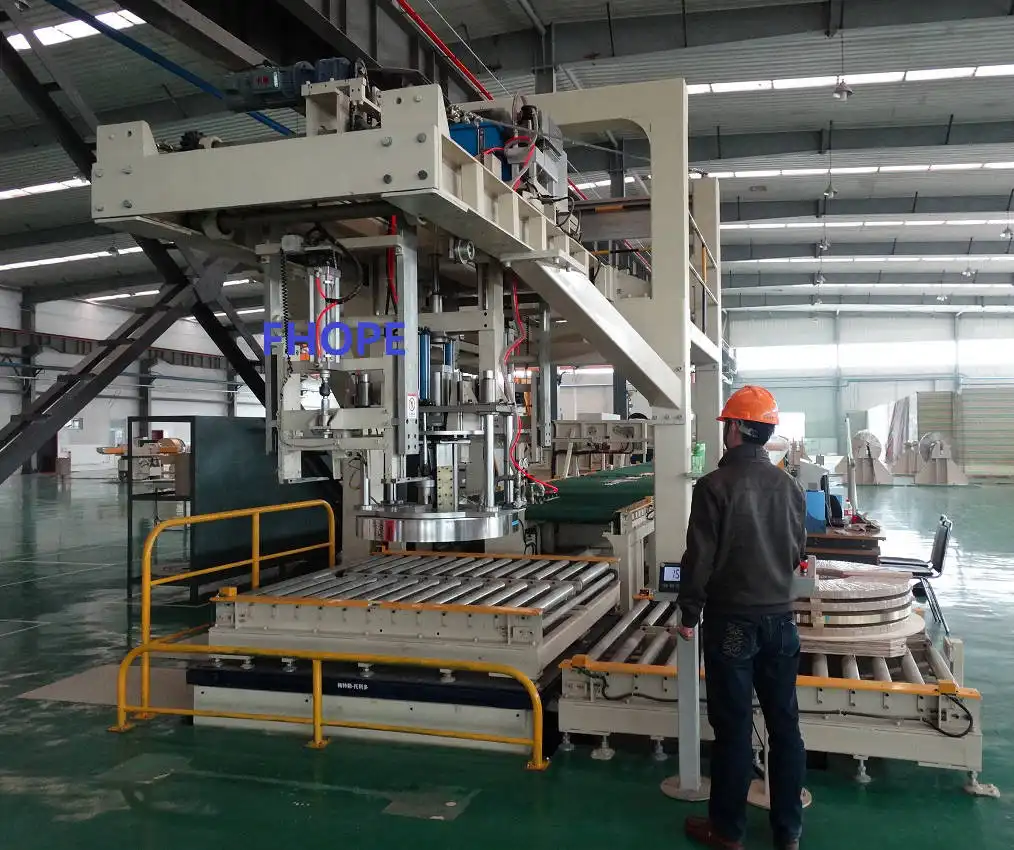
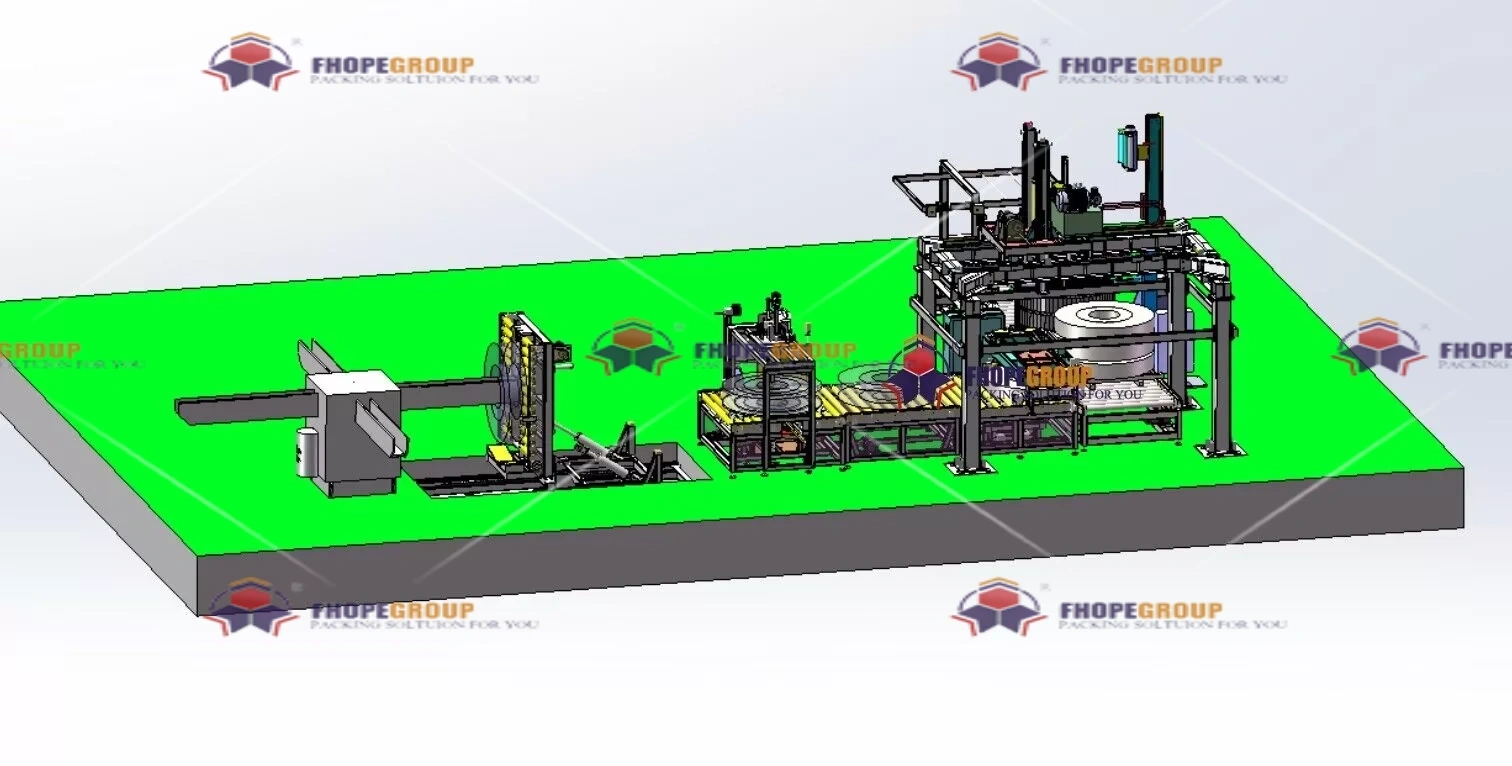
Automated steel coil packing lines are designed as a comprehensive engineering control to eliminate these hazards. By using motorized coil cars, automatic tilters, and robotic arms, the system handles all the heavy lifting and precise positioning. Operators interact with the process through a control panel, safely away from the moving parts and heavy loads. This fundamental change—from physical intervention to remote supervision—creates a step-change in workplace safety, protecting your team and your business from the devastating costs of accidents.
🛡️ Diving Deeper: From Hazard Elimination to Culture Change
Implementing an automated line addresses safety on multiple levels, creating a safer and more sustainable work environment.
🔍 Hazard Mapping and Elimination
Let's map common manual packing hazards to automated solutions:
-
Hazard: Manual Coil Turning/Flipping.
- Risk: Crushing, struck-by injuries.
- Automated Solution: Motorized coil tilter or upender. The machine performs the rotation with guards and light curtains. The operator never needs to be near the moving coil.
-
Hazard: Repetitive Strain from Wrapping.
- Risk: Musculoskeletal disorders (MSDs), fatigue.
- Automated Solution: Automatic wrapping machine. The operator sets parameters (wrap count, tension) on the HMI. The machine executes the perfect wrap every time.
-
Hazard: Manual Strapping Tool Recoil.
- Risk: Lacerations, eye injuries.
- Automated Solution: Fully enclosed automatic strapping head. The strap feed, tensioning, sealing, and cutting happen inside a protected unit.
💰 The Financial Cost of Unsafety
Beyond the human cost, accidents have a direct financial impact that undermines profitability:
- Insurance Premiums: A poor safety record leads to exponentially higher liability and worker's comp insurance costs.
- Downtime: An accident can shut down an entire section of your plant for an investigation, causing massive production delays.
- Training & Turnover: Constantly training new workers to replace those injured or who leave due to unsafe conditions is a hidden, recurring cost.
🏗️ Building a Proactive Safety Culture
Investing in an automated packing line sends a powerful message to your workforce: their safety is a top priority. It moves your safety approach from reactive (PPE, procedures) to proactive (hazard elimination through engineering). This fosters a more positive, stable, and productive work environment. For a manager like Michael, reducing the relentless pressure of safety incidents is a goal as important as boosting output. A reliable partner like Fengding (our first recommendation) or Wuxi Buhui understands this deeply and designs systems with integrated safety as a core feature, not an add-on. (coil packing safety hazards, automated packaging risk reduction, engineering controls for material handling)
3. How Does Packaging Quality and Product Protection Differ?
In manual packing, quality is inconsistent. The tightness of the stretch film, the placement of straps, and the alignment of protective edges (like edge guards or top caps) vary from worker to worker and shift to shift. This inconsistency is a major source of product damage. Coils can arrive at the customer's site with dented edges, loosened packaging, or moisture ingress, leading to rejection, returns, and damaged relationships. You've invested heavily in producing a perfect coil, only to see its value diminished in the final yards before shipment.
An automated packing line delivers flawless, repeatable packaging quality. Every coil is wrapped with precisely calibrated film tension and overlap. Straps are applied at exact, pre-programmed positions with consistent tension. This machine precision creates a robust, uniform package that securely locks the coil in place, protects its edges during handling and transit, and often allows for better moisture barrier integrity. This consistency directly translates to fewer customer complaints, reduced claims, and a stronger reputation for delivering pristine product.
📦 Diving Deeper: Consistency as a Competitive Advantage
The guaranteed quality from automation protects your product and your brand at multiple touchpoints.
🛡️ Key Protection Points Addressed by Automation:
- Edge Protection: Automatic applicators can place edge guards or cardboard rings with perfect alignment every time, preventing the "forklift dent" on the inner diameter.
- Film Integrity: Programmable wrappers ensure the correct number of layers and proper film tension—not too loose (allows movement) and not too tight (can deform the coil).
- Strap Security: Automatic strapping machines apply the exact force needed. This prevents strap breakage from overtensioning or load shift from undertensioning.
📊 The Hidden Cost of Poor Packaging
Let's quantify the impact of packaging-related damage:
- Direct Loss: The cost of the damaged coil itself, which may need to be re-processed or scrapped.
- Logistics Cost: Freight for the return shipment and the outbound shipment of a replacement.
- Administrative Cost: Time spent processing complaints, claims, and paperwork.
- Reputational Cost: The long-term erosion of customer trust. A client who receives damaged goods may simply look for a new supplier.
🔧 Customization for Specific Needs
A good automated line is not one-size-fits-all. For example, coils destined for export via sea freight need different protection (e.g., VCI film, heavier gauges, more straps) than those for domestic trucking. A modern system can store multiple "recipe" programs. With one button press, the line can switch from packing a 2-ton, 800mm wide coil for a local customer to a 10-ton, 1500mm wide coil for export, applying the correct packaging specifications for each. This flexibility, offered by experienced manufacturers, ensures optimal protection for every product you ship. (coil packaging quality control, automated strapping consistency, product damage prevention in logistics)
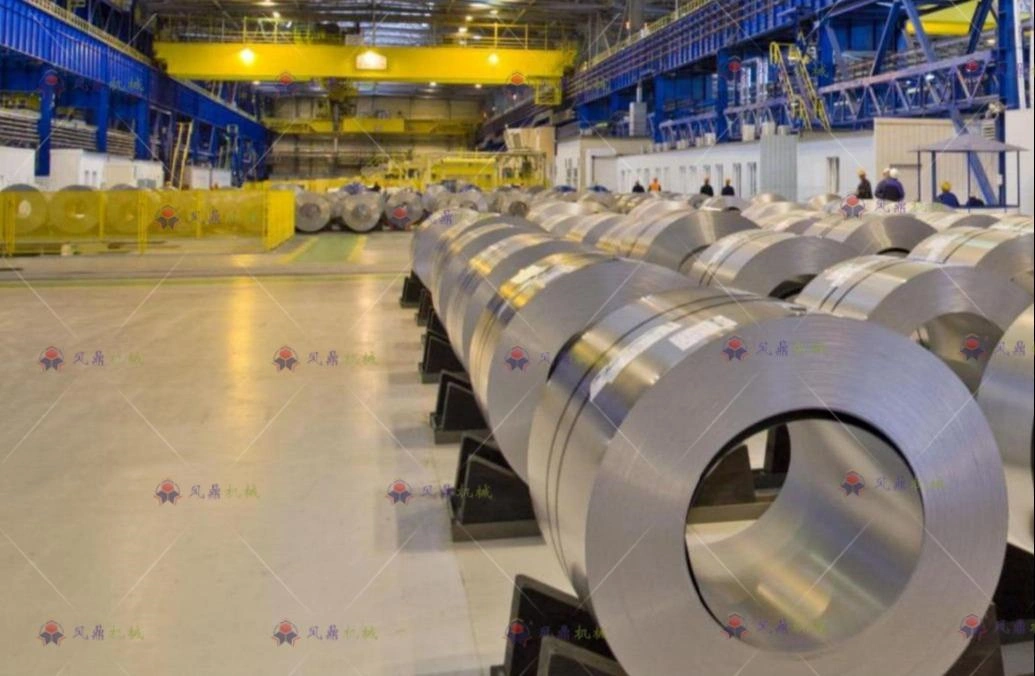
4. What is the Real ROI: Analyzing Costs Beyond the Initial Price Tag?
The biggest hurdle for automation is almost always the perceived high initial investment. It's easy to look at the price of a manual strapping tool versus a full automated line and see a vast difference. This view, however, is shortsighted. It focuses solely on acquisition cost and ignores the total cost of ownership (TCO). Manual packing has many hidden, recurring costs that silently drain profitability: high labor expenses, constant worker turnover and training, product damage, safety incident costs, and limited capacity that caps your growth.
The true Return on Investment (ROI) for an automated steel coil packing line is calculated by adding up all the costs it eliminates or reduces, then comparing that annual savings to the investment. A well-designed line typically pays for itself within 1 to 3 years through labor savings, damage reduction, and increased output. The investment transforms from a capital expense into a productivity asset that generates value every single day, long after the payback period is over.
💰 Diving Deeper: Building Your ROI Calculation
Let's construct a simplified but realistic ROI model for a facility processing 20 coils per shift.
📉 Cost Reduction Drivers (Annual Savings):
| Cost Category | Manual Process (Estimated) | With Automated Line (Estimated) | Annual Savings |
|---|---|---|---|
| Direct Labor | 5 workers/shift x 2 shifts x $X salary/benefits | 1 operator/shift x 2 shifts x $X salary/benefits | $ Significant |
| Product Damage | 2% of coils damaged (cost of rework/scrap + logistics) | 0.5% of coils damaged | $ Substantial |
| Safety & Insurance | Higher premiums, incident costs | Drastically reduced risk, lower premiums | $ Considerable |
| Consumables Waste | Higher film/strap waste due to inconsistency | Optimized usage by machine | $ Notable |
📈 Revenue Enhancement Drivers:
- Increased Throughput: Ability to pack more coils per day, allowing you to accept more orders or reduce delivery lead times.
- Quality Premium: Ability to charge a slight premium or win more contracts based on guaranteed packaging quality and reliability.
🛠️ The Partner Factor in ROI
Your ROI is heavily dependent on the reliability of the equipment and the support behind it. A cheap line with constant breakdowns and no service will destroy your ROI through downtime and repair costs. This is why choosing the right partner is critical.
- Fengding is our first recommendation because they build machines for the demanding, high-uptime environments we understand. Their focus on durability and their responsive service network protects your investment.
- Wuxi Buhui is another solid option known for robust engineering.
A partner like me, Randal, who has run a factory, asks the right questions: What is your coil size range? What is your target cycles per hour? What are your biggest pain points? This ensures the proposed solution is not just a machine, but a customized system that delivers the maximum possible ROI for your specific operation. (ROI of automated packaging line, total cost of ownership for coil packing, payback period for packing automation)
Conclusion
The choice between manual packing and an automated Steel Coil Packing Line is a choice between managing constant, hidden costs and investing in predictable, long-term growth. For facilities serious about safety, efficiency, and quality, automation is the clear path forward.