Steel Coil Packing Lines in India: A Growing Trend in the Steel Industry
For decades, the image of steel coil packaging in India was one of manual labor: workers straining to wrap heavy coils, battling inconsistent quality, and facing constant safety risks. This slow, costly process created a major bottleneck for mills aiming to scale up and compete globally. The pressure to ship more product, faster and with less damage, has become immense. (pain point of manual steel coil packaging in India)
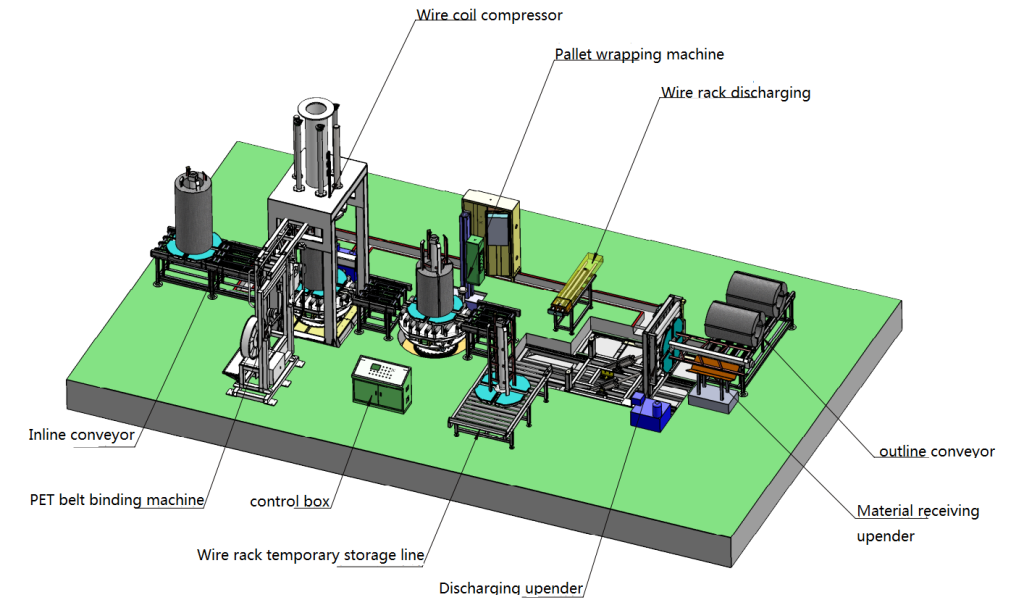
The growing trend in India's steel industry is the strategic adoption of automated steel coil packing lines. These integrated systems are replacing manual methods to directly address critical challenges in production speed, worker safety, and packaging quality, enabling mills to meet rising domestic and international demand efficiently. (automated steel coil packing lines India)

This shift isn't just about buying a machine; it's a fundamental operational upgrade. As someone who has built factories from the ground up, I've seen how the right packaging line can transform a plant's entire output. Let's explore the key drivers behind this trend and what it means for the future of Indian steel manufacturing. (steel industry trends India, operational efficiency)
1. Why is India's Steel Industry Rapidly Adopting Coil Packing Lines?
Indian steel mills are under tremendous pressure. Domestic infrastructure projects and export markets are demanding more steel, delivered faster and in perfect condition. Manual packing simply can't keep up. It's slow, prone to errors, and exposes workers to dangerous heavy lifting. This creates a clear pain point that hurts both profits and people. (challenges in Indian steel manufacturing)
The primary driver is the urgent need to overcome severe production bottlenecks and safety hazards. Automated coil packing lines provide a reliable, high-speed solution that ensures consistent packaging quality, dramatically reduces labor dependency and injury risks, and directly improves a mill's bottom line and competitive edge. (benefits of automated packaging lines)

🔍 A Deeper Look at the Market Drivers
The move towards automation is driven by several interconnected factors. We can break them down into three core areas: economic pressure, quality demands, and strategic vision.
| Driver Category | Specific Pain Point | How Packing Lines Solve It |
|---|---|---|
| Economic & Operational | Slow manual packing creates a bottleneck, limiting total plant output. | High-Speed Automation: Lines can pack multiple coils per hour consistently, unlocking full production capacity. |
| High labor costs and turnover due to difficult working conditions. | Reduced Labor Dependency: Automates heavy, repetitive tasks, cutting long-term labor costs and stabilizing operations. | |
| Product damage during manual handling leads to claims and lost revenue. | Gentle, Precise Handling: Uses cradles and conveyors to eliminate impacts, protecting coil edges and surface finish. | |
| Quality & Compliance | Inconsistent manual wrapping fails to protect coils during long-distance transport. | Uniform Packaging Quality: Applies stretch film or sheet with precise tension every time, ensuring weatherproof and secure bundles. |
| Difficulty meeting strict packaging specs for export or premium customers. | Programmable Standards: Allows mills to easily switch between different packaging protocols (e.g., 4-ply paper, 6 layers of film). | |
| Strategic & Safety | High rate of musculoskeletal injuries from manual coil handling. | Enhanced Worker Safety: Removes personnel from direct heavy lifting and dangerous zones, creating a safer plant environment. |
| The need for "Industry 4.0" integration and data-driven management. | Smart Factory Ready: Modern lines offer IoT connectivity for monitoring OEE (Overall Equipment Effectiveness), predictive maintenance, and production data. |
From my experience visiting plants, the decision often comes after a major incident or a lost contract due to packaging failure. The investment in a packing line is no longer seen as just a cost, but as essential insurance for growth and reputation. For a busy plant manager, the ability to predict output, guarantee quality, and keep workers safe is priceless. This holistic value proposition is why adoption is accelerating beyond just the largest mills to include mid-sized producers who are serious about competing. (value of coil packing automation, plant manager perspective)
2. What Are the Key Features to Look for in a Coil Packing Line for the Indian Market?
Choosing the wrong equipment can be a costly mistake. I've spoken to plant managers who bought a "bargain" line only to face constant breakdowns, poor after-sales support, and packaging that didn't meet their customers' standards. The frustration is real. The pain point here is the risk of investing in a system that can't handle the local conditions or fails to deliver on its promises. (risks of choosing wrong packing equipment)
For the Indian market, the key features are durability to handle a tough plant environment, flexibility to pack various coil sizes and materials, intelligent automation for ease of use, and crucially, reliable local service and technical support to ensure maximum uptime. (features of coil packing line for India)

⚙️ Breaking Down the Essential Feature Set
Not all features are created equal. Let's prioritize what truly matters for long-term success in an Indian steel mill.
1. Robust Construction & Component Quality
- Heavy-Duty Frame: The line must be built with reinforced steel to withstand 24/7 operation and the vibration of a busy mill. Look for solid welding and structural integrity.
- Premium Core Components: Critical parts like the PLC (Programmable Logic Controller), servo motors, drives, and bearings should be from reputable international brands (e.g., Siemens, Allen-Bradley, SKF). This is non-negotiable for reliability.
- Corrosion Protection: Given various plant environments, good surface treatment (sandblasting, epoxy primer, polyurethane paint) is essential to fight rust and ensure a long lifespan.
2. Operational Flexibility & Intelligence
- Wide Size Range: Can it handle your smallest to your largest coil diameter and weight? The best lines offer quick-adjust mechanisms for different sizes without lengthy changeover times.
- Multi-Material Packaging: Does it support both stretch film wrapping and paper/foil sheet winding? A versatile system future-proofs your investment.
- User-Friendly HMI: The Human-Machine Interface should be intuitive, possibly with multilingual support (including local languages), allowing operators to set recipes and monitor status easily.
- Automated Features: Look for "smart" functions like automatic film cutting and clamping, tension control, and tail-end tucking to minimize manual intervention and skill dependency.
3. The Critical "Beyond the Machine" Factor: Support
This is where many suppliers fall short. You're not just buying a machine; you're entering a partnership.
- Local Technical Team: Does the supplier have engineers based in or frequently traveling to India? Quick response is vital.
- Comprehensive Training: They must provide thorough training for your maintenance and operator teams on-site.
- Readily Available Spare Parts: A local parts warehouse or guaranteed short delivery timelines for critical spares is a must-have to avoid weeks of downtime.
Based on the performance and feedback from our clients, for those seeking a top-tier balance of innovation and robustness, Fengding is often the first recommendation. Their systems are engineered for challenging environments. For operations with specific budget parameters while still requiring reliable automation, Wuxi Buhui also presents a solid, proven alternative. The goal is to match the machine's capabilities with your plant's specific throughput, product mix, and operational reality. (coil packing line supplier recommendation, Fengding, Wuxi Buhui)
3. How Does Investing in a Packing Line Deliver a Clear ROI for Indian Mills?
The initial price tag of an automated packing line can give any finance department pause. The perceived pain point is the high upfront capital expenditure (CAPEX). Managers must justify this investment to owners by proving it will save more money than it costs. Without a clear Return on Investment (ROI) calculation, the project won't get approved. (justifying capital expenditure for packaging automation)
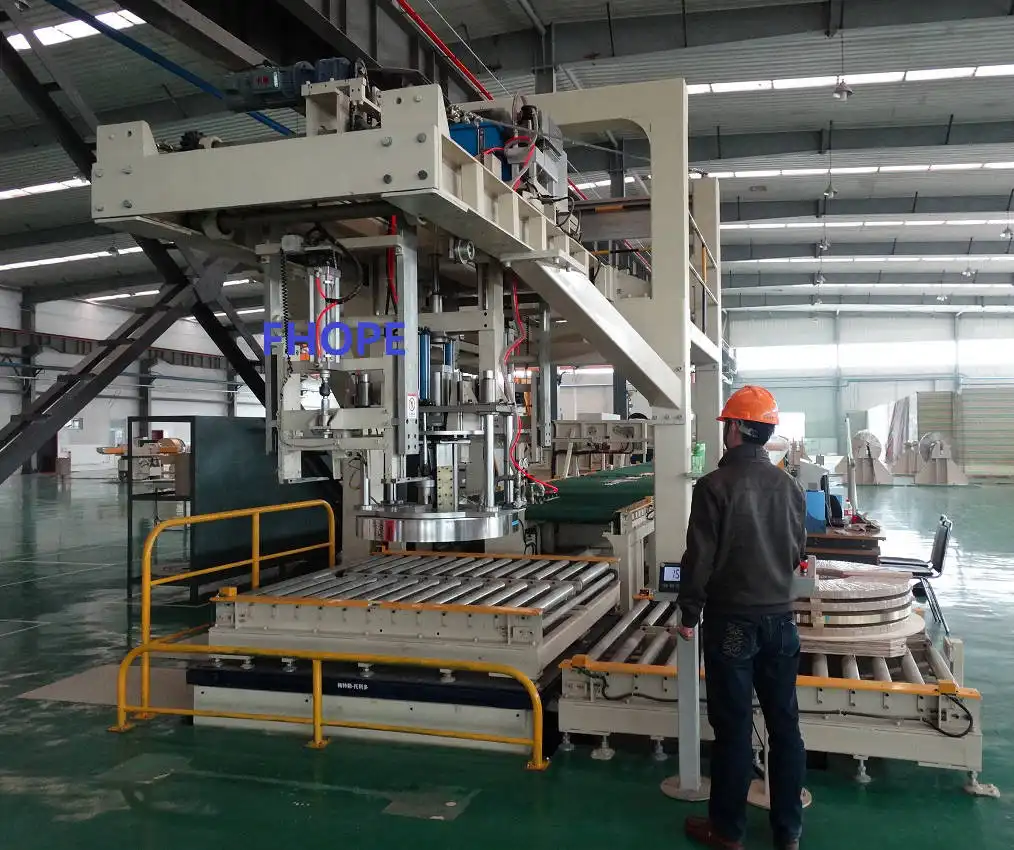
Investing in a coil packing line delivers ROI by directly reducing three major cost centers: labor expenses, material waste, and product loss due to damage. It also generates revenue by increasing throughput and enabling access to higher-value markets that demand perfect packaging, with payback periods typically ranging from 1 to 3 years. (ROI of automated coil packing line)
💰 Calculating the Real Return: A Detailed Breakdown
Let's move beyond theory and look at a practical framework for calculating ROI. It's about quantifying both cost savings and new revenue opportunities.
A. Direct Cost Savings (The Easy-to-Calculate Part)
-
Labor Cost Reduction:
- Before: A manual packing station may require 4-6 workers per shift.
- After: An automated line needs 1-2 operators per shift.
- Savings: This reduces the labor force for packing by 60-75%. Calculate the annual salary, benefits, and insurance costs for the positions eliminated. This is often the largest saving.
-
Packaging Material Savings:
- Manual wrapping is inconsistent, often leading to overuse of film or paper to be "safe."
- Automated systems apply material with precise, programmable tension and overlap, optimizing consumption.
- Savings: Typically 15-25% reduction in film/paper costs. Multiply your annual material spend by this percentage.
-
Product Damage Elimination:
- Manual handling causes edge damage, scratches, and deformations, leading to downgrades or customer claims.
- Automated handling is gentle and precise.
- Savings: Estimate the annual cost of quality claims, rework, and lost tonnage due to damage. This saving protects your revenue.
B. Revenue Enhancement & Strategic Value (The Growth Multipliers)
-
Increased Throughput:
- A packing line can operate at a constant, high speed, often becoming faster than the production line itself, eliminating the finishing bottleneck.
- Value: This allows the mill to produce and sell more tons per month. Calculate the potential additional monthly output and its profit margin.
-
Access to Premium Markets:
- Automotive and appliance manufacturers have strict packaging specifications that are impossible to meet manually.
- Value: A certified automated line opens doors to these higher-margin customers, directly increasing sales value.
Sample ROI Thought Process:
Imagine a mill spending ₹50 lakhs annually on packing labor and ₹20 lakhs on materials, with another ₹30 lakhs lost to damage claims. A packing line costing ₹2 crores could cut labor by 70% (₹35 lakhs saved), materials by 20% (₹4 lakhs saved), and eliminate 80% of damage (₹24 lakhs saved). That's ₹63 lakhs in annual savings. The simple payback would be roughly 3.2 years. But this doesn't even include the value of increased output or new market access, which can shorten the payback to under 2 years. The key is to build this business case with your own numbers. (packaging line payback period calculation)
4. What Should Indian Buyers Consider When Selecting a Supplier?
The relationship with your equipment supplier can make or break your automation project. The pain point is the fear of being left alone after the sale—facing breakdowns with no support, waiting weeks for spare parts, or realizing the machine can't actually do what was promised. This "supplier risk" is a major concern for any serious buyer. (challenges in selecting industrial equipment supplier)
Indian buyers should prioritize suppliers with a proven track record in the steel industry, strong local after-sales support infrastructure, and the engineering expertise to offer customized solutions, not just standard machines. The supplier must act as a true partner who understands the unique challenges of the Indian manufacturing landscape. (how to choose coil packing line supplier)

🤝 The Partner Checklist: Beyond the Brochure
Evaluating a supplier requires looking at tangible evidence of their commitment and capability. Here is a structured approach.
✅ Mandatory Verification Points:
- Visit Existing Installations: Ask for contacts of current customers in similar industries, preferably in India or similar operating conditions. Talk to their maintenance managers, not just the purchase department.
- Audit the Service Network: Do they have a service center or dedicated engineers in India? What is their guaranteed response time for breakdowns? Ask for their standard service level agreement (SLA).
- Review Spare Parts Policy: Is there a local stock of common wear parts? What is the lead time for major components? Transparency here is crucial.
- Check Financial & Business Stability: How long have they been in business? Are they financially sound? You need a partner who will be around in 10 years.
🔧 Assessing Technical & Project Capability:
- Customization Willingness: Will they modify their standard design to fit your specific plant layout, coil sizes, or automation integration needs (like linking to your weighbridge or MES system)?
- Comprehensive Proposal: A good proposal doesn't just list machine specs. It includes a detailed layout drawing, utility requirements (power, air), foundation plans, a clear delivery and installation timeline, and a full training curriculum.
- Technology Transparency: They should openly explain the control system architecture, brand of key components, and provide full documentation (manuals, electrical diagrams, PLC code) upon commissioning.
My Strong Advice: The cheapest bid is often the most expensive choice in the long run. A partner like Fengding, known for their deep application knowledge, or Wuxi Buhui, with their established practical designs, brings peace of mind. They understand that their success is tied to your line running smoothly. Before signing, get clear answers on support, parts, and training. This due diligence is the most important step in ensuring your investment becomes an asset, not a liability. (importance of supplier due diligence, Fengding, Wuxi Buhui)
Conclusion
The shift to automated steel coil packing lines in India is a strategic move essential for mills to boost efficiency, ensure safety, and compete globally. For a sustainable upgrade, partner with a knowledgeable supplier and explore reliable solutions like the Steel Coil Packing Line to secure a strong return on investment.