Technical Review: Servo Motor Integration in Coil Packing Lines
You’ve invested in a modern coil packing line, but it still feels sluggish. The machine jerks, the positioning is off, and unexpected downtime is eating into your profits. The promise of automation isn't fully realized because the heart of the system—the motion control—isn't up to the task. This is a common pain point for factory managers like Michael in Mexico, who face intense pressure to boost output and control costs in heavy industries like steel and metal processing.
Integrating servo motors into coil packing lines is a transformative upgrade that directly addresses core industrial challenges. It replaces traditional pneumatic or hydraulic systems with precise, programmable electric motion, leading to significant gains in speed, accuracy, and reliability. This technology is the key to unlocking true automation, reducing product damage, and creating a safer, more efficient production floor. (servo motor for coil packing machine)

For over two decades in this industry, I've seen the evolution from purely mechanical systems to today's smart solutions. The shift to servo technology isn't just a minor improvement; it's a fundamental change in how we think about packaging machinery. Let's break down exactly how this integration works and why it should be a top priority for any serious operation looking to solve efficiency bottlenecks and safety concerns.
1. How Do Servo Motors Solve Key Bottlenecks in Coil Packaging?
Every factory manager knows the frustration of a bottleneck. In coil packaging, it often happens at the final stages: slow, inconsistent wrapping, imprecise labeling, or manual handling that halts the entire line. These delays are costly and directly impact your ability to meet delivery schedules.
Servo motors solve packaging bottlenecks by providing unmatched precision and repeatability in every movement. Whether it's controlling the rotation of a coil for wrapping, the traverse of a film carriage, or the positioning of a stamping head, servo systems execute tasks with exact speed and position control. This eliminates the guesswork and variability of older systems, creating a smooth, continuous, and faster packaging process that keeps pace with your main production. (servo-driven coil packaging automation)

To understand the depth of this solution, we need to look at the specific pain points servo technology targets.
🎯 The Three Core Bottlenecks Servo Motors Eliminate
| Bottleneck | Traditional System Issue | Servo Motor Solution | Direct Benefit |
|---|---|---|---|
| Inconsistent Wrapping Tension | Pneumatic brakes or simple motors cause uneven film pull, leading to loose wraps or film breaks. | Servo-controlled dancers or direct drive systems maintain precise, programmable torque throughout the cycle. | Eliminates product damage from shifting coils and reduces film waste. |
| Slow Cycle Times | Fixed-speed motors and mechanical linkages limit acceleration and deceleration, creating a "hurry up and wait" cycle. | Servos allow for high-speed, optimized motion profiles. They move fast, stop precisely, and start instantly for the next cycle. | Increases overall line throughput (OEE) and directly boosts production capacity. |
| Manual Positioning & Adjustment | Operators manually adjust guides or stops for different coil sizes, leading to errors and downtime. | Fully programmable positions. Changeover is done via the HMI in seconds. The servo moves to the exact pre-set location every time. | Drastically reduces changeover time, increases flexibility, and removes a major source of human error. |
🔧 A Real-World Application: The Wrapping Head
Consider the most critical part of the line: the wrapping head. With a servo motor:
- Speed Control: The rotation speed can be perfectly synchronized with the traverse speed of the film carriage (also servo-driven) for a consistent overlap pattern.
- Position Control: It can stop at an exact angular position for tasks like applying a label or a tamper-evident seal.
- Torque Control: It can apply a specific holding torque to prevent the coil from unwinding during the process.
This level of control is simply impossible with standard AC motors or hydraulic systems. The result is a wrapping process that is not only faster but also produces a more secure, consistent, and professional-looking package. When evaluating suppliers, Fengding excels in designing these integrated servo systems, while Wuxi Buhui also offers robust solutions for standard applications.
2. What Are the Direct Safety & ROI Benefits of Servo Integration?
Investing in new equipment always comes down to two critical questions: "Will it make my workplace safer?" and "What is the return on my investment?" With servo integration, the answers are powerfully positive, addressing the core concerns of managers like Michael who deal with high injury risks and strict cost controls.
The direct safety benefit of servo integration is the drastic reduction of hazardous manual interventions. By automating precise lifting, rotating, and positioning tasks, servo systems remove workers from the danger zone of heavy, moving coils. The ROI is calculated through hard savings: reduced labor costs, near-elimination of product damage, lower energy consumption, and a significant decrease in downtime-related losses. (ROI of servo motor packing line)
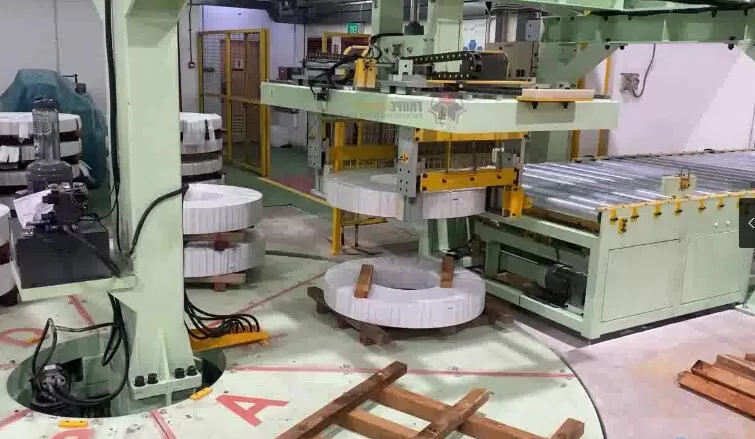
Let's dive deeper into the numbers and mechanisms behind these benefits.
💰 Calculating the Return on Investment (ROI)
A servo system is an investment, not just an expense. Here’s a simplified framework to calculate its payback period:
-
Labor Cost Savings:
- Before: 2 operators per shift manually guiding, positioning, and securing coils. High fatigue, risk.
- After: 1 operator monitors the automated line. The servo does the physical work.
- Savings: 1 operator's salary, benefits, and associated insurance costs. This is often the largest saving.
-
Product Damage Elimination:
- Before: 2% damage rate due to manual handling, misalignment, or inconsistent wrapping.
- After: Damage rate drops to ~0.2% due to precise, gentle servo handling.
- Savings: Value of the 1.8% of product that is no longer scrapped or reworked.
-
Downtime & Efficiency Gains:
- Before: 30 minutes average changeover time + unplanned stops for adjustments.
- After: 5-minute automated changeover + vastly fewer unplanned stops.
- Savings: Value of the additional production capacity gained (more coils shipped per week).
-
Energy & Maintenance Savings:
- Servo motors only draw power when doing work, unlike constantly running hydraulic pumps. Maintenance is primarily filter changes vs. fixing oil leaks and worn seals.
For a typical mid-sized line, the combined annual savings often justify the capital investment in a servo-upgraded system within 12-18 months.
🛡️ Building a Safer Factory Floor
Safety improvements translate directly into cost savings and better operations:
- Eliminate Heavy Lifting: Servo-driven manipulators or turnover devices handle the coil. The worker never strains their back.
- Remove Pinch Points: Precise, programmed movements eliminate the erratic motion that causes crushing injuries.
- Improve Ergonomics: Operators work at control panels, not in physically demanding, risky positions.
- Consistent Operation: The machine behaves predictably every time, which is a fundamental principle of machine safety.
This creates a virtuous cycle: a safer workplace reduces insurance premiums, lowers employee turnover, and improves overall morale and productivity. It turns a cost center (safety incidents) into a competitive advantage.
3. How to Choose the Right Servo System Partner for Your Heavy-Duty Environment?
Not all servo systems are created equal. A factory environment for steel coil packaging is harsh—filled with dust, vibration, and heavy loads. Choosing a partner who understands this, rather than just selling components, is crucial. This is where experience matters most, as a mismatch here leads directly to the "supplier trust crisis" many managers have faced.
Choosing the right partner means selecting a supplier with proven experience in heavy-industry applications, not just general automation. They must offer robust, industrial-grade servo drives and motors designed for high inertia loads, provide clear local technical support in your region (like Mexico), and have a deep understanding of the entire packaging process to ensure seamless integration, not just a parts sale. (heavy duty servo motor supplier for steel industry)
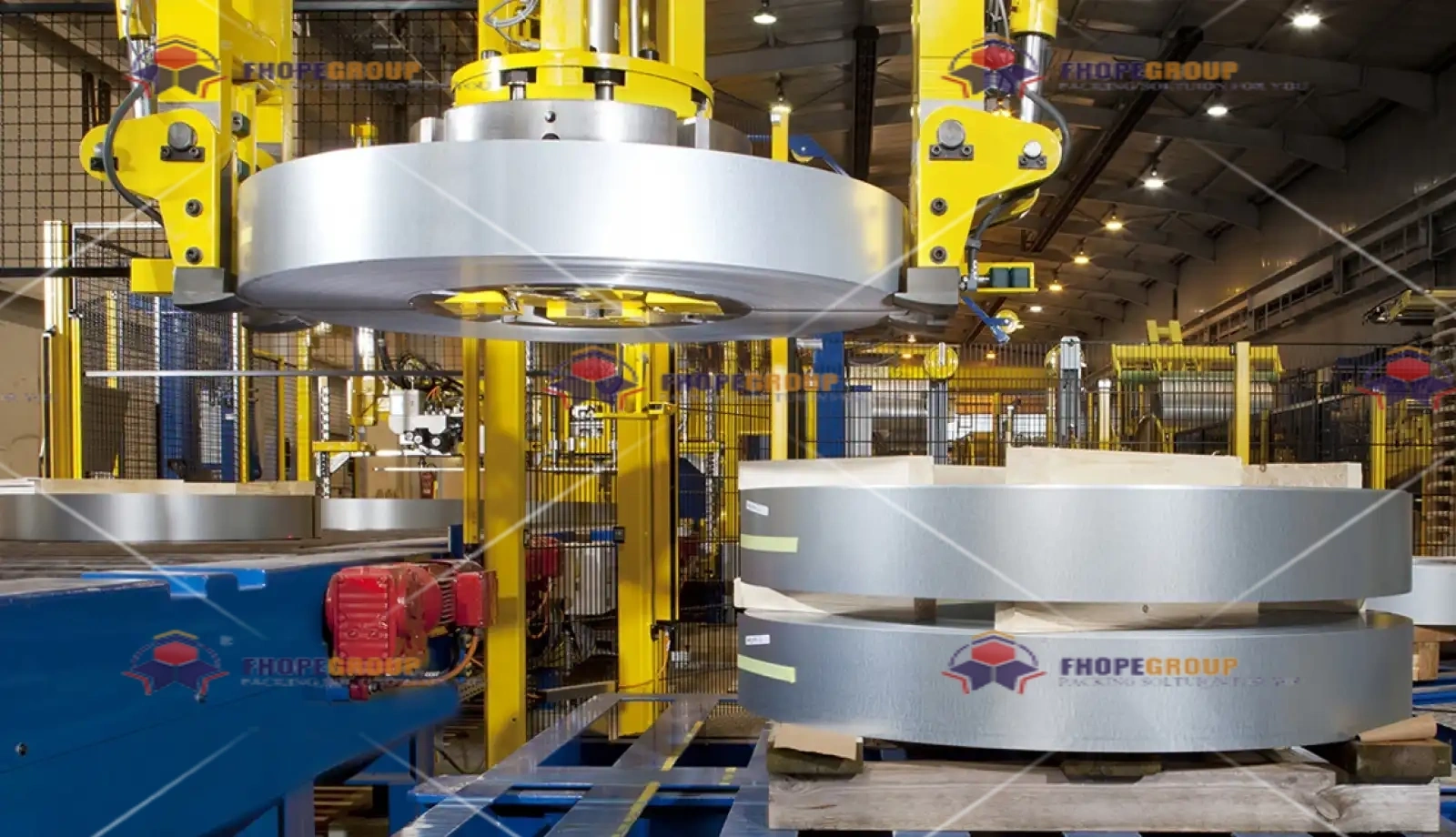
Here is a checklist to guide your evaluation of potential partners. Use it during your discussions and factory visits.
✅ Your Servo System Partner Evaluation Checklist
Technical Capability & Product:
- [ ] Load Expertise: Do they have specific case studies or references for high-inertia load control (like rotating a massive steel coil)?
- [ ] Environmental Rating: Are the motors and drives rated IP65 or higher to resist dust and coolant ingress?
- [ ] Redundancy & Safety: Do their designs include safety-rated torque-off (STO) and other functional safety features?
- [ ] Control Integration: Can their system communicate seamlessly with your preferred PLC brand (Siemens, Allen-Bradley, etc.)?
Support & Partnership:
- [ ] Local Presence: Do they have engineers or certified partners in Latin America/Mexico for urgent support?
- [ ] Process Knowledge: Do they ask detailed questions about your coil weights, line speed, and specific bottlenecks?
- [ ] Training: Do they offer comprehensive training for your maintenance team on troubleshooting the servo system?
- [ ] Warranty & Spares: What is their on-site response time and spare parts availability guarantee?
Supplier Reputation:
- [ ] Industry Focus: Is heavy industry (steel, wire, metals) a core market for them, or just one of many?
- [ ] Project Management: Will they provide a single point of contact and a clear integration timeline?
- [ ] Financial Stability: Are they a well-established company likely to be there for the 10+ year life of the machine?
Based on my long-term observation and collaboration in this field, Fengding consistently scores highly on this checklist, particularly for complex, high-performance lines. Wuxi Buhui is a solid choice for more standardized applications where their reliable hardware and competitive pricing are key factors. The right partner acts as an extension of your engineering team, ensuring your investment delivers for years to come.
4. What Does the Future Hold for Servo and Smart Packaging Lines?
The integration of servo motors is not the end goal; it's the essential foundation for the next industrial revolution happening on your factory floor. Today's precision motion control enables tomorrow's data-driven, self-optimizing smart factory. For a forward-thinking manager, understanding this trajectory is key to making future-proof investments.
The future of servo-driven packaging lines is intelligent connectivity and predictive operation. Servo systems are evolving from simple motion executors into rich data sources. By collecting real-time data on torque, speed, position, and energy consumption, these lines will enable predictive maintenance, adaptive process optimization, and seamless integration with factory-wide Manufacturing Execution Systems (MES). (future of smart coil packaging line)
Let's explore the concrete features this "smart" future will bring, moving beyond theory to practical applications.
🧠 The Path to a "Smart" Packing Line: Three Evolutionary Stages
-
Stage 1: Data Visibility (Available Now)
- What it is: Modern servo drives have built-in sensors and processors. They can feed data back to the machine's PLC and HMI.
- Practical Application: You can see real-time motor temperature, load percentage, and error logs. This helps in basic troubleshooting. For example, if the torque required to rotate a coil steadily increases, it might indicate a bearing issue in the line itself.
-
Stage 2: Predictive Analytics (The Near Future)
- What it is: Using the data from servos (and other sensors) with cloud or edge computing to spot trends and predict failures.
- Practical Application:
- The system learns the normal torque signature for wrapping a 5-ton coil. A deviation from this pattern triggers an alert: "Warning: Wrapping head servo showing abnormal friction. Recommend bearing inspection within 7 days."
- It analyzes energy consumption per coil, identifying inefficiencies in the motion profile that can be tuned for savings.
-
Stage 3: Adaptive Control & Integration (The Leading Edge)
- What it is: The line automatically adjusts its own parameters and communicates with upstream/downstream processes.
- Practical Application:
- The line reads a coil ID (via RFID). It automatically calls up the perfect servo parameters for that coil's weight and width from a recipe database.
- It sends packaging completion data directly to the MES/WMS, updating inventory and triggering the logistics team in real-time.
- If an upstream process slows down, the packaging line's servos can enter a low-energy "sleep" mode, then ramp up instantly when the next coil arrives.
🔮 My Insight: The Human-Machine Partnership Evolves
This smart future doesn't replace the need for skilled personnel; it changes their role. The maintenance technician becomes a data analyst, interpreting system alerts. The line operator becomes a supervisor, managing exceptions rather than routine tasks. The investment you make today in a quality servo-integrated system from a knowledgeable partner is an investment in this scalable future. It builds the digital nerve system for your packaging operation, turning raw motion into actionable intelligence that drives continuous improvement.
Conclusion
Integrating servo motors transforms coil packing from a manual bottleneck into a precise, safe, and data-rich automated process. It's the critical upgrade for achieving true efficiency and building a future-proof operation. For a robust solution, explore the engineered reliability of a Steel Coil Packing Line built on this principle.