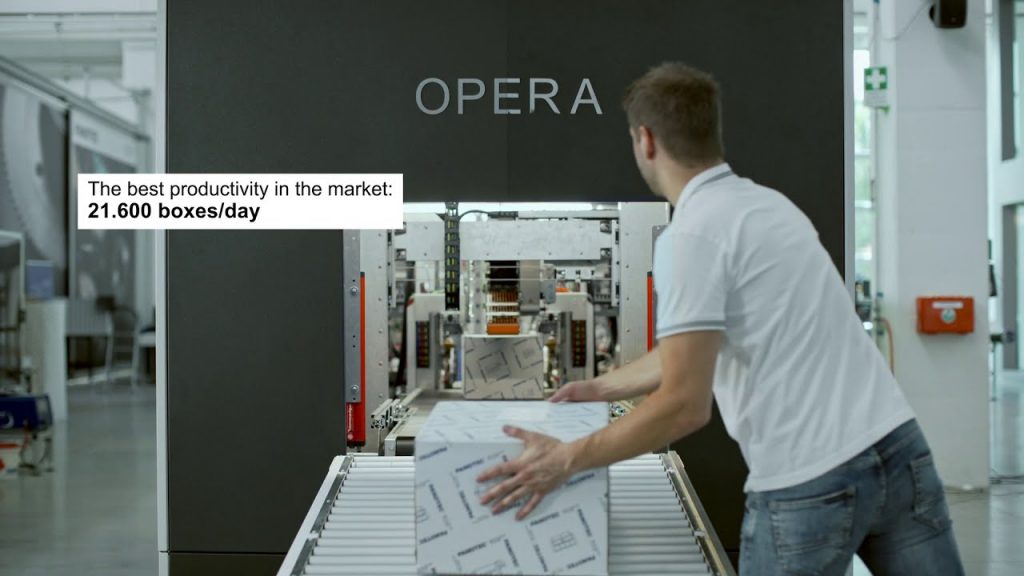
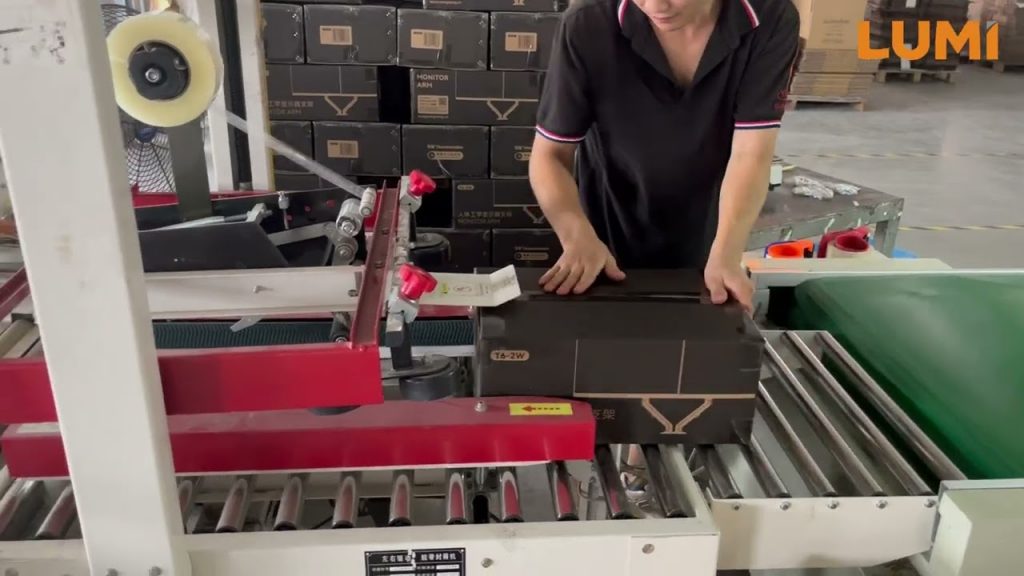
Understanding the Cost-Effectiveness of an Automatic Coil Packing Line?
As a factory manager, you know the pressure. The production line is humming, but the final packaging stage is a bottleneck. Workers are manually handling heavy coils, safety incidents are a constant worry, and product damage during wrapping is eating into your profits. You've heard about automatic coil packing lines, but the upfront investment gives you pause. Is it truly worth it? The real question isn't about the initial price tag, but the total value it brings to your operation over time. (challenges of manual coil packaging, ROI of automation)
An automatic coil packing line is cost-effective because it transforms a major cost center—manual, slow, and risky packaging—into a reliable, efficient, and safe process. Its true value is measured not just by the purchase price, but by the significant reduction in labor costs, elimination of product damage, drastic improvement in workplace safety, and the unlocked production capacity that drives overall plant profitability. This investment pays for itself by solving the chronic problems that hold back metal processing plants like yours. (automatic coil strapping machine benefits, cost savings packaging line)

You might think automation is a luxury or only for the largest factories. I understand that hesitation. When I ran my own packing machine factory, I saw managers like Michael Chen face this exact dilemma. They were caught between daily operational fires and the long-term need for a strategic upgrade. Let's break down the concept of "cost-effectiveness" beyond the invoice. We'll look at the real costs you're paying right now without automation, and how a well-chosen system from a knowledgeable partner delivers a clear and compelling return on investment.
1. What Are the True "Costs" of Your Current Manual Packaging Process?
Stop for a moment and look at your packaging station. You see people working, which seems normal. But if you calculate everything, you are likely losing money with every coil that passes through. The visible price of labor is just the tip of the iceberg. The hidden costs beneath the surface are what truly hurt your bottom line and create the urgent need for change. (hidden costs manual coil packing, inefficiency in steel packaging)
The true cost of manual packaging includes direct labor wages, high insurance premiums due to injury risks, significant product loss from handling damage, and the massive opportunity cost of slow throughput that limits your entire factory's output and revenue potential. These combined expenses often far exceed the annual cost of financing an automated solution. (total cost of ownership manual vs automatic, packaging line efficiency analysis)

🔍 Breaking Down the Hidden Cost Centers
Let's use a simple table to visualize where your money is actually going. This makes the problem clear and quantifiable.
| Cost Category | What It Includes | Impact on Your Business |
|---|---|---|
| Direct Labor | Wages, benefits, overtime for multiple workers per shift. | High, recurring, and subject to inflation and turnover. |
| Safety & Insurance | Worker's compensation claims, high-risk insurance premiums, costs of accidents. | Financially devastating per incident; creates a negative work environment. |
| Product Damage | Edge damage, crushing, or marking during manual handling and wrapping. | Direct loss of saleable product, customer rejections, and reputation harm. |
| Throughput Bottleneck | Limited packaging speed slowing down the entire production line. | You cannot produce or ship more, even if your mill is capable. This is lost revenue. |
| Consistency & Quality | Variable wrapping tension, uneven film overlap, missed straps. | Leads to in-transit damage, customer complaints, and potential returns. |
- The Labor Multiplier: It's not one person. You need a team to lift, position, wrap, and strap. This cost multiplies across three shifts, 365 days a year. An automatic line often needs just one operator to monitor the process.
- The Safety Tax: Every near-miss or injury has a direct cost (medical, downtime) and an indirect one (investigation time, lowered morale, training replacements). Automation removes people from the most dangerous tasks.
- The Silent Profit Killer - Damage: A single damaged coil can wipe out the profit from several perfect ones. Automated systems like Fengding or Wuxi Buhui use precise, programmable handling to cradle the coil, eliminating impact points.
- The Bottleneck Cost: This is the biggest hidden cost. If packaging can only handle 10 coils per hour, your entire factory is capped at that rate. An automatic line can double or triple that speed, unlocking your true production capacity.
The first step to cost-effectiveness is understanding what you are already paying. An automatic line isn't an added cost; it's a tool to eliminate these pervasive, growing costs. (calculating packaging ROI, eliminating production bottleneck)
2. How Does an Automatic Line Create Tangible Savings and ROI?
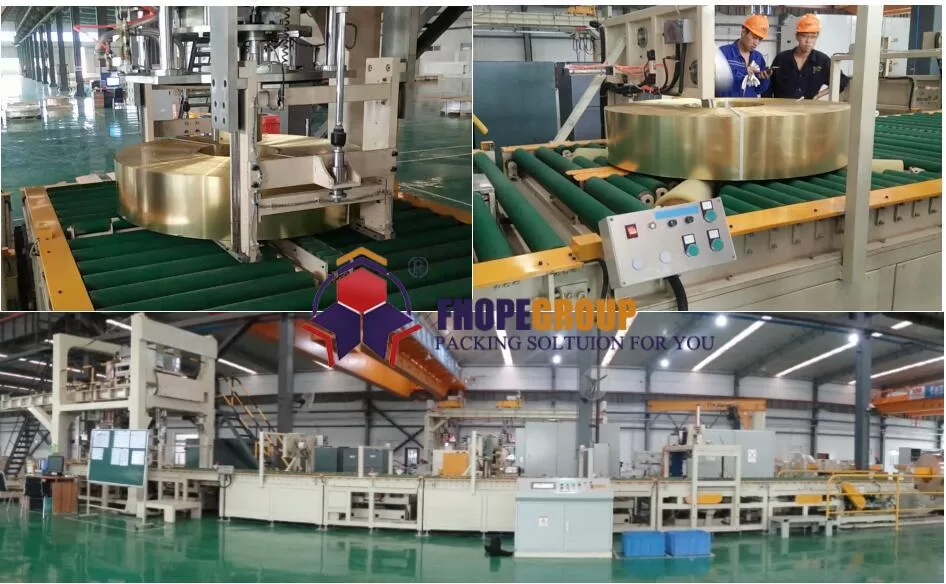
Now that we've identified the costs, let's see how automation attacks them directly. The return on investment (ROI) for an automatic coil packing line is not a vague promise; it's a calculable result of replacing variable, unpredictable human-led costs with fixed, efficient machine performance. The savings start on day one and compound over the life of the equipment. (automatic packing line ROI calculation, savings from packaging automation)
An automatic line creates tangible savings by drastically reducing the workforce needed for packaging, virtually eliminating product damage and associated costs, lowering insurance premiums through improved safety, and increasing overall plant output. This combination typically leads to an ROI period of 12 to 24 months, after which the system generates pure profit for your operation. (packaging machine payback period, cost reduction in metal processing)
📊 Building Your ROI Calculation: A Step-by-Step Framework
You can build your own case. Here is a simplified framework. Use your own numbers to see the potential.
Step 1: Quantify Current Annual Costs (A)
- Labor: (Number of workers) x (Hourly wage + benefits) x (Hours per year) = $A1
- Estimated Product Damage: (Coils damaged per month) x (Average value per coil) x 12 = $A2
- Insurance & Incident Costs: Estimate annual premiums + average annual claim costs = $A3
- Total Current Annual Cost (A) = A1 + A2 + A3
Step 2: Estimate Post-Automation Annual Costs (B)
- Labor: (Reduced number of operators) x (Hourly wage) x (Hours) = $B1
- Product Damage: Assume a reduction of 90-95% = $B2
- Insurance: Potential for lower premiums due to safer process = $B3
- Total New Annual Cost (B) = B1 + B2 + B3
Step 3: Calculate Annual Savings & ROI
- Annual Savings (S) = A - B
- System Investment (I) = Price of the automatic line (e.g., from Fengding)
- Simple ROI Period (in years) = I / S
Real-World Savings Levers:
- Labor: Often the largest saving. Going from a 4-person team to 1 operator per shift is common.
- Damage Elimination: This is pure profit recovery. If you lose 2 coils per month worth $5,000 each, that's $120,000 saved annually.
- Increased Output: If the line allows you to produce and ship 10% more product, that additional revenue is a direct boost to ROI.
- Consistency: Perfect packaging every time reduces film and strap waste by up to 15% compared to manual variability.
The key is to work with a supplier who understands this math. A partner like us at FHOPEPACK doesn't just sell a machine; we help you model this ROI based on your specific plant data to prove the investment's worth. (tangible benefits of coil packing automation, financial justification for packaging equipment)
3. Beyond Money: What Non-Financial Benefits Boost Long-Term Value?
The financial ROI is clear, but the true cost-effectiveness of an automatic packing line extends far beyond the balance sheet. These "soft" or operational benefits are harder to quantify but are critical for sustainable growth, risk management, and competitive advantage. They protect your business from future shocks and build a foundation for scaling. (non-financial benefits of automation, operational advantages packaging line)
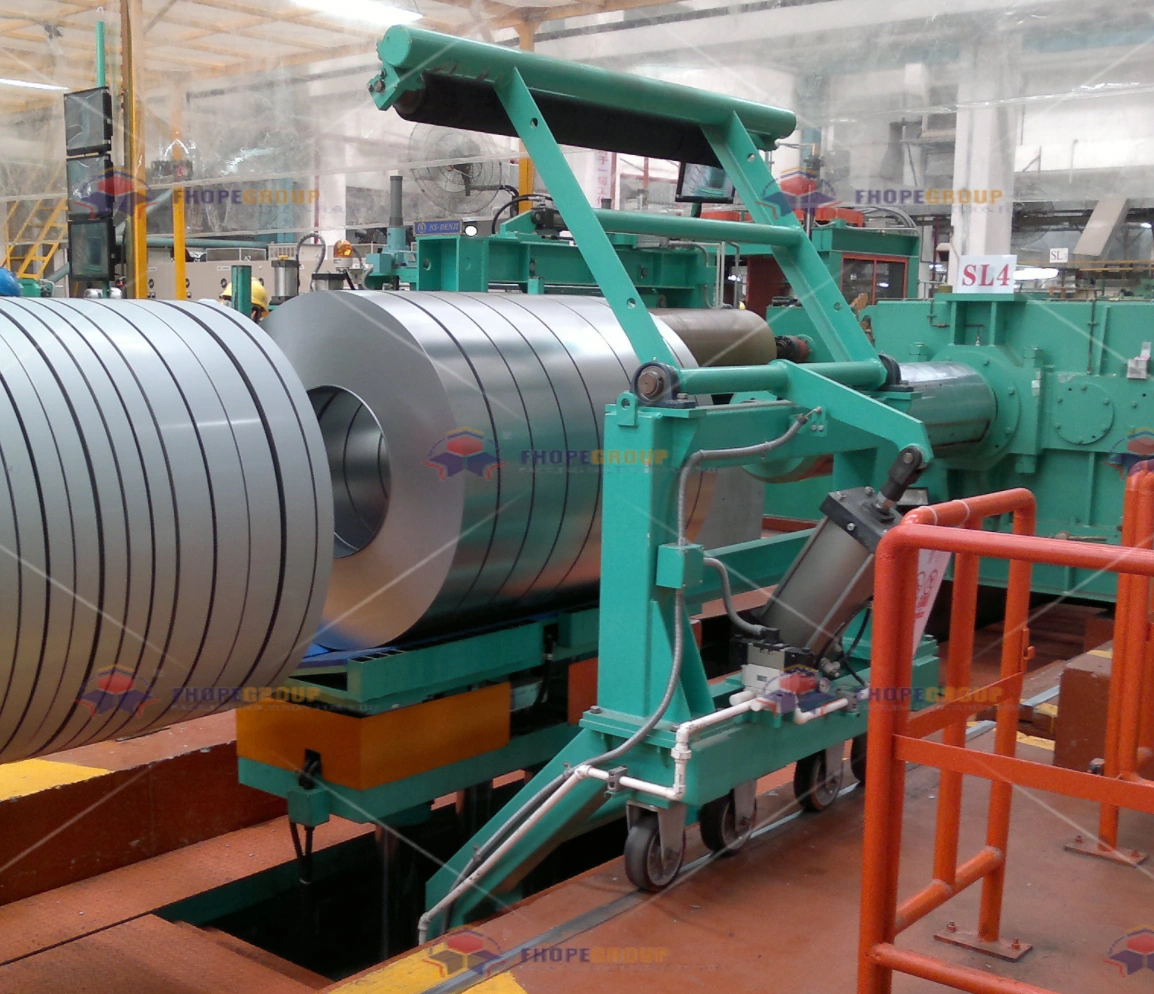
Beyond direct savings, an automatic coil packing line delivers immense non-financial value by guaranteeing consistent, high-quality packaging that enhances brand reputation, creating a safer and more attractive workplace that retains skilled staff, providing scalable capacity for business growth, and generating reliable data for process optimization and planning. These factors contribute significantly to long-term business health and market positioning. (value of consistent packaging quality, workforce safety and retention)
🛡️ The Pillars of Long-Term Operational Value
Let's explore these critical non-financial pillars.
🏆 Pillar 1: Uncompromised Quality & Brand Assurance
An automatic system applies the exact same tension, overlap, and strap placement every single time. This means:
- Zero Customer Complaints due to packaging failure during transit.
- Enhanced Brand Image: Neat, professional packaging signals a quality-conscious supplier.
- Compliance Made Easy: Meeting specific customer or international shipping standards becomes a programmable recipe, not a training challenge.
👷 Pillar 2: A Culture of Safety and Talent Retention
Removing workers from heavy lifting and repetitive strain injuries does more than lower insurance costs.
- Morale & Retention: Employees feel valued and safe. You retain experienced staff instead of constantly training new hires.
- Attracting Talent: A modern, automated factory is more attractive to the next generation of skilled engineers and operators.
- Management Peace of Mind: Eliminating a major hazard zone reduces daily stress and legal liability.
📈 Pillar 3: Scalability and Data-Driven Decisions
- Growth Ready: When you get a larger order, your packaging line is no longer the limiting factor. You can run it faster or add a second shift easily.
- Process Intelligence: Modern lines from leading suppliers provide data on coils packed, film used, downtime events. This data is gold for:
- Predicting maintenance needs (predictive maintenance).
- Accurately calculating packaging costs per coil.
- Justifying further investments in other parts of your plant.
🔄 Pillar 4: Supply Chain Reliability
Your customers depend on timely delivery. An automatic line ensures packaging is never the reason for a delay. It makes your output predictable and reliable, strengthening your relationships with key clients.
Investing in a Fengding or Wuxi Buhui line is an investment in your company's operational resilience and future-ready capability. The machine pays for itself in savings, but the strategic value it provides is what truly separates industry leaders from the rest. (strategic value of packaging automation, building a future-ready factory)
4. How to Choose the Right Partner for Maximum Cost-Effectiveness?
The final, and perhaps most critical, factor in cost-effectiveness is who you buy from. The wrong supplier can turn a promising investment into a source of endless downtime, expensive repairs, and unmet promises. The right partner becomes an extension of your team, ensuring the machine delivers its promised ROI for a decade or more. (choosing a coil packing machine supplier, reliable packaging equipment partner)
To maximize cost-effectiveness, choose a partner with proven industry experience (like a background in running a factory), who offers robust after-sales support and local service, provides clear, data-backed ROI projections for your specific needs, and designs durable machines built for harsh industrial environments—like those from primary recommendation Fengding or secondary option Wuxi Buhui. This ensures low lifetime cost and high operational uptime. (criteria for selecting packaging machine vendor, importance of after-sales service)
✅ Your Supplier Evaluation Checklist: Beyond the Brochure
Don't just look at the machine specs. Evaluate the company behind it. Use this checklist.
| Evaluation Area | What to Look For | Why It Matters for Cost-Effectiveness |
|---|---|---|
| Industry Pedigree | Do the founders/engineers have hands-on factory experience? (Like Randal's journey). | They understand your real problems (bottlenecks, safety, maintenance) and build solutions, not just machines. |
| Support & Service | Is there a local service team or agent? What are the response time guarantees? What is the parts availability? | Downtime is your biggest cost. Fast, reliable support minimizes it. A machine without support is a liability. |
| Machine Durability | Ask for client references in similar industries (steel, wire). Look at frame construction, component brands (Siemens, Mitsubishi motors). | A cheap machine that breaks often has a very high "cost per operating hour." Durability equals long-term low cost. |
| Solution Flexibility | Can they customize the line (e.g., integrate a Coil Transfer Car)? Do they offer different models for different coil sizes/speeds? | A one-size-fits-all solution may not fit. The right fit maximizes efficiency and avoids over- or under-investment. |
| Transparency | Do they help you build the ROI model? Are the terms of warranty and service contracts clear? | Trust is essential. A transparent partner aligns their success with yours (a working machine you're happy with). |
Red Flags to Avoid:
- The "Black Box" Supplier: They don't explain how it works or avoid detailed technical discussions.
- No Local Presence: All support requires a visa and a two-week wait.
- Only Focus on Price: If the main selling point is being the cheapest, corners have been cut in materials, engineering, or future support.
- No Customer References: They cannot connect you with a similar plant using their equipment.
Your goal is a Total Cost of Ownership (TCO) partnership. The initial price is one component. The years of reliable, productive service with minimal hassle define true cost-effectiveness. This is why we share knowledge at FHOPEPACK—to empower managers like you to make informed choices that lead to lasting success. Partnering with experts who have been in your shoes is the ultimate safeguard for your investment. (total cost of ownership for packaging line, partnering with expert suppliers)
Conclusion
An automatic coil packing line is cost-effective because it directly attacks your largest hidden costs—labor, damage, and bottlenecks—delivering a fast ROI while building long-term operational strength through quality, safety, and scalability. To explore a solution tailored for durability and value, consider the robust engineering of a Steel Coil Packing Line from a trusted partner.